
If you would like to get in touch, please feel free to contact: email hidden; JavaScript is required
Browse collection
- Full collection
- 18th Century & earlier
- Ackermann
- Africa
- Alken
- Animals
- Arabasia
- Architecture/Mansions
- Art
- Australasia
- Botany
- British Isles
- Caricatures
- Children
- China
- Chromo added colour
- Chromolithographs
- Conchology
- Costume
- Cruikshank
- Culture/Lifestyle
- Dutch
- East European
- Far East
- France
- Furniture/Antiques
- General
- Germany
- Grandville
- Heraldry
- History
- History - England
- History - Europe
- Holy Land
- India
- India - sepia
- Islam
- Italy
- Japan
- Literature
- London
- Manuscript
- Map
- Military
- Monnier
- Natural history
- Pastimes
- Pochoir
- Polar regions
- Portraits
- Religious/Christian
- Religious/other
- Rowlandson
- Russia
- Science
- Scrapbook
- Sepia
- South America
- Sports/Hunting
- Stamps
- Swiss
- The Americas
- Theatre
- Travel/Scenery
- Watercolours
- World
ALEXANDER, James Edward.
Travels from India to England; Comprehending a Visit to the Burman Empire, and a Journey through Persia, Asia Minor, European Turkey, &c. In the Years 1825-26. Containing a Chronological Epitome of the late Military Operations in Ava
General Sir James Edward Alexander(1803 – 1885) was a Scottish traveller, author, and soldier in the British Army. Alexander was the driving force behind the placement of Cleopatra's Needle on the Thames Embankment. In 1820, he joined the British East India Company's army, transferring into the British Army in 1825. As aide-de-camp to the British envoy to Persia, he witnessed fighting during the war between Persia and Russia in 1826 and in 1829 was present in the Balkans during the Russo-Turkish War, 1828-1829. From 1832 to 1834, he witnessed the War of the Two Brothers in Portugal, and in 1835 he took part in the 6th Cape Frontier War in South Africa as aide-de-camp and private secretary to Sir Benjamin D'urban. He was the son-in-law of Charles Collier Michell, having married in Cape Town on 25 October 1837 his daughter Eveline Marie, born 16 April 1821.






- Published
- London: Parbury, Allen, and Co., 1827.
- References
- Cordier 418; Abbey Travel II 520; Herbert 353; Tooley 17;
- Plates
- 5
- Binding/Size
- M=4to
- Value
- 0-5000
- Published
- London: Parbury, Allen, and Co., 1827.
- Ref
- 1222
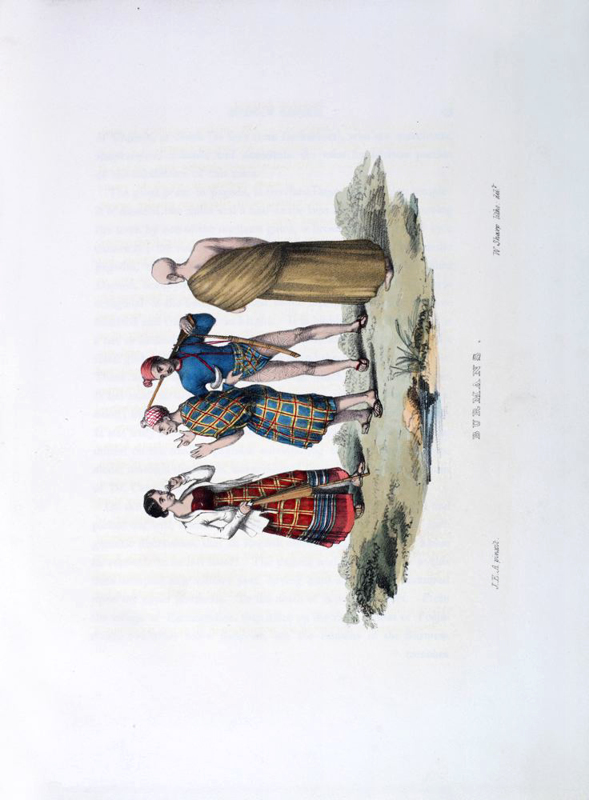
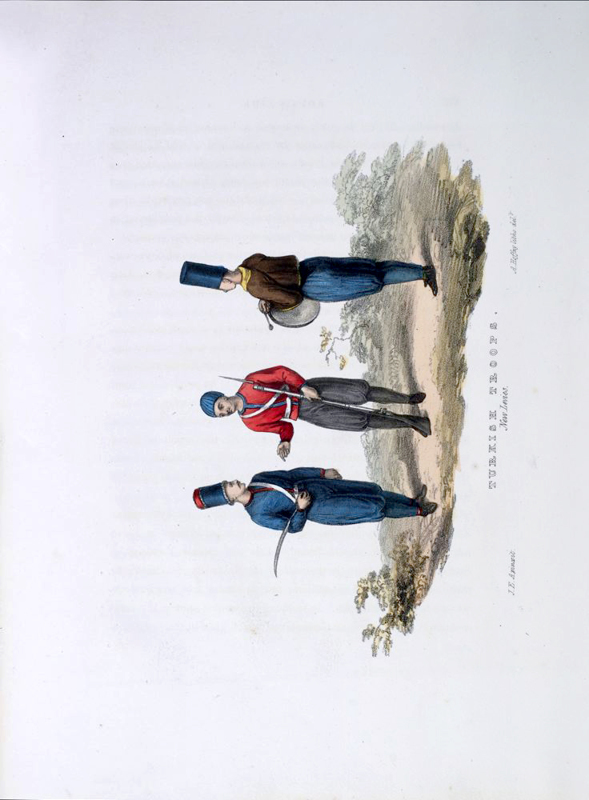
FIRST EDITION. 4to, pp. xvi, 301, uncoloured lithograph portrait on India paper, 16 lithograph plates and maps, including five hand-coloured plates of costumes, 22 wood-engraved vignettes on seven leaves. A very good copy bound in contemporary cloth-backed boards, neatly re-backed. Corners bumped, spine label defective. Occasional minor spotting. Armorial bookplate of Fitzherbert Macdonald on the front pastedown. MS (?) notations from a third party concerning the author on the front free endpaper. Coloured plates in order: 1. Burmans. 2. Madras Troops. 3. Trooper of the Escort. 4. Persian Troops. 5. Turkish Troops.
