If you would like to get in touch, please feel free to contact: email hidden; JavaScript is required
Browse collection
- Full collection
- 18th Century & earlier
- Ackermann
- Africa
- Alken
- Animals
- Arabasia
- Architecture/Mansions
- Art
- Australasia
- Botany
- British Isles
- Caricatures
- Children
- China
- Chromo added colour
- Chromolithographs
- Conchology
- Costume
- Cruikshank
- Culture/Lifestyle
- Dutch
- East European
- Far East
- France
- Furniture/Antiques
- General
- Germany
- Grandville
- Heraldry
- History
- History - England
- History - Europe
- Holy Land
- India
- India - sepia
- Islam
- Italy
- Japan
- Literature
- London
- Manuscript
- Map
- Military
- Monnier
- Natural history
- Pastimes
- Pochoir
- Polar regions
- Portraits
- Religious/Christian
- Religious/other
- Rowlandson
- Russia
- Science
- Scrapbook
- Sepia
- South America
- Sports/Hunting
- Stamps
- Swiss
- The Americas
- Theatre
- Travel/Scenery
- Watercolours
- World
SIMPSON, William.
The Seat of War in the East.
William Simpson (1823–1899) was a Scottish artist, war artist, and war correspondent. During the Crimean War, he became a pioneer war artist: dispatched by the printsellers Colnaghi & Son (on Day's recommendation), he recorded the naval battles in the Baltic Sea and then went on to Balaklava in November 1854 to make accurate sketches on the spot. The drawings he made during that terrible winter were submitted to Lord Raglan, sent home to England, and shown to Queen Victoria by the minister of war, the duke of Newcastle. After the fall of Sevastopol, he was attached to the duke's party of exploration in Circassia. Eighty of his Crimean drawings were lithographed in The Seat of War in the East (2 volumes, 1855 6), which was dedicated with permission to Queen Victoria. When the original watercolours were exhibited at Colnaghi's gallery, Lord Elcho and other MPs called for them to be bought by the nation as a historical record of the war. On the advice of Sir Charles Eastlake, this proposal was rejected, and the watercolours were sold off separately. Simpson returned to England with a brown beard long enough to button into his waistcoat, and he had an audience with the queen: he showed her his sketches and was much impressed by her grasp of every detail of the war.






- Published
- London: Paul & Dominic Colnaghi & Co., 1855.
- References
- Abbey Travel 237; Bobins I 162.
- Plates
- 81
- Binding/Size
- L=FOLIO
- Value
- 0-5000
- Published
- London: Paul & Dominic Colnaghi & Co., 1855.
- Ref
- 388
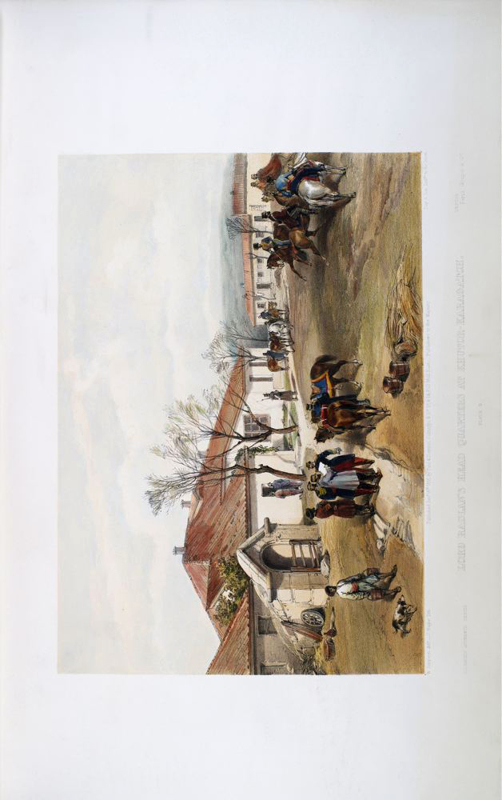
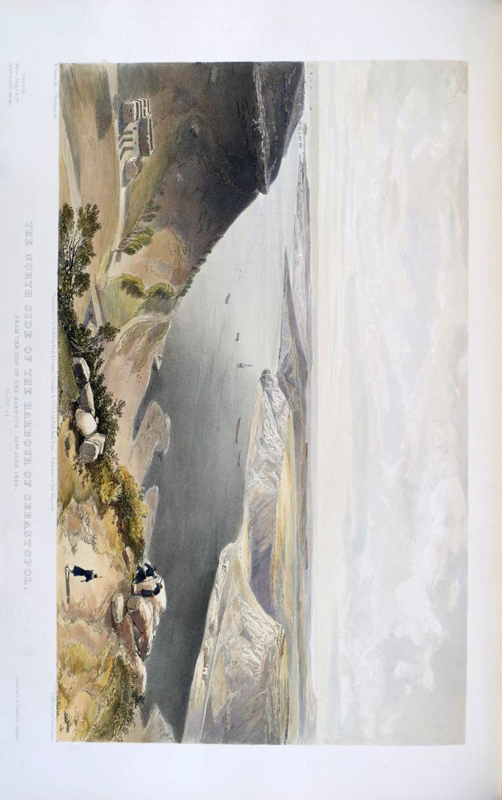
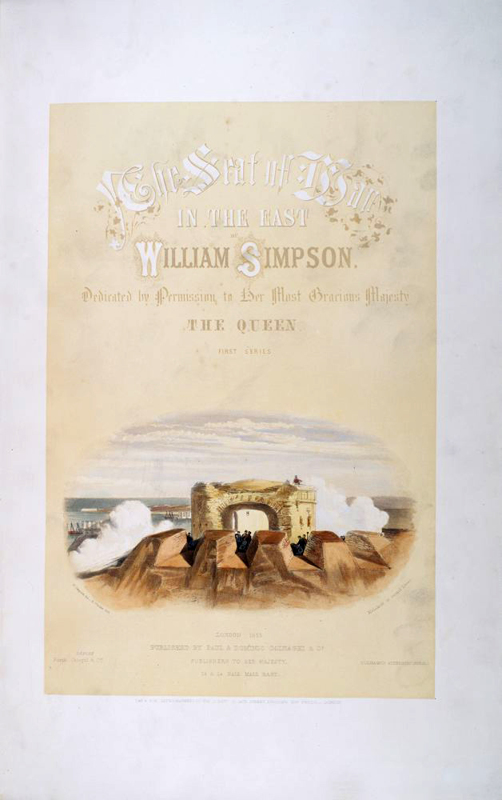
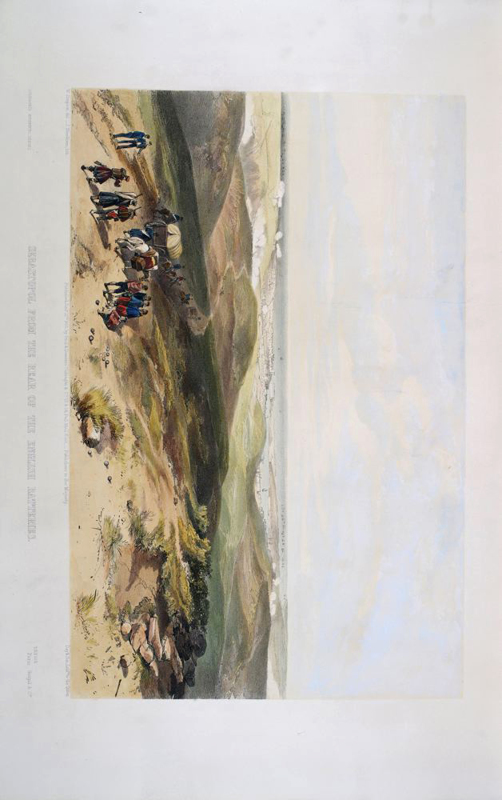
2 volumes in 1. Folio recent gilt ½ calf with marble boards spine with seven compartments of gilt raised bands with gilt floral designs to each, gilt title on morocco to the second compartment. Edges gilt, endpapers renewed. Complete with 80 full-page hand-coloured lithographs.P. (1) litho. title (1) dedication list of plates 26 plates litho. title 1-14 52 plates (2). This handsome plate book is in excellent condition text and plates are clean and crisp, and the colours are fresh. This copy contains both series. "Both series were published in ten parts, each part containing four plates (except the last part of the second series which contained five plates the lithographed title being given in this part.) … As a publisher's announcement in December 1854 shows Simpson had been 'commissioned to proceed to Sebastopol' immediately by Colnaghi's. This was the beginning of the enterprise which earned him the name 'Crimean Simpson.' These plates are indeed an impressive piece of work not only artistically and technically but also as pictorial reporting. Simpson must in this way rank as an early war correspondent". (Abbey) Coloured plates in order: First Series. 1. Lithograph title page. The Malakoff or Round Tower. 2. The Cavalry Affair of the heights of Bulganak, September 19th, 1854. 3. Balaklava, looking towards the Sea. 4. The Gale off the Port of Balaklava, November 14th, 1854. 5. Sevastopol from the rear of the English Batteries. 6. Charge of the Heavy Cavalry Brigade, October 25th, 1854. 7. Second Charge of the Guards when they re-took the Two-Gun Battery at the Battle of Inkermann. 8. Lord Raglan's Head Quarters at Khutor-Karagatch. 9. Distant view of Lord Raglan's Head Quarters before Sevastopol. 10. A Quiet Day in the Diamond Battery. Portrait of a Lancaster 68 Pounder. December 15th, 1854. 11. The Field of Inkermann. 12. Sentinel of the Zouaves before Sevastopol. 13. Commissariat Difficulties, the Road from Balaklava to Sevastopol, at Kadikoi, during the wet weather. 14. The Graves in the Fort on Cathcart's Hill of the Officers 4th Division who fell at Inkermann. 15. The Railway at Balaklava, looking South. 16. The New Works at the Siege of Sevastopol on the Right Attack, from the Mortar battery on the right of Gordon's Battery. 17. A Christmas Dinner on the Heights before Sevastopol. 18. Sebastopol from the East or extreme right of English Attack. 19. View from the Heights above Balaklava, looking towards Sebastopol, shewing the ground of the Battles of the October 25th & of the November 5th, 1854 and the line of our defenses since the October 25th. 20. Excavated Church in the Caverns at Inkermann, looking West. 21. A Hot Day in the Batteries. 22. A Hot Night in the Batteries. 23. The Valley of the Shadow of Death. Caves in the Woronzoff Road behind the 21 Gun Battery. 24. Russian Rifle Pit, now part of the British Advanced Trenches, on the Left of the Right Attack, or Gordon's Battery. 25. Prince Woronzoff's Palace near Yalta on the South Coast of the Crimea. 26. The Monastery of St. George and Cape Fiolente. Looking West. 27. The Light-House at Cape Chersonese. Looking South. Second Series. 28. Lithographed title page. A Bomb-proof chamber in the Malakoff. 29. Charge of the Light Cavalry Brigade, October 25th, 1854. Under Major General The Earl of Cardigan. 30. Huts and Warm Clothing for the Army. 31. Camp of the Naval Brigade, before Sebastopol. 32. The Camp of the 1st Division looking North towards the Camp of the 2nd Division - the Heights of Inkermann in the distance. 33. Sebastopol from the 26 Gun Battery on the Extreme Right of French Attack. 34. Head of the Harbour, Sebastopol. 35. Graves at the Head of the Harbour of Balaklava. 36. Sebastopol from the Sea. Sketched from the Deck of H.M. Sidon. 37. Embarkation of the Sick at Balaklava. 38. A Quiet Night in the Batteries. A Sketch in the Greenhill Battery (Major Chapman's) January 29th, 1855. 39. The Camp of the Second Division, Looking East, January 1855. 40. The Ruins of Inkermann and City of Caverns. 41. Highland Brigade Camp. Looking South. 42. Disembarkation of the Expedition to Kertch at Kamish Bournou and the blowing up of St. Paul's Battery. 43. Fortress of Yenikale, Looking towards the Sea of Azoff. 44. Kertch from the North. 45. Straits of Yenikale with the Bay and Town of Kertch. 46. Funeral Cortege of Lord Raglan leaving head Quarters. 47. The Town Batteries or Interior Fortifications of Sebastopol, from the advanced parallel of Chapman's Attack, June 23rd, 1855. 48. Burning of the Government Buildings at Kertch, June 9th, 1855. 49. Interior of Lord Raglan's Head Quarters. A Council of War. 50. Camp of the 4th Division. July 15th, 1855. 51. Cavalry Camp, July 9th, 1855. 52. Camp of the Light Division. 53 Camp of the 3rd Division. 54. Sketch in the Interior of the Mamelon Vert. Looking South. 55. Battle of the Tchernaya, August 16th, 1855. 56. Valley of the Tchernaya. Looking North. 57. Balaklava shewing the state of the Quays & the Shipping. 58. Cape Aiya. Looking North, towards Balaklava. 59. The Valley of Baidar, from near Petroski's Villa - looking East. 60. The Attack on the Malakoff. 61. The Interior of the Redan. Taken from its left face, looking towards the salient angle, looking South. 62. Church in the rear of the Redan, Looking North showing the effects of shot and shell. 63. Sebastopol from the rear of Fort Nicholas, looking South. 64. The Investiture of the Order of the Bath, at the Head Quarters of the British Army before Sebastopol. 65. The North side of the Harbour of Sebastopol, from the top of the Harbour - June 22nd, 1855. 66. Ditch of the Bastion du Mat. 67. Docks at Sebastopol with ruins of Fort St. Paul. 68. Interior of the Malakoff with the remains of the Round Tower. 69. Kamiesch. 70. Interior of Fort Nicholas. 71. Public Library & Temple of the Winds. 72. Quarantine Cemetery and Church with French Battery No. 50. 73. The Admiralty, Sebastopol. 74. Hospital and Cemetery at Scutari. 75. One of the Wards of the Hospital at Scutari. 76. Church of St. Peter & St. Paul. 77. Sebastopol from Old Chersonese, and ancient Church of St. Vladimir. 78. Redan and advanced Trenches of British Right Attack. 79. Ditch of the Malakoff, Battery Gervais, and Rear of the Redan. 80. Mine of the Bastion du Mat. 81. Bastion du Mat, from the Central Bastion.