If you would like to get in touch, please feel free to contact: email hidden; JavaScript is required
Browse collection
- Full collection
- 18th Century & earlier
- Ackermann
- Africa
- Alken
- Animals
- Arabasia
- Architecture/Mansions
- Art
- Australasia
- Botany
- British Isles
- Caricatures
- Children
- China
- Chromo added colour
- Chromolithographs
- Conchology
- Costume
- Cruikshank
- Culture/Lifestyle
- Dutch
- East European
- Far East
- France
- Furniture/Antiques
- General
- Germany
- Grandville
- Heraldry
- History
- History - England
- History - Europe
- Holy Land
- India
- India - sepia
- Islam
- Italy
- Japan
- Literature
- London
- Manuscript
- Map
- Military
- Monnier
- Natural history
- Pastimes
- Pochoir
- Polar regions
- Portraits
- Religious/Christian
- Religious/other
- Rowlandson
- Russia
- Science
- Scrapbook
- Sepia
- South America
- Sports/Hunting
- Stamps
- Swiss
- The Americas
- Theatre
- Travel/Scenery
- Watercolours
- World
FREUDENBERG, Caroline von.
Johann Bernhard Geyer.
Neue Blumenstausse, oder Munster zur feinen Stickkunst.
An extremely rare flower sample book, not mentioned in any of the relevant reference works. Four other copies located worldwide (three in institutions, one in sales records), some of which contain only six plates.


- Published
- Nuremberg, [1817]
- References
- Nissen, BBI; Great Flower Book: Nagler; KVK (2 copies); Thieme/Beckler 34, p.481 (engraver); WorldCat 1439117548 (1 copy).
- Plates
- 39
- Binding/Size
- L=FOLIO
- Value
- 5001-25000
- Published
- Nuremberg, [1817]
- Ref
- 1677
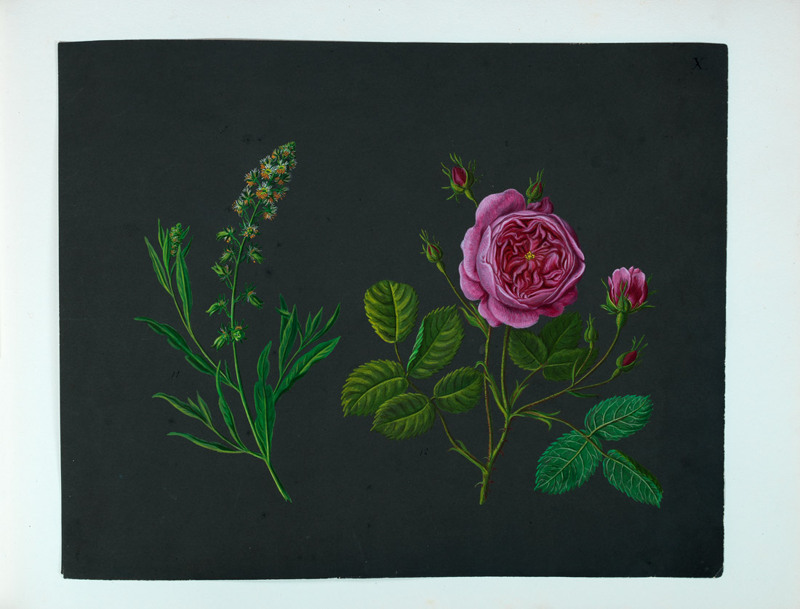
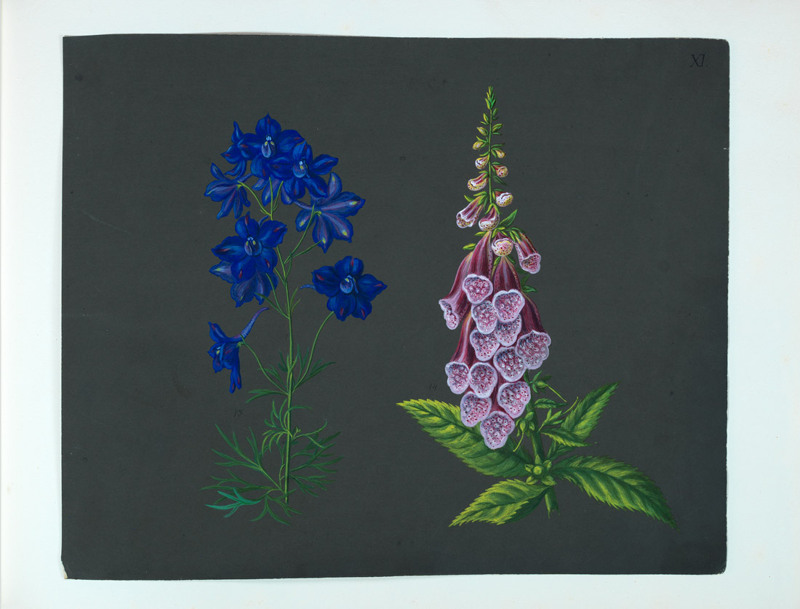
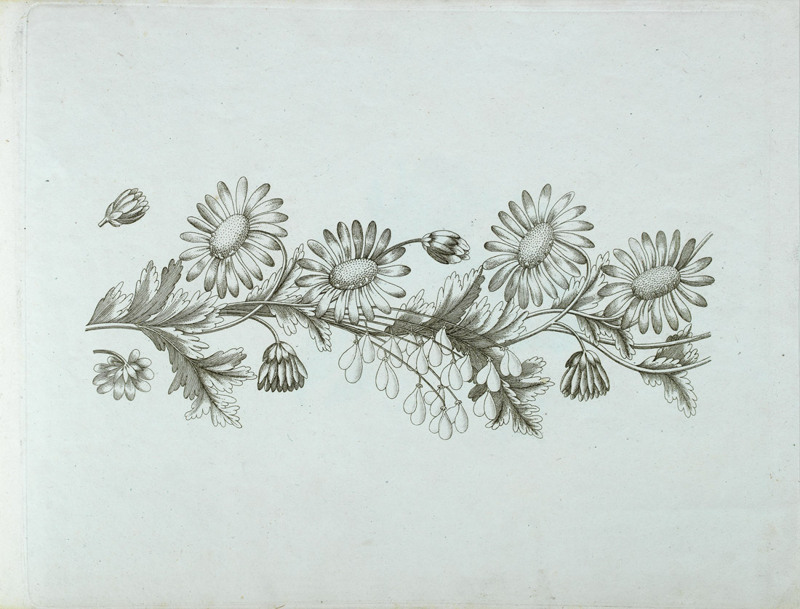
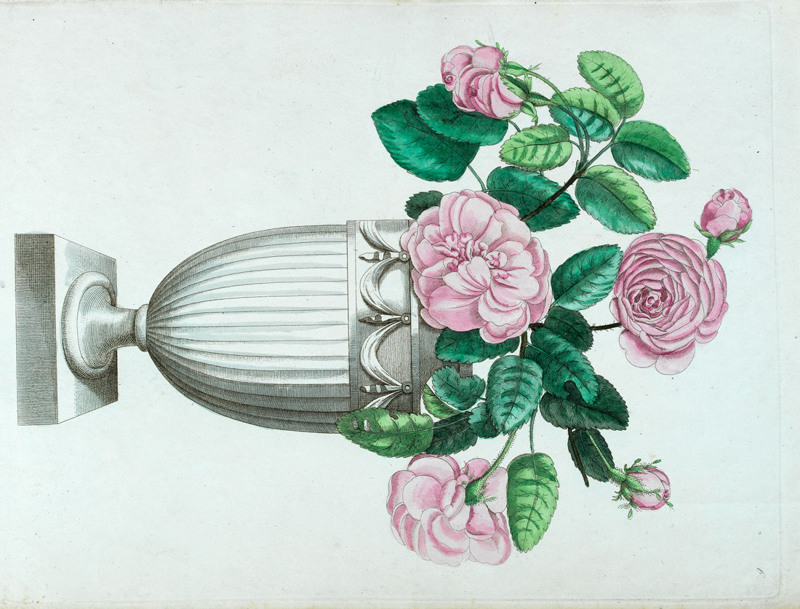
Oblong folio, 2 works bound in 1 volume. With 2 engraved title pages (1 hand-coloured and 1 uncoloured duplicate) with 10 engraved plates (5 hand-coloured and 5 uncoloured duplicates) mounted on stubs, a painted title page, 32 gouache paintings mounted on the leaves and numbered by hand, and a handwritten index in German copperplate. Contemporary gold and blind tooled maroon calf, in Selenka style, with an oval orange paper title label in the central panel on the upper cover. Gold-tooled turn-ins, gilt edges, dark purple watered silk endpapers. With a paper label ("No.190") mounted on the front front pastedown, and a booksellers label ("Simon, papetier a Rouen) mounted on the verso of the first flyleaf. Edges and corners of covers are scuffed, and worn and scratched, and the hinges and joints are slightly weakened. 'Neue Blumenstausse'. The engraved plates show six different designs that have all been duplicated (coloured and uncoloured). Designed by Caroline von Freudenberg (dates unknown), who may have been a commercial flower artist in Nuremberg. The engraver is only mentioned on the title page as "Vogel", but this probably refers to Georg Friedrich Vogel, a member of the third generation of a family of engravers from Nuremberg. Freudenberg appears to be unrecorded, and the best clue to her background is her association with the engraver and publisher. In 1817, Geyer began publishing "Nurnbergische Flora" by the botanical artist Johann Samuel Winterschmidt (1760-1824). Winterschmidt's book was published in parts and left incomplete in 1821 with 108 plates, also engraved by "Vogel". It seem probable that Freudenberg worked for Winterschmidt and then briefly on her own, perhaps after his death in 1824. [Bound with} Botanical paintings. 'Flora'. Published in Germany? 19th century. Contains a beautiful selection of 33 vibrant gouache paintings. It begins with a painted title page depicting a lush garden with an allegorical representation and short text for each season, followed by 32 paintings of plants from the four seasons, from individual leaves and blossoms to elaborate bouquets of flowers. The botanical compositions, often including insects, have been painted on to a dark background, thus making them stand out. paintings are unsigned, but are numbered in ink, by hand ,at the top right corner of each painting. All are mounted onto leaves of the album and are accompanied by a handwritten index at the rear. They are painted in a somewhat older German style introduced into Germany by the Nuremberg school of natural history painting, and are reminiscent of the work by Barbara Regina Dietzsch (1706-1783). 'Flora' paintings numbered I - 20. 'Neue Blumenstausse' engravings numbered 1 - 6.