If you would like to get in touch, please feel free to contact: email hidden; JavaScript is required
Browse collection
- Full collection
- 18th Century & earlier
- Ackermann
- Africa
- Alken
- Animals
- Arabasia
- Architecture/Mansions
- Art
- Australasia
- Botany
- British Isles
- Caricatures
- Children
- China
- Chromo added colour
- Chromolithographs
- Conchology
- Costume
- Cruikshank
- Culture/Lifestyle
- Dutch
- East European
- Far East
- France
- Furniture/Antiques
- General
- Germany
- Grandville
- Heraldry
- History
- History - England
- History - Europe
- Holy Land
- India
- India - sepia
- Islam
- Italy
- Japan
- Literature
- London
- Manuscript
- Map
- Military
- Monnier
- Natural history
- Pastimes
- Pochoir
- Polar regions
- Portraits
- Religious/Christian
- Religious/other
- Rowlandson
- Russia
- Science
- Scrapbook
- Sepia
- South America
- Sports/Hunting
- Stamps
- Swiss
- The Americas
- Theatre
- Travel/Scenery
- Watercolours
- World
EMPSON, Charles.
Narratives of South America, illustrating Manners; Customs and Scenery; containing also numerous Facts in Natural History, collected during a four years’ Residence in Tropical Regions.
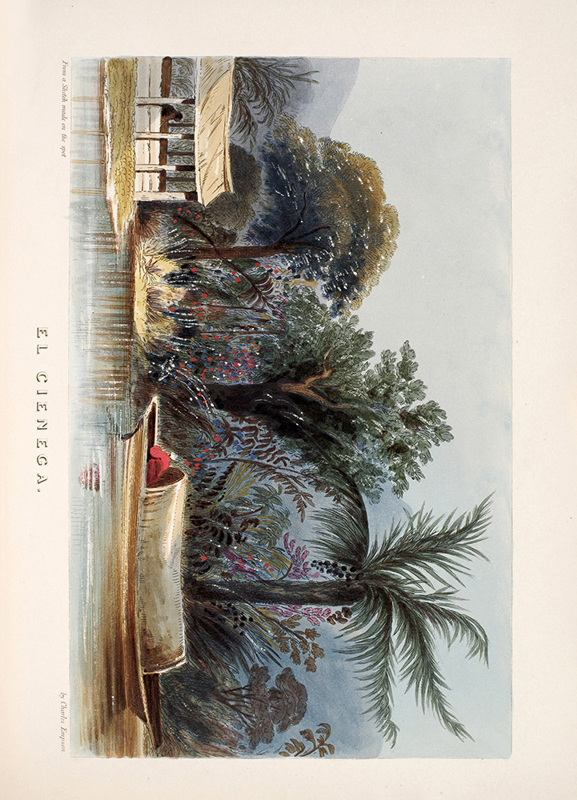
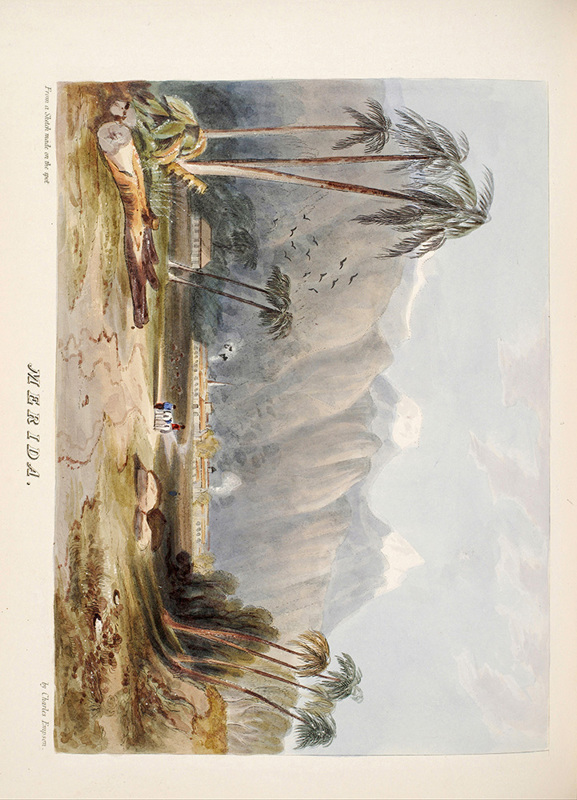
Empson, a print and watercolour dealer in Bath, spent three years travelling the northern part of South America, for the most part in what is now Colombia, from 1824 to 1827. His original drawings of the exotic plants of South America, which he first encountered on that journey, introduce an artist of superb technique and achievement better known through the narratives of his travels in South America. His peregrinations took him from Cienega on the northern coast of Colombia through the central and eastern cordilleras of the Andes to Honda in the south, via the river Magdalena, and east into Venezuela.





- Published
- London, printed by A.J. Valpy … and published for the author by William Edwards, 1836.
- References
- Abbey Travel II 702; Tooley 210; Sabin 22548; Bobins 808.
- Plates
- 15
- Binding/Size
- M=4to
- Value
- 0-5000
- Published
- London, printed by A.J. Valpy … and published for the author by William Edwards, 1836.
- Ref
- 5286
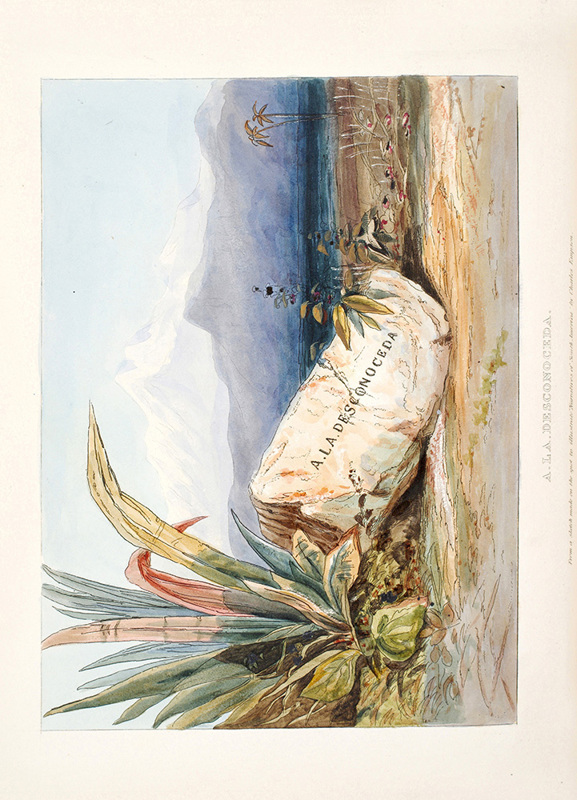
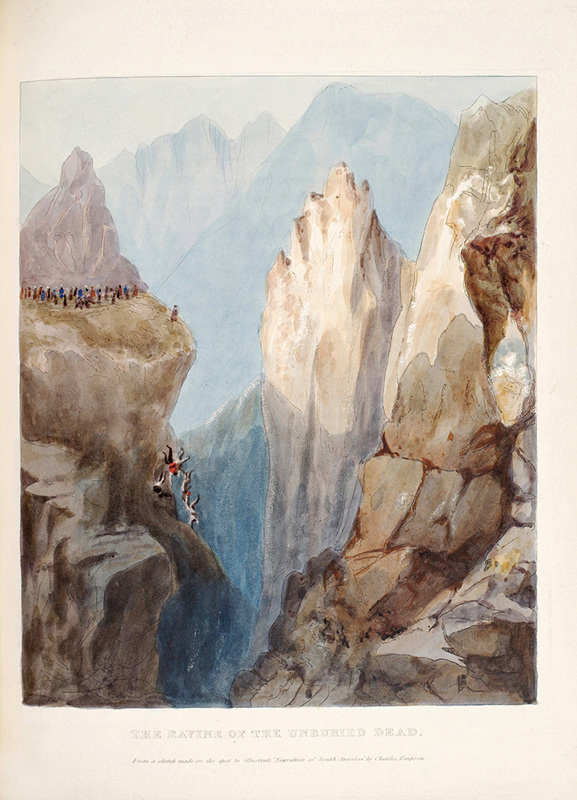
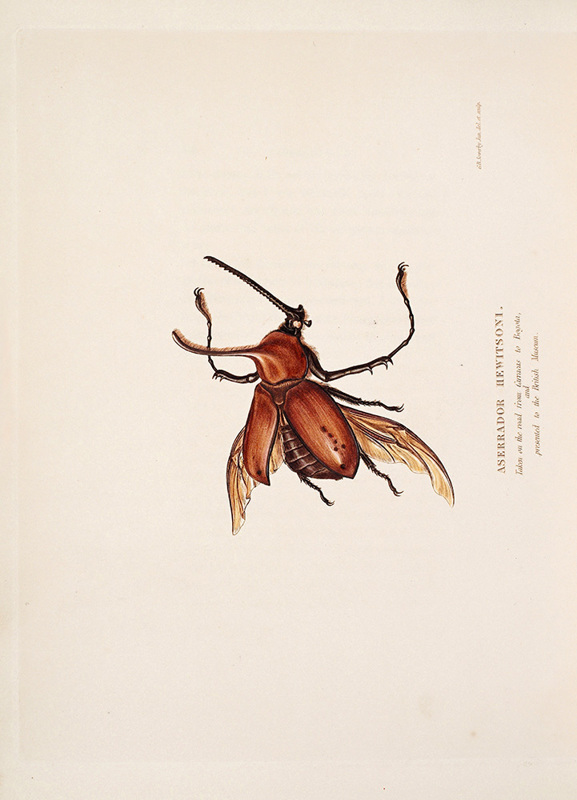
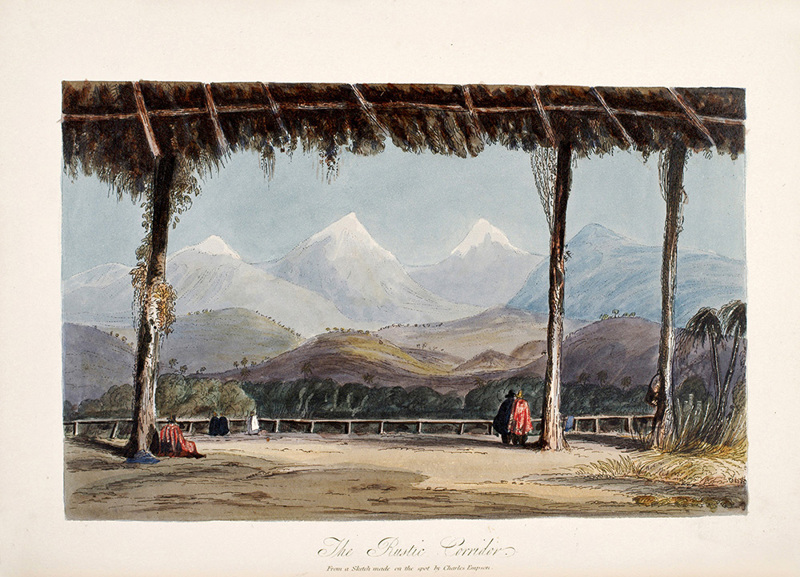
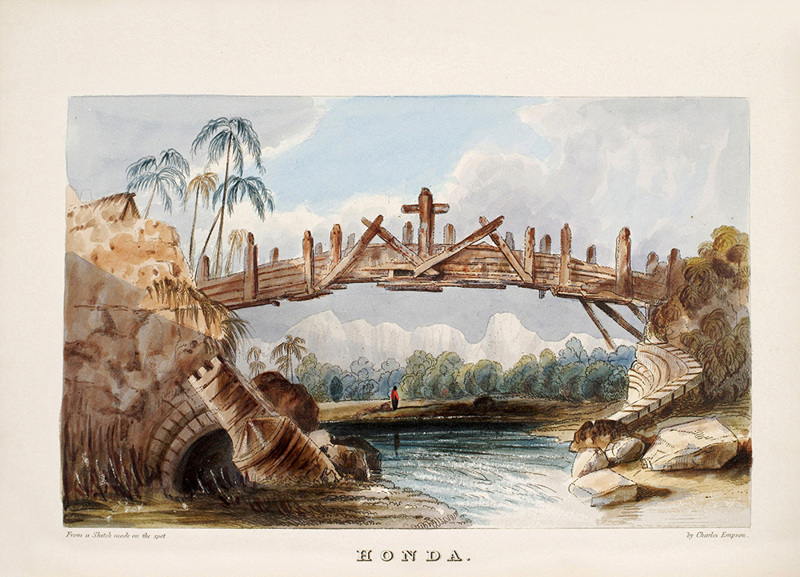
Folio atlas of plates, text 8vo, together with two volumes, title, dedication (1 leaf), Notice (1 leaf), Preface, pp. vii-xi; contents pp. xii, to xvi; text, pp. 1-322, imprint A.J. Valpy at the foot of p. 322, text to Coleoptera plates, one of these drawn and engraved by G.B. Sowerby Jnr., the other by Miss Taylor, 2ll., double column, versos blank, 15 hand-coloured engraved plates, illustrations of manners, customs, scenery, containing numerous other facts of natural history, the whole collected during a four years’ residence in tropical regions, bound in presentation binding. Charles Empson had always wanted to travel and, at the age of 29 in 1824, left England for South America, spending time in the northern section of the continent in what is now Colombia. He traveled with his friend, Robert Stephenson, son of railway engineer George Stephenson. The two friends left Colombia at the end of July 1827, bringing precious objects of pre-Colombian art, including some gold artifacts that Charles Empson later exhibited in Newcastle-upon-Tyne. Sadly some of their collection was lost in a shipwreck at the entrance to New York harbour. Following his travels, Empson set up as a fine art bookseller. He later moved to Bath, where he dealt in pictures, opening a museum, which perhaps functioned more as an art gallery, as it also featured the work of local artists. One of Empson’s acquaintances in Bath was Charles Louis Napoleon (1808-1873), who later proclaimed himself Emperor Napoleon III. It should be noted that the number of plates in this copy agrees with Tooley’s collation and that of the Keynes copy. Abbey Travel lists plates 15 & 16 as extra plates. Plates 6 & 8, the kitchen and the Bridge at Mariquita, are coloured lithographs. The remainder of the plates are coloured etchings. The plates of views are by Ackermann. Abbey writes that the plates are “of a high quality artistically and technically.” The text is in the form of a series of narratives, which offer vignettes of life in South America at this time. Tooley mentions that those mounted coloured plates, usually bound in a folio as here, carry the signature “From the sketch on the spot by Charles Empson and one of the Coleoptera plates, on the road from Caracas to Bogota.” Tooley cites a later edition with plates uncoloured, 14 views, and bound with text, dated 1836. This would indicate that this text was in folio format. Coloured plates in order: 1. El Cienega. 2. South American Cottage. 3. The Rustic Corridor. 4. Cocenas. 5. Honda. 6. A. La. Desconoceda. 7. The Bridge at Marquita. 8. Peladeros. 9. El Salto. 10. Merida. 11. Tolyma. 12. Pamplona. 13. The Ravine of the Unburied Dead. 14. River Claro. 15. Aserrador Hewitsoni (bug).