If you would like to get in touch, please feel free to contact: email hidden; JavaScript is required
Browse collection
- Full collection
- 18th Century & earlier
- Ackermann
- Africa
- Alken
- Animals
- Arabasia
- Architecture/Mansions
- Art
- Australasia
- Botany
- British Isles
- Caricatures
- Children
- China
- Chromo added colour
- Chromolithographs
- Conchology
- Costume
- Cruikshank
- Culture/Lifestyle
- Dutch
- East European
- Far East
- France
- Furniture/Antiques
- General
- Germany
- Grandville
- Heraldry
- History
- History - England
- History - Europe
- Holy Land
- India
- India - sepia
- Islam
- Italy
- Japan
- Literature
- London
- Manuscript
- Map
- Military
- Monnier
- Natural history
- Pastimes
- Pochoir
- Polar regions
- Portraits
- Religious/Christian
- Religious/other
- Rowlandson
- Russia
- Science
- Scrapbook
- Sepia
- South America
- Sports/Hunting
- Stamps
- Swiss
- The Americas
- Theatre
- Travel/Scenery
- Watercolours
- World
CASTRO, C.
Mexico y sus Alrededores. Coleccion de Vistas Monumentales, Paisajes y Trajes del Pais. Dibujados al Natural y Lithografiados por Los Artistas Mexicanos...
A very rare and important work. Captions in Spanish, English, and French. The artists involved were Casimiro Castro, Juan Campillo, Luis Auda, and G. Rodriguez. Michael Mathes in Mexico on Stone calls this work "one of the most significant lithographic productions in the history of the art. This is the most important work illustrating Mexico in the 19th century."


- Published
- Mexico: Imprenta Litografica de V.Debray, 1869.
- References
- Bobins 6; Abbey Travel II 672; Colas 547; Lippenheide 1624; Sabin 4859; Mathes, Mexico on Stone, pp. 28-29 and 57; Toussaint, La Litografia en Mexico, p. XVIII.
- Plates
- 40
- Binding/Size
- L=FOLIO
- Value
- 25001-100000
- Published
- Mexico: Imprenta Litografica de V.Debray, 1869.
- Ref
- 5332
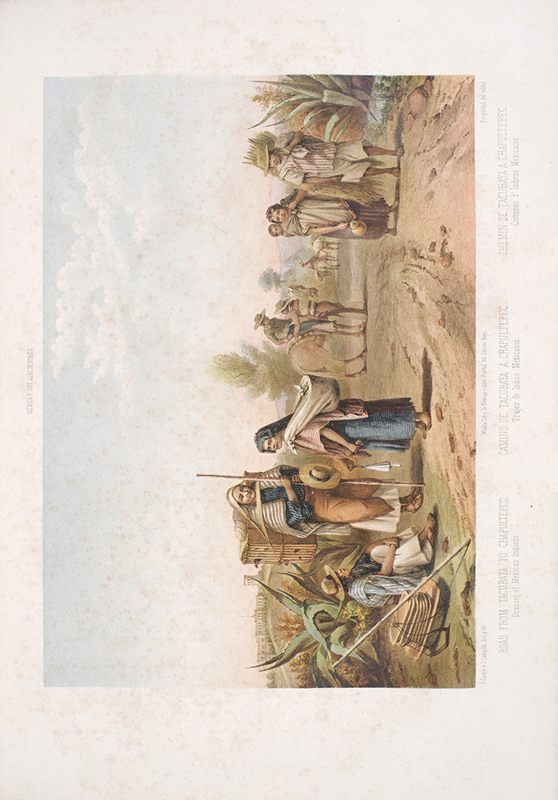
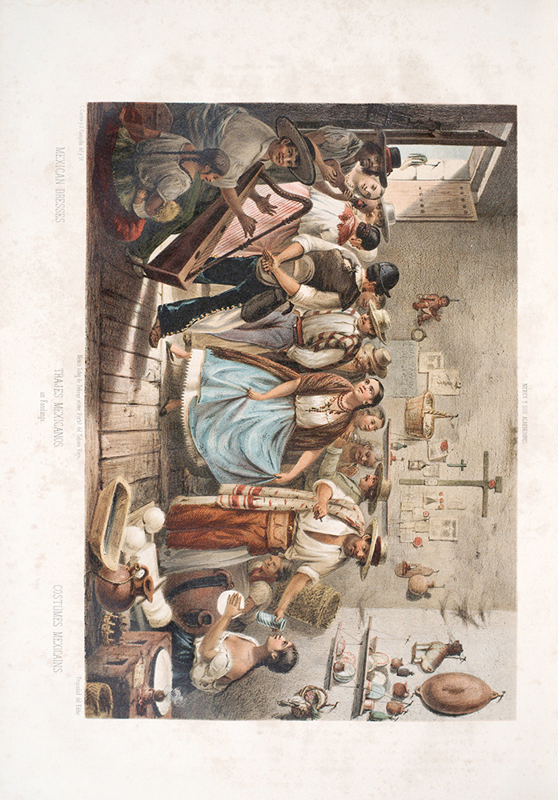
[Mexico and its Alfrededores. Collection of Monumental Views, Landscapes and Costumes of the Country. Drawn from Nature and Lithographed by Mexican Artists...] Folio, early twentieth century 1/2 red calf over red cloth, gilt borders, spine with raised bands, and gilt. Forty hand-colored lithographs on 36 plates. Lithographed title, all plates with titles in English, Spanish and French. MS notes in French to half-title. Bobins bookplate to front pastedown. Some plates are toned and foxed. The plan is of Mexico city and printed in black, three colours, and a background tint. Abbey comments that the draughtsmanship and lithography were of a very high standard. European explorers La Perouse 1782; Malaspina 1792; Alexander von Humboldt 1803, along with Mexican savants, found new fascination in flora, geography, and archaeological antiquities of New Spain and the Mexican countryside. There was a strong sense of nationalism in Mexico and an interest in pre-Columbian heritage, love of Mexican dress, customs, and landscape. To the foreigner, Mexico was mysterious and ancient. To the Mexican mysterious and majestic" (Mathes). Decaen was one of the foremost exponents. This was considered one of the most significant lithographic productions in art history. "The most important work illustrating Mexico city in the 19th century" (Mathes). Coloured plates in order: 1. La Ciudad de Mexico. 2. La Fuente de la Tlaxpana, Calzada de San Cosme. 3. Plaza de Morelos, Antigua Plazuela de Guardiola. 4. Ataque de una Diligencia. 5. La Fuente del Salto del Agua. 6. Interior de la Catedral de Mexico. 7. El Sagrario de Mexico. 8. Casa Municipal, o Diputacion. 9. Casa del Emperador Iturbide, Hoy hotel de las Diligencias Generales. 10. St. Antonio Chimalistaca. Entrada de St. Angel. 11. San Angel. Plaza de San Jacinto. 12. La Villa de Guadalupe. Tomada en globo el dia 12 de Diciembre. 13. Las Cadenas en Una Noche de Luna. 14. Interior de la Alameda de Mexico. 15. Teatro Nacionale de Mexico. 16. Plaza de San Agustin de Las Cuevas. Ciudad de Tlalpam. 17. El Calvario. En San Agustin de las Cuevas. 18. La Calle de Roldan, y su desembarcadero. 19. La Ville de Tacubaya, Tomada desde Chapultepec. 20. Colegio de Mineria. 21. Paseo de Bucareli. 22. El Mercado de Iturbide, Antigua plaza de san Juan. 23. La Alameda de Mexico, Tomada en Globo. 24. El Paseo de la Viga. 25. Bosque de Chapultepec (1869). 26. El Pueblo de Ixtacalco. 1869 27. Plaza de Santo Domingo. 28. Atrio del Convento de san Francisco (1860). 29. Interior del Teatro Iturbide. 30. Palacio Nacional de Mexico. Entrada del Ejercito federal el 1st de Enero de 1861. 31. Jardin de la Plaza de Armas. 32. Antiguedades Mexicanas que existen en el Museo nacionale de Mexico, 1857. 33-35. Trajes Mexicanos. 36. Camino de Tacubaya a Chapultepec. Trajes de Indios Mexicanos. 37. Trajes Mexicanos. 38. Trajes Mexicanos. Soldados del Sur. 1855. 39. Trajes Mexicanos un Fandango. 40. Trajes Mexicanos.