If you would like to get in touch, please feel free to contact: email hidden; JavaScript is required
Browse collection
- Full collection
- 18th Century & earlier
- Ackermann
- Africa
- Alken
- Animals
- Arabasia
- Architecture/Mansions
- Art
- Australasia
- Botany
- British Isles
- Caricatures
- Children
- China
- Chromo added colour
- Chromolithographs
- Conchology
- Costume
- Cruikshank
- Culture/Lifestyle
- Dutch
- East European
- Far East
- France
- Furniture/Antiques
- General
- Germany
- Grandville
- Heraldry
- History
- History - England
- History - Europe
- Holy Land
- India
- India - sepia
- Islam
- Italy
- Japan
- Literature
- London
- Manuscript
- Map
- Military
- Monnier
- Natural history
- Pastimes
- Pochoir
- Polar regions
- Portraits
- Religious/Christian
- Religious/other
- Rowlandson
- Russia
- Science
- Scrapbook
- Sepia
- South America
- Sports/Hunting
- Stamps
- Swiss
- The Americas
- Theatre
- Travel/Scenery
- Watercolours
- World
SOLVYNS, Frans Balthazar.
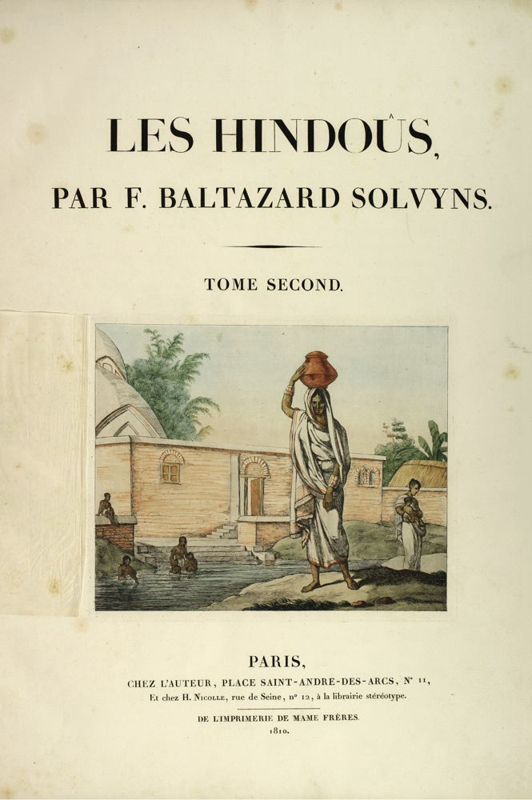
Les Hindoûs ou Description de Leurs Moeurs Coutumes et Ceremonies.
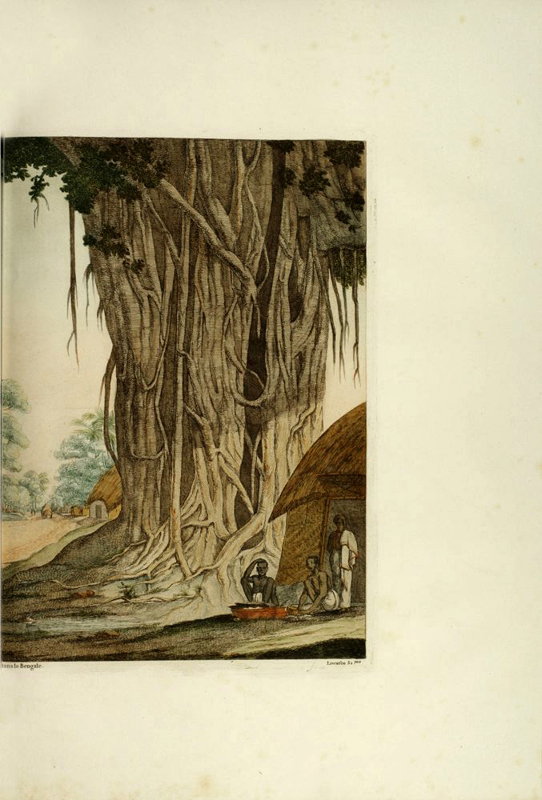
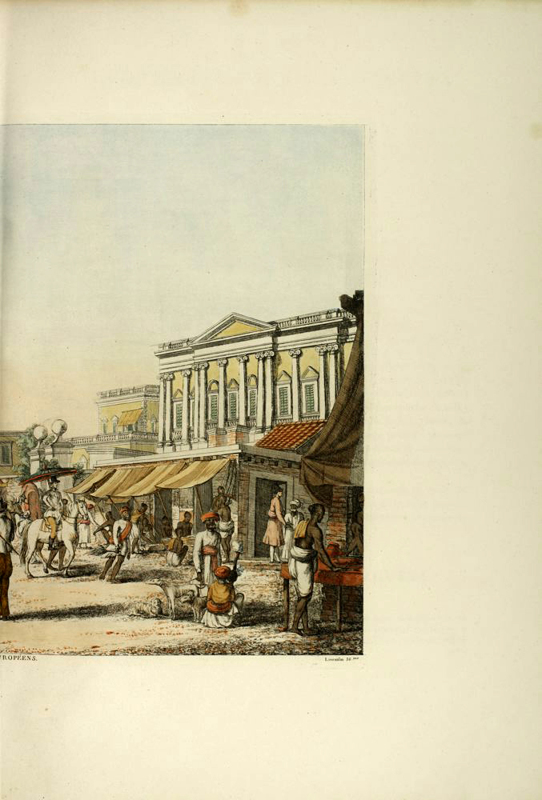
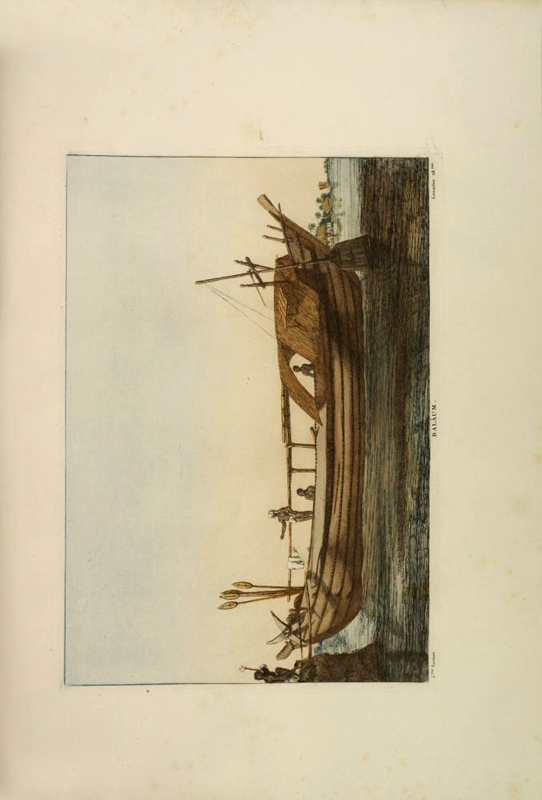
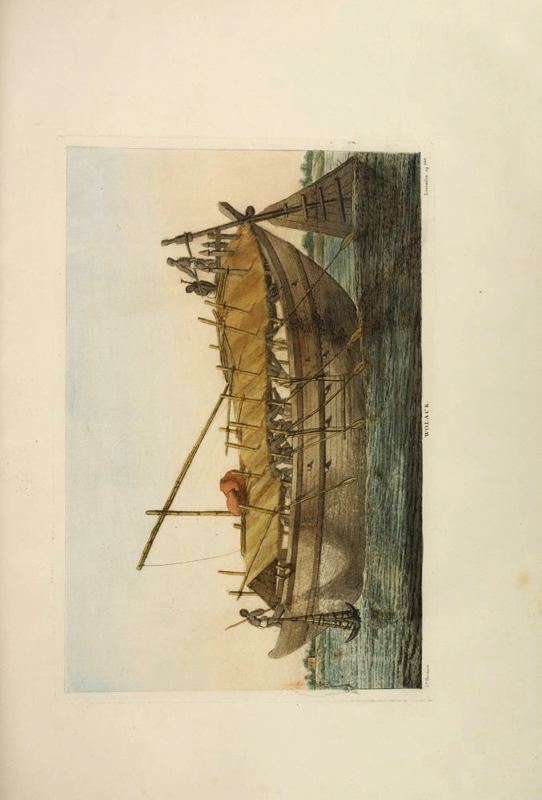
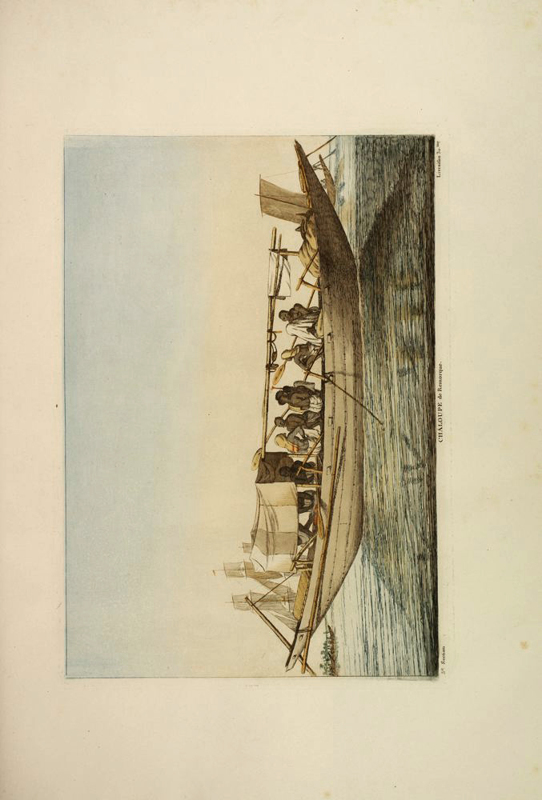
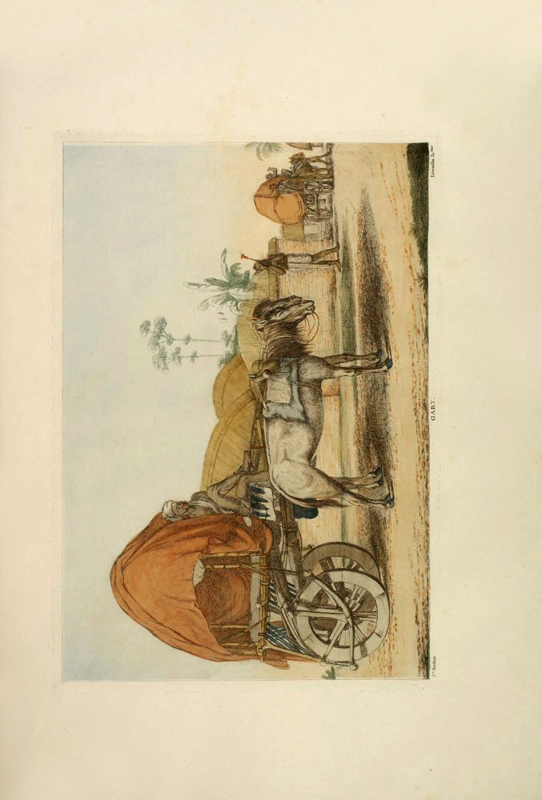
Arranged in sections, the four volumes illustrate the customs, festivals, occupations, caste system, and costume of the Hindus, encompassing all social classes. The images are of tradesmen and their tools, princes, doctors (vol. I), dances, religious devotees, different types of musical instruments, customs associated with marriage and death (vol. II), types of boats, games, modes of transportation, games and various methods of smoking (vol. III), classes of domestic servant and native flora and fauna (vol. IV). The accompanying text provides explanations and descriptions of Hindu customs and habits, such as the rituals of religious ceremonies, meetings for conversation, servants' duties, and the cultivation of plants for domestic use. A native of Antwerp, Balthazar Solvyns set sail for India in 1790, arriving in Calcutta the following year. Having undertaken a commission in 1792 for Alexander Kyd, the Surveyor-General in Calcutta, in which he provided illustrations for a report written for the East India Company on Kyd's expedition to Penang and the Andaman Islands, Solvyns noticed the keen interest shown by the British in Indian costumes and ways of life. This led him to produce his comprehensive work on India, A Collection of Two Hundred and Fifty Coloured Etchings Descriptive of the Manners, Customs, and Dress of the Hindoos (Calcutta, 1799), encouraged by the orientalist, Sir William Jones. He issued the enlarged and improved French folio edition, Les Hindous, in 48 parts from 1808-1812, with coloured plates and an English translation by his English wife, Mary Anne Greenwood Solvyns.





- Published
- Paris: chez l'Auteur [vols.II and III] et chez Nicolle [vol.II], 1810-1811
- References
- Bobins I 271; Abbey Travel 430; Brunet V, 432; Colas 2767; not in Lipperheide. (4); cf. M. & W.G. Archer "Francois Balthazar Solvyns: Early Painter of Calcutta Life" in Science, Philosophy and Culture: Essays in Honour of Huymayun Kabir's sixty-second birthday , edited by Frank Moraes and others...
- Plates
- 144
- Binding/Size
- M=4to
- Value
- 0-5000
- Published
- Paris: chez l'Auteur [vols.II and III] et chez Nicolle [vol.II], 1810-1811
- Ref
- 1311
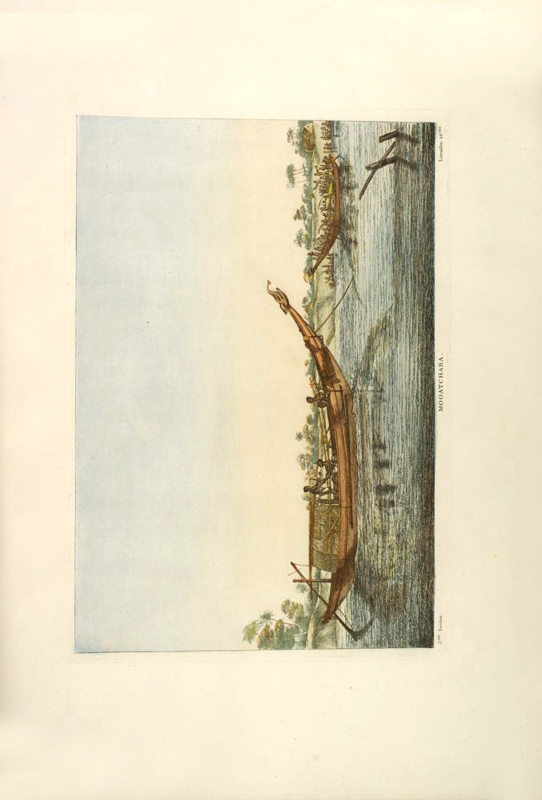
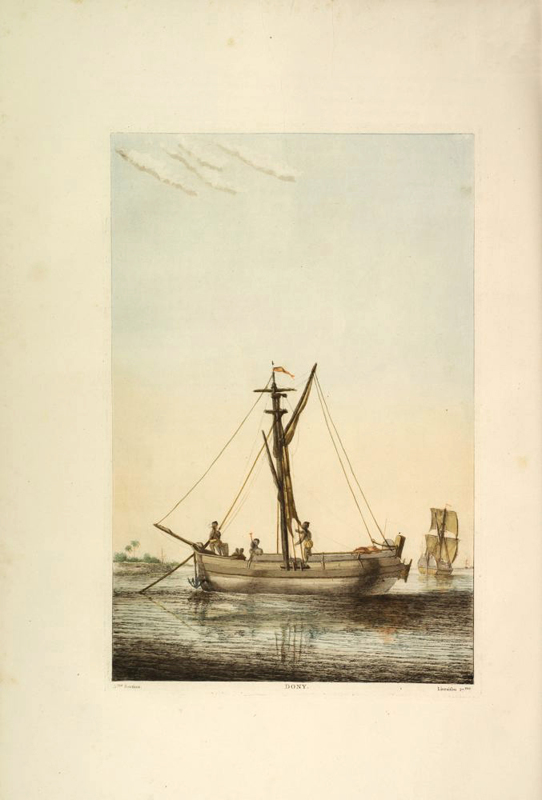
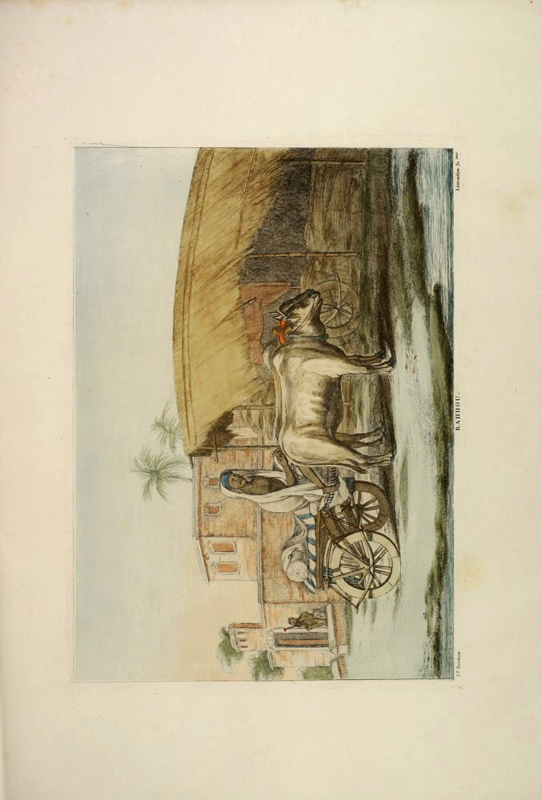
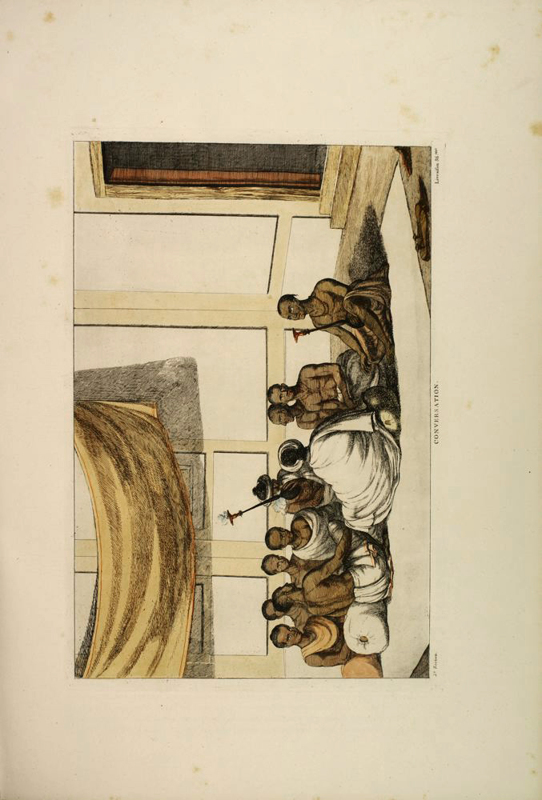
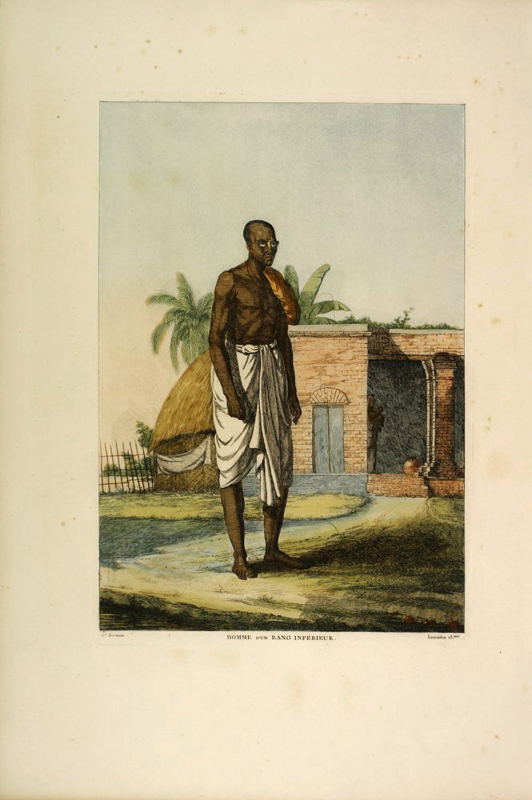
Volumes II and III only (of 4), folio (21 1/4 x 15 5/8 inches). Text in French and English. Titles with hand-coloured etched vignettes, 144 etched plates, partly printed in colours, partly hand-coloured (24 double-page). (Half-titles lacking). Mid-19th-century French black half morocco over marbled paper-covered boards, spines in seven compartments with semi-raised bands. Lettered in gilt in the second compartment, numbered in the fifth, the others uniformly panelled in blind, marbled endpapers (extremities scuffed, corners bumped, front inner hinge of vol.II split). A good selection from the rare first French edition of the first great systematic ethnographic survey of life in India illustrated with beautiful colour-printed stipple-engraved plates that ably capture the mysterious beauty of the Indian sub-continent. As a visual record of the peoples of Bengal in the late 18th century, the present work is without rival and "constructs a rich and compelling image of India two hundred years ago" (R.L. Hardgrave. A portrait of the Hindus: Balthazard Solvyns and the European image of India. [New-York, 2004], p.9). It was based largely on Solvyns's own experiences: 'I have wholly neglected the testimony of authors who have treated these subjects before me, and have given only what I have seen, or what I have myself heard from the mouth of the natives' (preliminary discourse p.21). This reliance on the first hand gives the images an immediacy that is immensely appealing to the modern eye. As is the fact that "Solvyns is not simply recording ethnographic types. He gives his figures individual character and places them in time and space, with narrative interest. In doing so, he provides the viewer with intimate access ... he combines the ethnographic with the aesthetic. He conveys 'art as information'" (R.L. Hardgrave. op.cit, p.9) Solvyns was born in Antwerp and sailed for India in 1790. He first noticed the keen interest shown by the British in Indian costumes and way of life after completing the illustrations for a report on Kyd's expedition to Penang and the Andaman Islands. In 1799, in Calcutta, he published what was in effect a preliminary edition of the present work: A Collection of Two Hundred and Fifty Coloured Etchings of the Manners, Customs, and Dress of the Hindoos. Unfortunately, the work was a financial failure largely due to the images being poorly executed by European standards. This first attempt did, however attract the attention of the eminent orientalist Sir William Jones, and it was with his enthusiastic support that Solvyns pursued his aim of issuing a work that did justice to the subject. In 1803 he left India for France, where he reworked and vastly improved the plates, he also prepared an enlarged text in both French and English (translated by his wife Mary Anne Greenwood). This reworking and rewriting took years, and it was not until 1808 that the first part of the present work was published. Over the next four years, it was issued in 48 parts with 288 color-printed plates, all beautifully finished by hand. The final result not only amply justifies Solvyn's self-belief but also was to prove to be an influential model for the so-called 'Company School' of Indian artists during the 19th century who produced suites of drawings of 'occupations' for the British serving in India. The complete work consists of four volumes made up from 48 'livraisons' or parts, which are arranged with illustrations that take in all social classes and picture the customs, festivals, costumes, and the caste system of the Hindus. The present selection includes the complete contents of volumes II and III: the second volume contains customs associated with marriage and death, different types of musical instruments, religious sects, and dances; volume three depicts various methods of smoking, modes of transportation, games, and types of boats. The text provides explanations and descriptions of the subjects of the plates. The division of the work into parts or groups of parts means that each can concentrate on an individual subject, complete in itself. In volume II, two parts are devoted to fakirs and no less than seven parts (with 42 plates) to musical instruments. A good section of volume III (parts 26 to 30) cover boats, ships, and other methods of transport, while parts 34-35 (with 12 plates) illustrate the different methods of smoking. #24306 Abbey Travel II, 430; cf. M. & W.G. Archer "Francois Balthazar Solvyns: Early Painter of Calcutta Life" in Science, Philosophy and Culture: Essays in Honour of Huymayun Kabir's sixty-second birthday, edited by Frank Moraes and others (Bombay: 1968); Brunet V, 432; Colas 2767 ('ce livre est rare et il n'existe que peu d'exemplaires complets'); cf. R.L. Hardgrave. A portrait of the Hindus: Balthazard Solvyns and the European image of India. (New-York, 2004); Vinet, 2351. Colour plates in order: Volume II. 1. Batimens Hindous (double page. 2. Homme de Distinction. 3. Homme d'un Rang Inferieur. 4. Homme de Basse Condition. 5. B'Halya. 6. Kaurty. 7. Natche (double page). 8. Femme de Distinction. 9. Femme d'un Rang Inferieur. 10. Femme de Basse Condition. 11. Goalyn. 12. Agoury. 13. Dourga-Poudjah (double page). 14. Femme en Grande Parure. 15. Ram-Djeny. 16. Hidjera. 17. Cipahys. 18. Balok. 19. Calygat (double page). 20. Porom Houngse. 21. Dondys. 22. Sounyacy. 23. Bichnoub. 24. Nanek-Pounthy. 25. Oudoubahous (double page). 26. Abd'Hout. 27. Ramanandy. 28. Bermatchary. 29. Nagous. 30. Faqyr (Priant). 31. Beyaho (double page). 32. Song & Gantah. 33. Konser. 34. Thambourah. 35. Qaplious. 36. Pennak. 37. Djadan (double page). 38. Sitar. 39. Sarenguy. 40. Sarindah. 41. Omerti. 42. Ourni. 43. Saunb'Heryah (double page). 44. D'Hauk. 45. D'Houla. 46. Mirdeng. 47. D'Houlok. 48. Thobla. 49. Choho-Gomon (double page). 50. Djourg'Hagje. 51. Tikora. 52. Pok'Haodje. 53. Naqarah. 54. Kaura. 55. Onou-Gomon (double page). 56. Domp. 57. D'Hoeirah. 58. Djougo. 59. Sourmonglah. 60. K'Hounjery. 61. Choho-Gomon (double page). 62. Kortal. 63. Kaounsy. 64. Djoltren. 65. Moudjirah. 66. Dj'Haoundjery. 67. Choho-Gomon (double page). 68. Ramsinga. 69. Baunk. 70. Sournae. 71. Tobri. 72. Bansy. Volume III. 73. Nord Ouest (double page). 74. Pinnacle. 75. Fyl-Tcharra. 76. Mourpenky. 77. Badjera. 78. Baoulya. 79. Macree (double page). 80. Pettoua. 81. Panswae. 82. Khela Dinguy. 83. Dinguy. 84. Mogatchara. 85. Penang (double page). 86. Dony. 87. Tchehely Dinguy. 88. Seringee. 89. Eykkatchy. 90 Gonga. 91. Rade de Balasore (double page). 92. Grab. 93. Bangles. 94. Pataeley. 95. Kautrey. 96. Balaum. 97. Ferry (double page). 98. Brick. 99. Wolack. 100. Kose. 101. Polouar. 102. Hola. 103. Mellopray (double page). 104. Sloup. 105. Chaloupe de Remorque. 106. Borr. 107. Goudouary. 108. Yet Dinguy. 109. Elephants & Chameaux (double page). 110. Routh. 111. Gary. 112. Ekka. 113. Rahhou. 114. Hakery. 115. Route dans le Bengale (double page). 116. T'Chanpal Palanquin. 117. D'Jehalledar. 118. Mohhafa. 119. D'Houly. 120. Ladou-Byl. 121. Ville Noire de Calcutta (double page). 122. Cheval richement caparaconne et Tattou. 123. Mejanah. 124. Long Palanquin. 125. Boutcha. 126. Chaise Palanquin. 127. Ecole (double page). 128. Nariel Houka. 129. Nariel No.2 130. Nariel No.3 131. Nariel No.4 132. Chillim. 133. Bazar (double page). 134. Houka a tuyau. 135. Gourgoury. 136. Kalian. 137. T'Cherout. 138. Pan. 139. Edifices Europeens (double page). 140. Conversation. 141. Jongleurs. 142. Jeux. 143. Nations differentes. 144. Navires.