
If you would like to get in touch, please feel free to contact: email hidden; JavaScript is required
Browse collection
- Full collection
- 18th Century & earlier
- Ackermann
- Africa
- Alken
- Animals
- Arabasia
- Architecture/Mansions
- Art
- Australasia
- Botany
- British Isles
- Caricatures
- Children
- China
- Chromo added colour
- Chromolithographs
- Conchology
- Costume
- Cruikshank
- Culture/Lifestyle
- Dutch
- East European
- Far East
- France
- Furniture/Antiques
- General
- Germany
- Grandville
- Heraldry
- History
- History - England
- History - Europe
- Holy Land
- India
- India - sepia
- Islam
- Italy
- Japan
- Literature
- London
- Manuscript
- Map
- Military
- Monnier
- Natural history
- Pastimes
- Pochoir
- Polar regions
- Portraits
- Religious/Christian
- Religious/other
- Rowlandson
- Russia
- Science
- Scrapbook
- Sepia
- South America
- Sports/Hunting
- Stamps
- Swiss
- The Americas
- Theatre
- Travel/Scenery
- Watercolours
- World
ELLIS, Sir Henry.
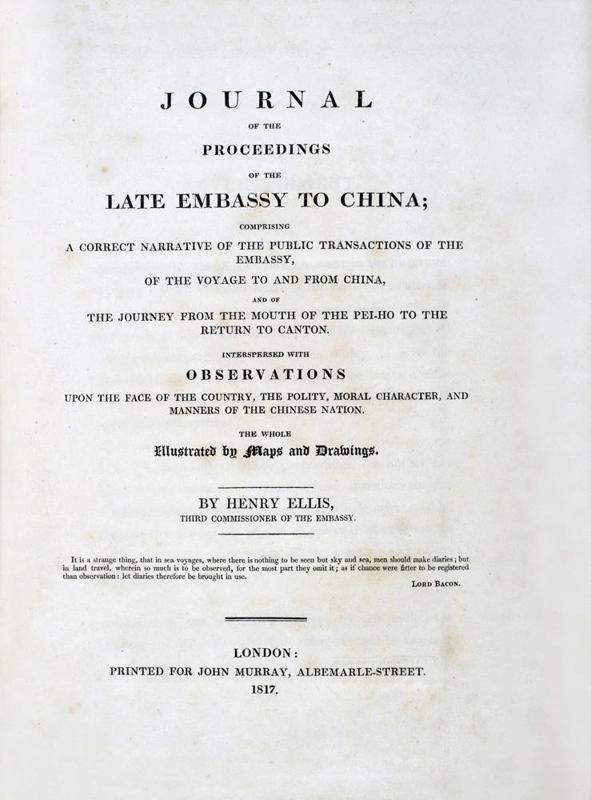
Journal of the Proceedings of the Late Embassy to China; Comprising a Correct Narrative of the Public Transactions of the Embassy, of the Voyage to and from China
An account of the short-lived embassy to China. Sir Henry Ellis (1788-1855) was a career diplomat who joined the East India Company in 1805. In 1815 the English Government sent an envoy under the command of Lord Amherst to go to Peking to negotiate with Emperor Kea K’ing on behalf of the British subjects suffering under his rule. In 1816 Ellis joined the mission as Third Commissioner. Ellis was unimpressed by the Chinese, whom he considered xenophobic, ultra-tradition, and uninteresting. The mission ended in failure after Amherst refused to ‘kow-tow’ (nine strikes of the forehead on the ground) to the emperor. On the return voyage, their ship, the Alceste, was wrecked off the coast of Sumatra. Ellis and his companions were rescued by an open boat. The ship stopped at St. Helena and allowed Ellis the opportunity to interview Napoleon Boneparte. Napoleon later disputed Ellis’s account of the meeting. On the journey out, the Alceste had visited Madeira, Rio de Janeiro, Cape Town, Java, and Macao.


- Published
- London: John Murray, 1817
- References
- Abbey Travel II 536. Hill 413. Tooley 208. Prideaux 250.
- Plates
- 7
- Binding/Size
- M=4to
- Value
- 0-5000
- Published
- London: John Murray, 1817
- Ref
- 753
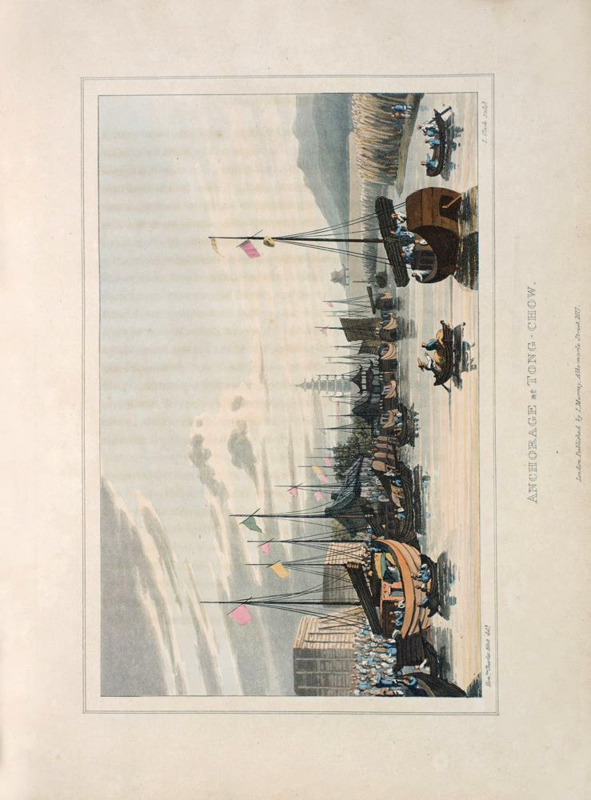
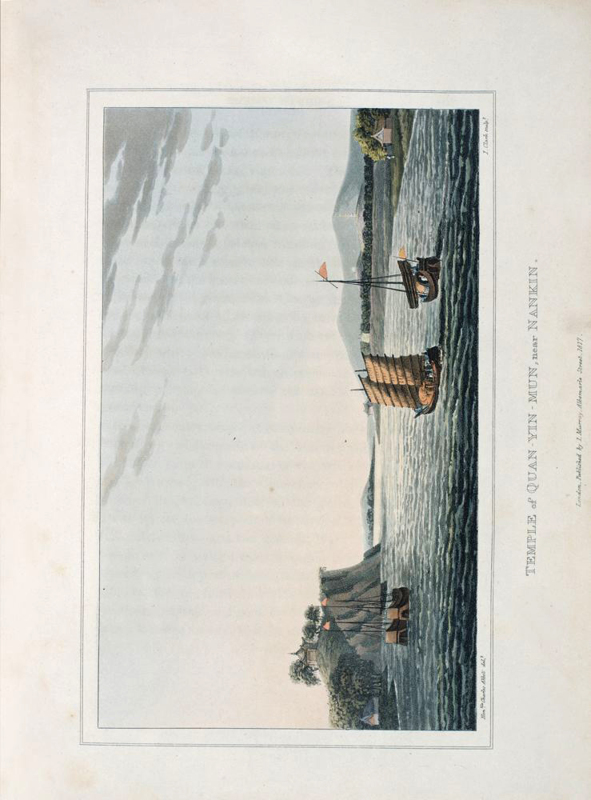
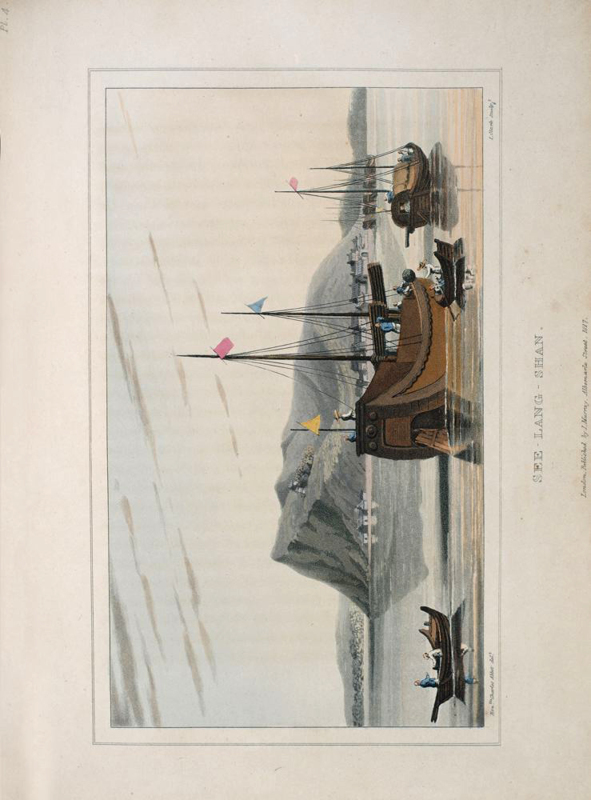
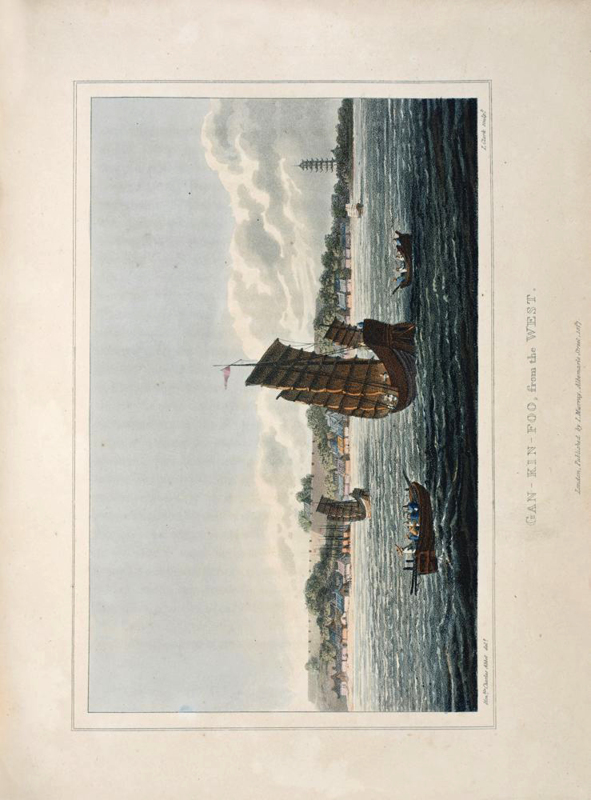
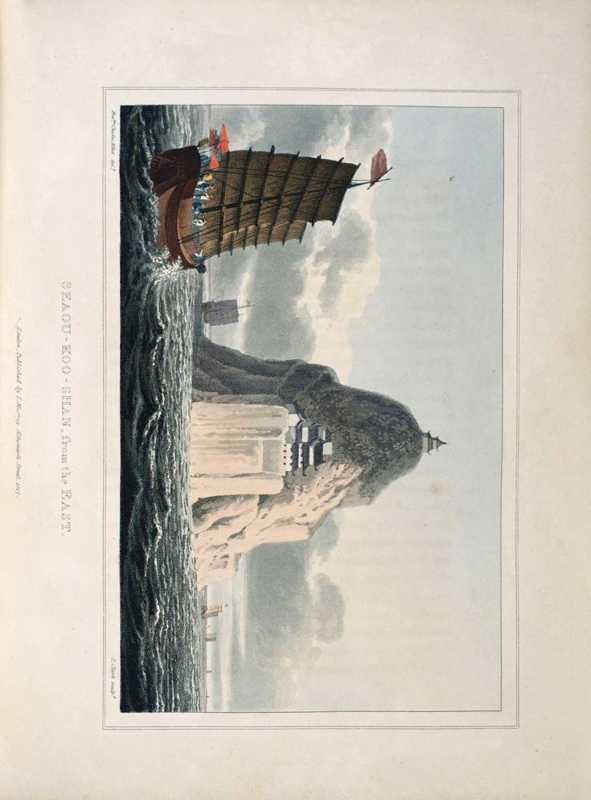
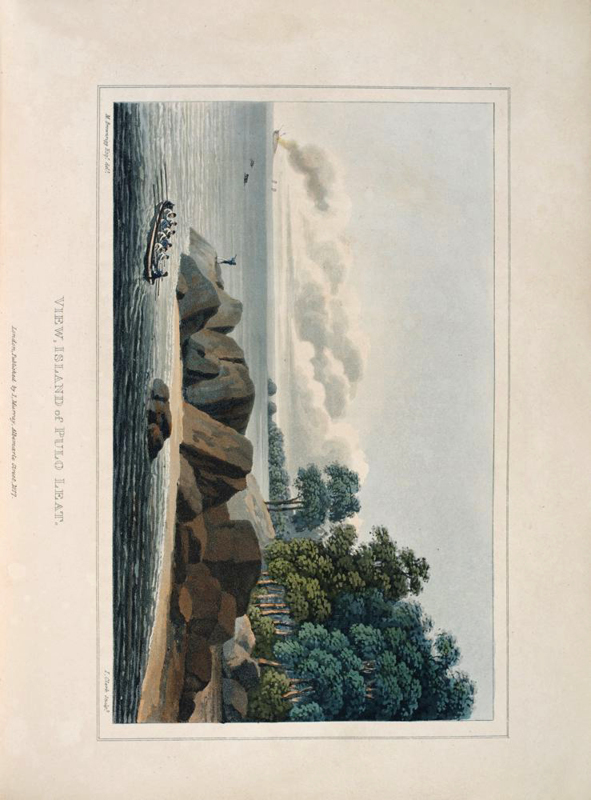
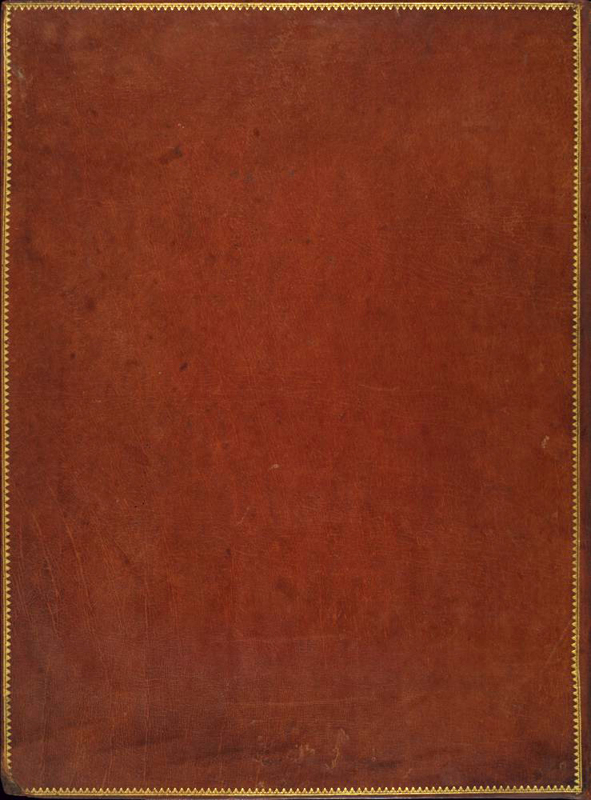
Quarto contemporary full brown calf re-backed at an early date red morocco spine labels all edges gilt. The First edition of this early mission to China is splendidly illustrated with seven beautiful hand-coloured aquatints depicting the Emperor's summer palace at Tien-Sing, the Tong-Chow harbour, a temple near Nankin, the island of Pula Leat, and views of other harbour cities as well as three maps (one large folding) in contemporary calf. After the peace of 1815, the English government turned their attention to the complaints of injustice and exactions on the part of the Chinese mandarins, which reached them from time to time from the English merchants at Canton. Lord Amherst was chosen to proceed to Peking as a British envoy to represent to Emperor Kea K'ing the wrongs which British subjects were suffering under his rule… Ellis, a diplomat, accompanied Amherst in his embassy to China in the capacity of the third commissioner in 1816. A mission to China was then so rare an event in the history of Europe that Ellis published in 1817 an official narrative of the journey and transactions of the embassy" (DNB). J. Clark prepared the detailed aquatint plates from the drawings of Ellis' friend Charles Abbot. With errata sheet at rear. Book label. Beautiful hand-coloured plates are vivid and pleasing, but mild browning and offsetting to maps. The binding is quite handsome. An exceptional copy. Colour plates as listed. 1. Sumer Palace of the Emperor, opposite the City of Tien-Sing. 2. Anchorage at Tong-Chow. 3. Temple of Quan-Yin-Mun, near Nankin. 4. See - Lang - Shan. 5. Gan - Kin - Foo, from the West. 6. Seaou - Koo - Shan, from the Est. 7. View, Island of Pulo Leat.
