If you would like to get in touch, please feel free to contact: email hidden; JavaScript is required
Browse collection
- Full collection
- 18th Century & earlier
- Ackermann
- Africa
- Alken
- Animals
- Arabasia
- Architecture/Mansions
- Art
- Australasia
- Botany
- British Isles
- Caricatures
- Children
- China
- Chromo added colour
- Chromolithographs
- Conchology
- Costume
- Cruikshank
- Culture/Lifestyle
- Dutch
- East European
- Far East
- France
- Furniture/Antiques
- General
- Germany
- Grandville
- Heraldry
- History
- History - England
- History - Europe
- Holy Land
- India
- India - sepia
- Islam
- Italy
- Japan
- Literature
- London
- Manuscript
- Map
- Military
- Monnier
- Natural history
- Pastimes
- Pochoir
- Polar regions
- Portraits
- Religious/Christian
- Religious/other
- Rowlandson
- Russia
- Science
- Scrapbook
- Sepia
- South America
- Sports/Hunting
- Stamps
- Swiss
- The Americas
- Theatre
- Travel/Scenery
- Watercolours
- World
HINCKS, William.
Irish Linen Industry.
A spectacular set of plates depicting Linen production during the 18th century in Ireland.


- Published
- London, R. Pollard 1791 [1808]
- References
- Abbey Life 444.
- Plates
- 12
- Binding/Size
- L=FOLIO
- Value
- 5001-25000
- Published
- London, R. Pollard 1791 [1808]
- Ref
- 1652
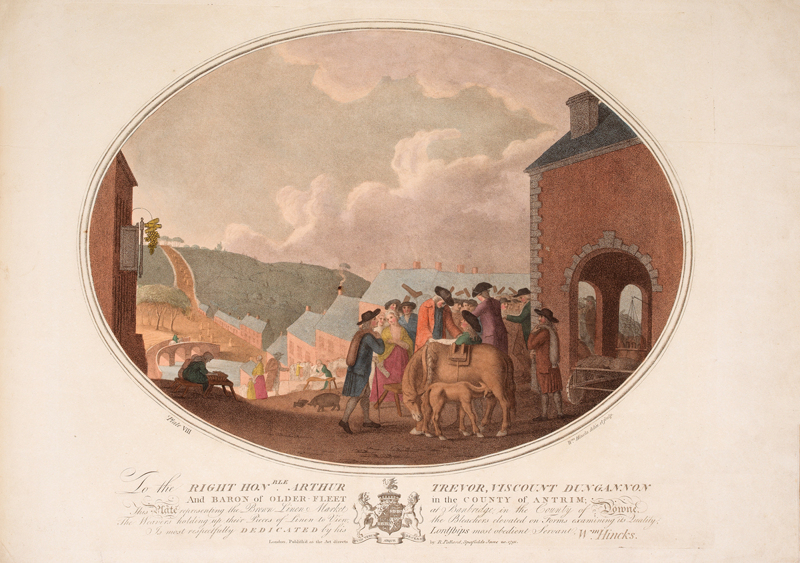
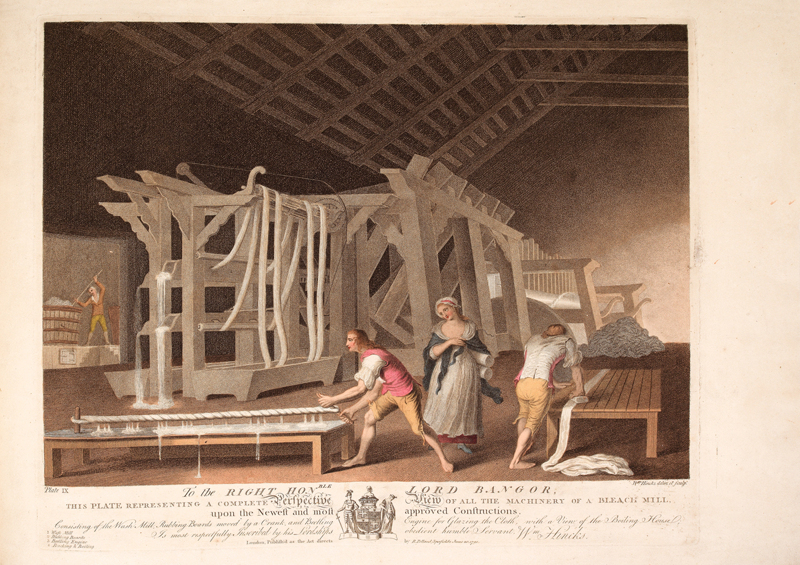
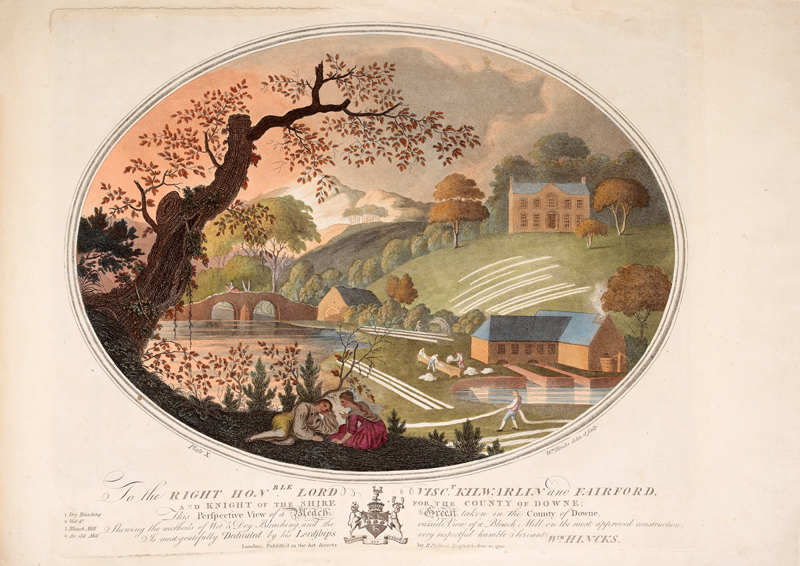
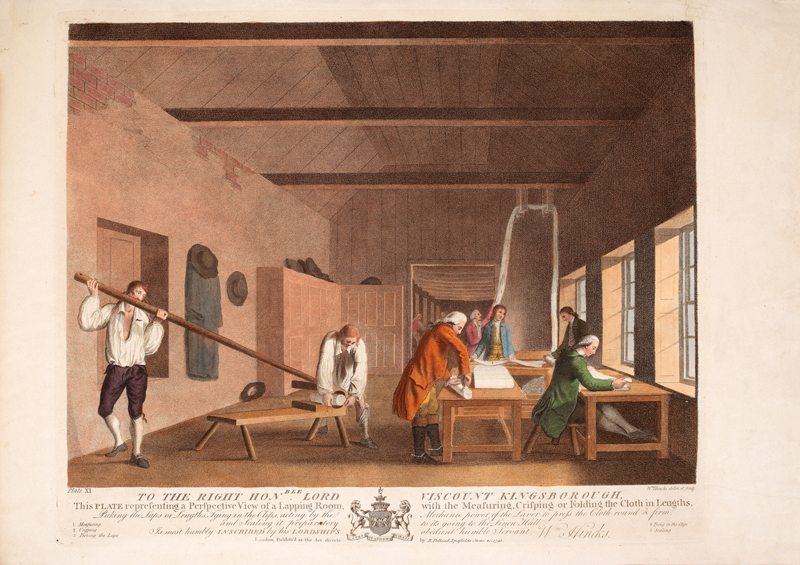
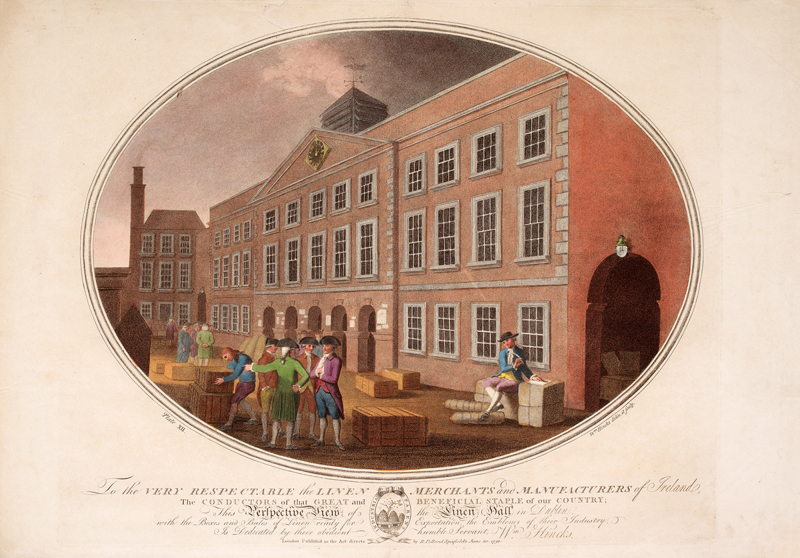
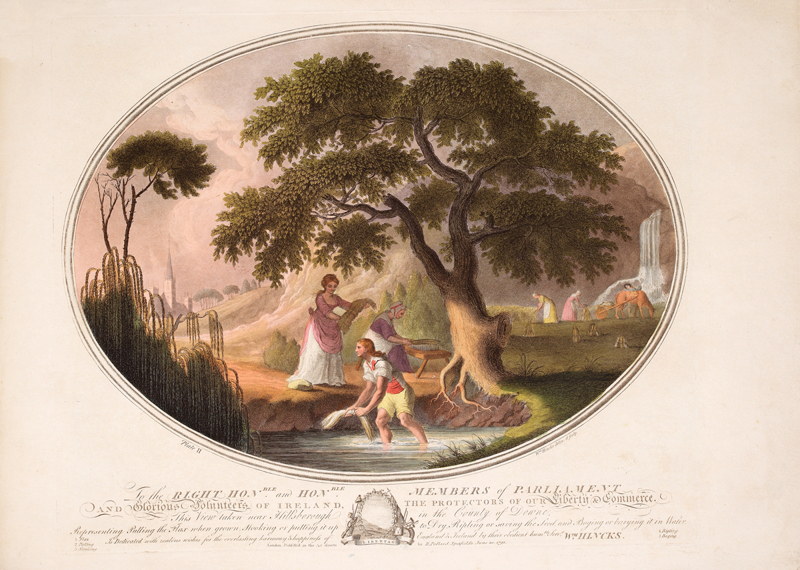
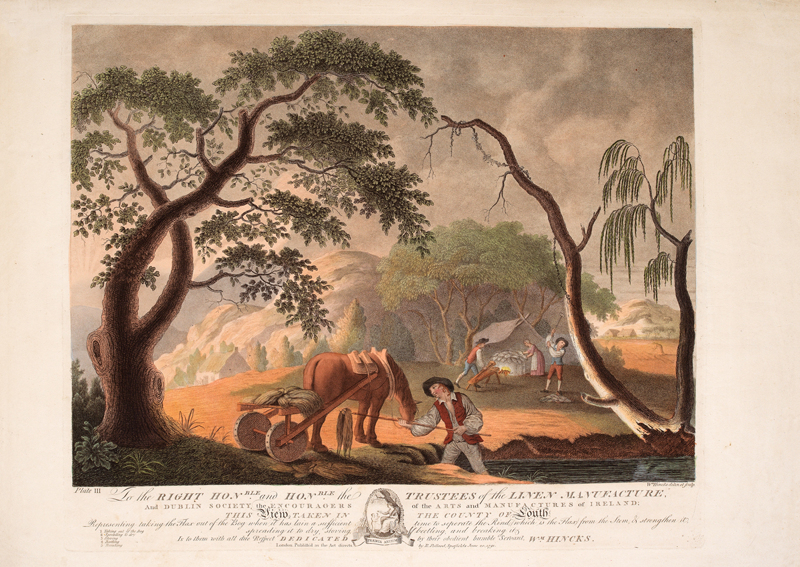
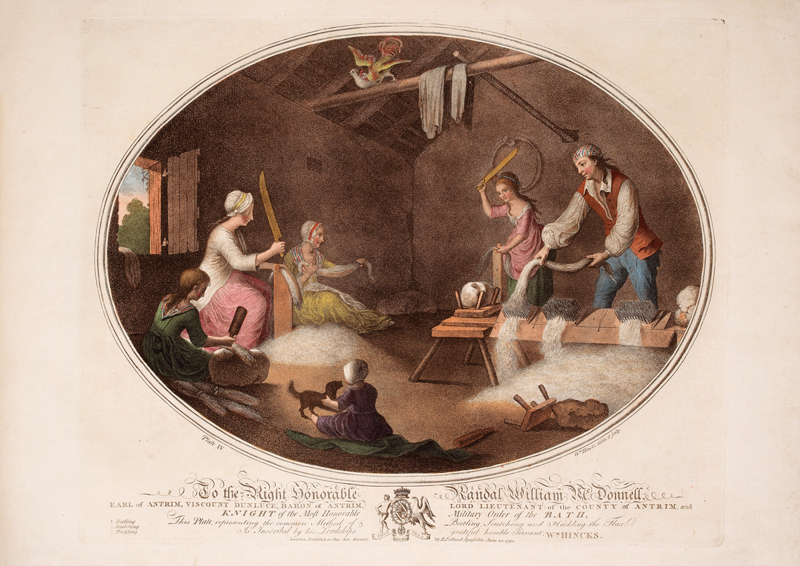
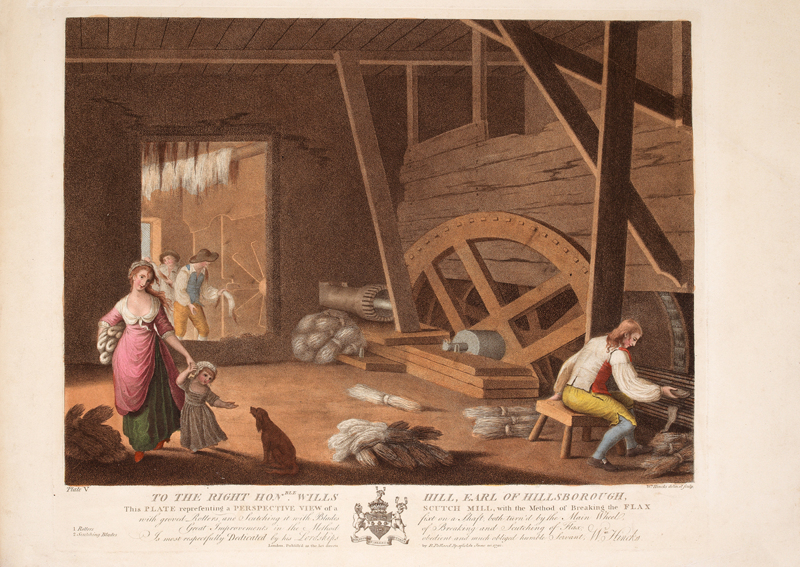
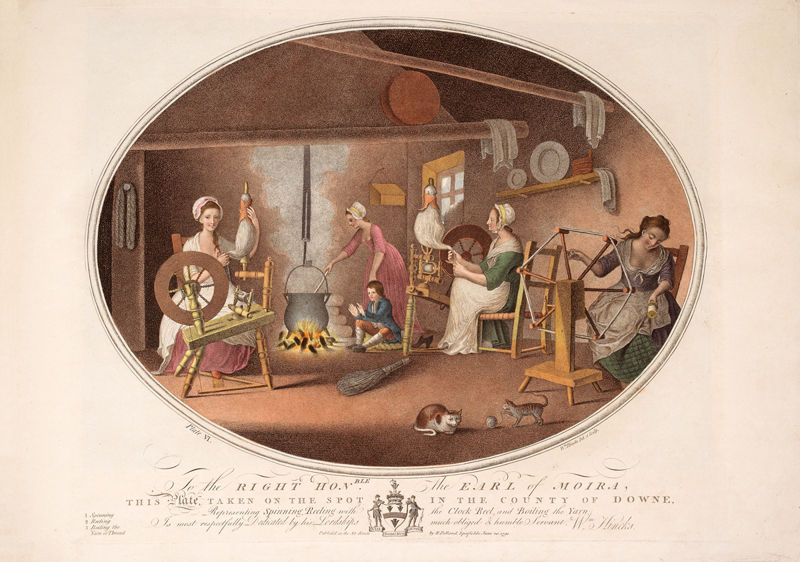
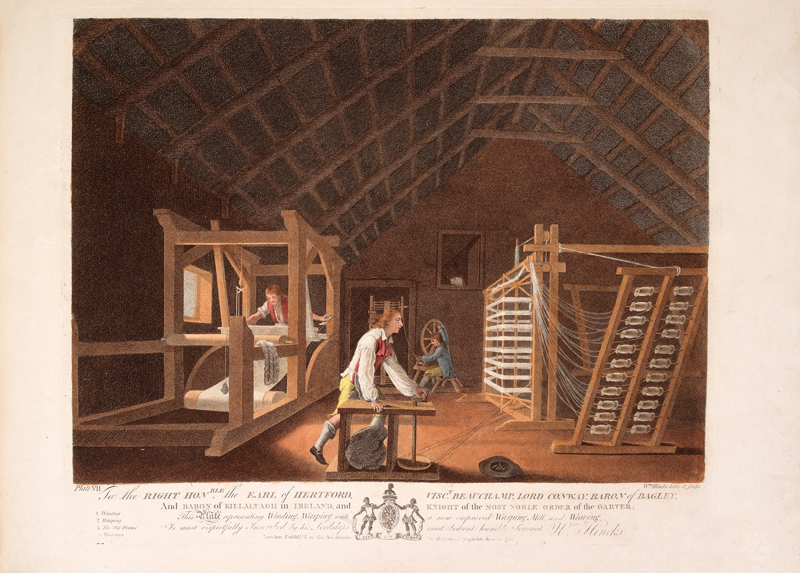
Oblong folio. Twelve hand coloured stipple engravings by William Hincks, all numbered 1-12. All the plates bear an engraved dedication at the foot of each print above the title. Watermarked 1808. Bound in later mauve cloth, leather spine, black leather label on front cover, lettered in gilt. A fine set of engravings representing the various processes used in the manufacture of linen in the north of Ireland, from the sowing of flax to the packing for export the finished article at the Linen Hall in Dublin. The set was first issued in black & white, and then republished in colour in 1791 by R. Pollard in London. William Hincks was a portrait painter and engraver who was born in Watford, who spent his early life apprenticed to a blacksmith. He was self-taught as an artist. In 1781 he sent a crayon portrait to the Royal Academy, and continued to exhibit there at intervals until 1797 - his contributions being mainly miniatures. Colour Plates in Order. 1. This view taken near Scaroa in the County of Downe, representing Ploughing, Sowing the Flax Seed and Harrowing. 2. This view taken near Hillsborough in the County of Downe, representing Pulling the Flax when grown, Stooking or putting it up to Dry, Ripling or Saving the Seed, and Boging or burying it in Water. 3. This view taken in the County of Louth representing taking the Flax out of the Bog when it has lain a sufficient time to separate the Rind (Flax)from the Stem, & strengthen it, spreading it to dry, stoving, beetling, and breaking it. 4. This Plate representing the common Method of Beetling, Scutching and Hacking the Flax. 5. This Plate representing a Perspective View of a Scutch Mill, with the Method of breaking the Flax with groved Rollers and Scutching it with Blades fixt on a Shaft, both turn'd by the Main Wheel. Great Improvements in the Method of Breaking and Scutching of Flax. 6. This Plate taken on the Spot in the County of Downe, representing Spinning, Reeling with the Clock Reel, and Boiling the Yarn. 7. This Plate representing Winding, Warping with a new improved Warping Mill, and Weaving. 8. This Plate representing the Brown Linen Market at Banbridge in the County of Downe. The Weavers holding up their Pieces of Linen to View, the Bleachers elevated on Forms examining its Quality. 9. This Plate representing a Complete Perspective View of all the Machinery of a Bleach Mill, upon the Newest and most approved Constructions. Consisting of the Wash Mill, Rubbing Boards moved by a Crank, and Beetling Engine for Glazing the Cloth, with a View of the Boiling House. 10. This Perspective View of a Bleach Green taken in the County of Downe; Shewing the methods of Wet & Dry Bleaching and the outside view of a Bleach Mill, on the most approved construction. 11. This Plate representing a Perspective View of a Lapping Room, with the Measuring, Crisping of Folding the Cloth in Lengths, Picking the Laps or Lengths, Tying in the Clips, acting by the Mechanic power of the laver to press the Cloth. round & firm, and sealing it preparatory to its going to the Linen Hall. 12. This Perspective View of the Linen Hall in Dublin with the Boxes and bales of Linen ready for Exportation, the Emblems of their Industry.