If you would like to get in touch, please feel free to contact: email hidden; JavaScript is required
Browse collection
- Full collection
- 18th Century & earlier
- Ackermann
- Africa
- Alken
- Animals
- Arabasia
- Architecture/Mansions
- Art
- Australasia
- Botany
- British Isles
- Caricatures
- Children
- China
- Chromo added colour
- Chromolithographs
- Conchology
- Costume
- Cruikshank
- Culture/Lifestyle
- Dutch
- East European
- Far East
- France
- Furniture/Antiques
- General
- Germany
- Grandville
- Heraldry
- History
- History - England
- History - Europe
- Holy Land
- India
- India - sepia
- Islam
- Italy
- Japan
- Literature
- London
- Manuscript
- Map
- Military
- Monnier
- Natural history
- Pastimes
- Pochoir
- Polar regions
- Portraits
- Religious/Christian
- Religious/other
- Rowlandson
- Russia
- Science
- Scrapbook
- Sepia
- South America
- Sports/Hunting
- Stamps
- Swiss
- The Americas
- Theatre
- Travel/Scenery
- Watercolours
- World
REPTON, Humphrey.
John Adey [and] George Stanley.
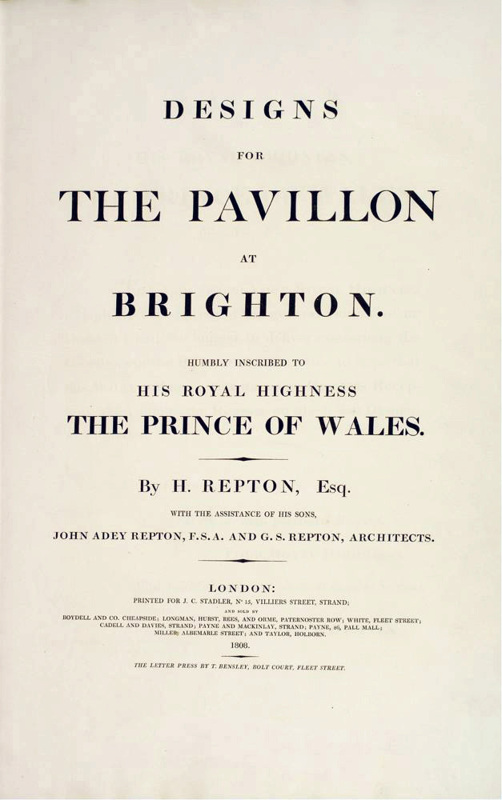
Designs for the Pavilion at Brighton.
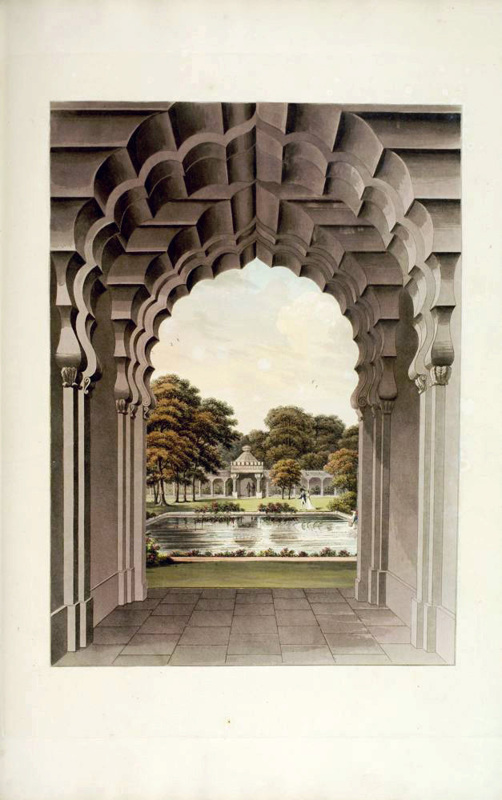
Repton had long sought Royal patronage and so saw the commission by the Prince of Wales to propose designs for the refashioning of the Royal Pavilion as one the greatest honours of his career. Although he enlisted the help of all three of his sons his designs were not implemented and he received no money for the work; the designs by John Nash which were eventually built though, were partly based on Repton's and this book remains as a tribute to his vision.




- Published
- London: T. Bensley, for J.C. Stadler, to be sold by Boydell and Co. and other, 1808.
- References
- Abbey Scenery 55; Tooley 396 (variant title); Bobins 709.
- Plates
- 20
- Binding/Size
- L=FOLIO
- Value
- 0-5000
- Published
- London: T. Bensley, for J.C. Stadler, to be sold by Boydell and Co. and other, 1808.
- Ref
- 5239
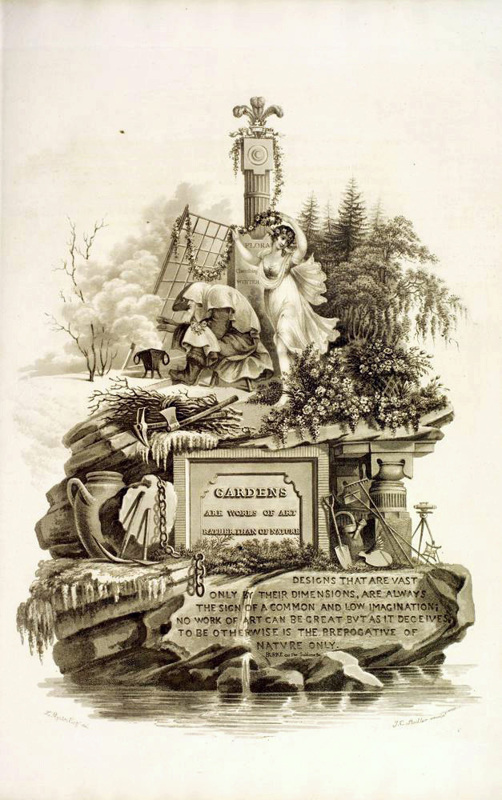
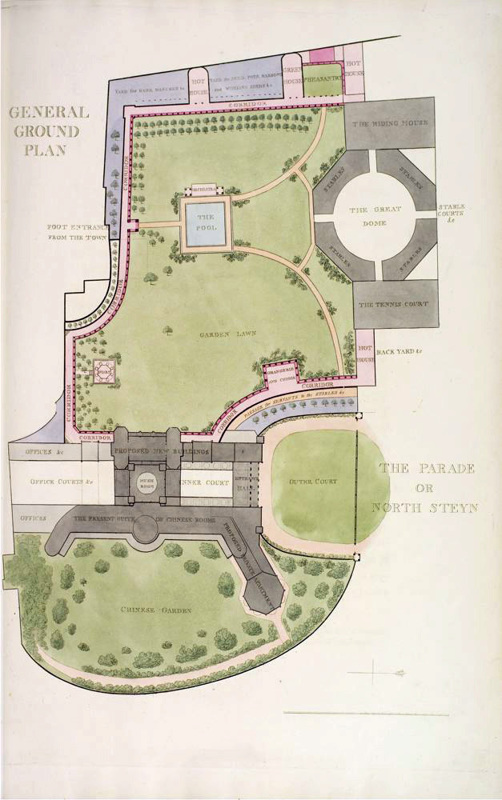
FIRST EDITION. Folio, 20 plates and illustrations, including an engraved hand-coloured plan; 19 of these in aquatint, nine hand-coloured; six of these with oversleeps, one with over page, one folding, two with sepia wash - all by Stadler after Repton. 20th century half calf over marbled sides. Gilt to spine. Bookplates of 'George Harwood' and 'Willoughby' to front pastedown. Aided by his sons, Repton published these plans (in what is perhaps his most beautiful book) after the original scheme had been abandoned for lack of funds. Not only did Nash plagiarise many of Repton's specific ideas, but the general oriental character of the Pavilion is also due to Repton's belief that Indian architecture would become the force in England that Italian architecture had been in the past. As Hussey points out, if it were not for the triumph of Gothic, Repton might have become the English Pugin." However, as published, Designs for the Pavilion is a magnificent record of Repton's enterprise, vision, and imagination. Coloured plates in order: 1. Frontispiece (sepia). 2. General Ground Plan. 3. View of the Stable Front seen from the Garden. 4. Overslip for above. 5. View from The Dome. 6. Overslip for above. 7. West - Front of the Pavilion (sepia). 8. The General View from the Pavillon. 9. Overslip for above. 10. Dining Room (forming part of page 36, in sepia). 11. Corridor (forming part of page 39). 12. Design for Orangerie. 13. Overslip for above. 14. The Pheasantry. 15. View from the proposed private apartment. 16. Overslip for above, forming part of page 41). 17. West - Front of the Pavillon towards the Garden. 18. North - Front towards the Parade (folding plate) 19-20. Overslips for above.