If you would like to get in touch, please feel free to contact: email hidden; JavaScript is required
Browse collection
- Full collection
- 18th Century & earlier
- Ackermann
- Africa
- Alken
- Animals
- Arabasia
- Architecture/Mansions
- Art
- Australasia
- Botany
- British Isles
- Caricatures
- Children
- China
- Chromo added colour
- Chromolithographs
- Conchology
- Costume
- Cruikshank
- Culture/Lifestyle
- Dutch
- East European
- Far East
- France
- Furniture/Antiques
- General
- Germany
- Grandville
- Heraldry
- History
- History - England
- History - Europe
- Holy Land
- India
- India - sepia
- Islam
- Italy
- Japan
- Literature
- London
- Manuscript
- Map
- Military
- Monnier
- Natural history
- Pastimes
- Pochoir
- Polar regions
- Portraits
- Religious/Christian
- Religious/other
- Rowlandson
- Russia
- Science
- Scrapbook
- Sepia
- South America
- Sports/Hunting
- Stamps
- Swiss
- The Americas
- Theatre
- Travel/Scenery
- Watercolours
- World
MERIAN, Matthaeus.
Hieronymus Hess. (1799-1850)
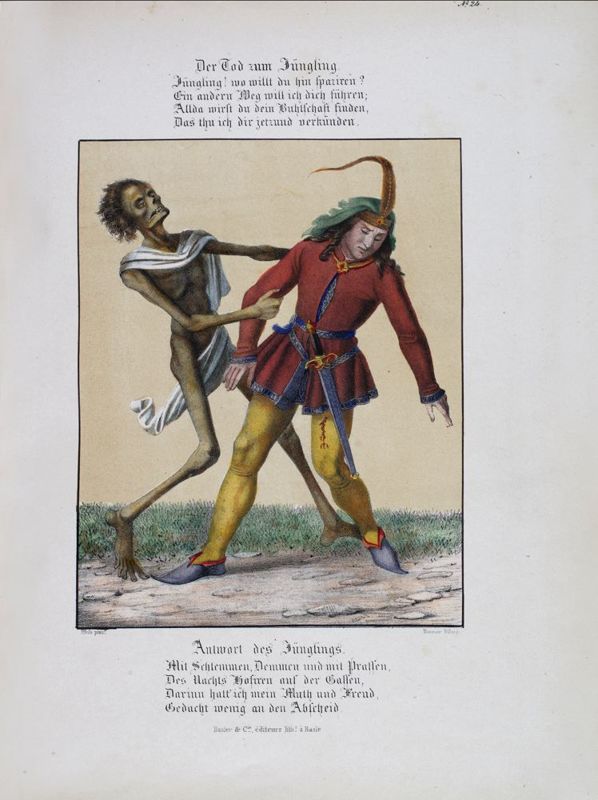
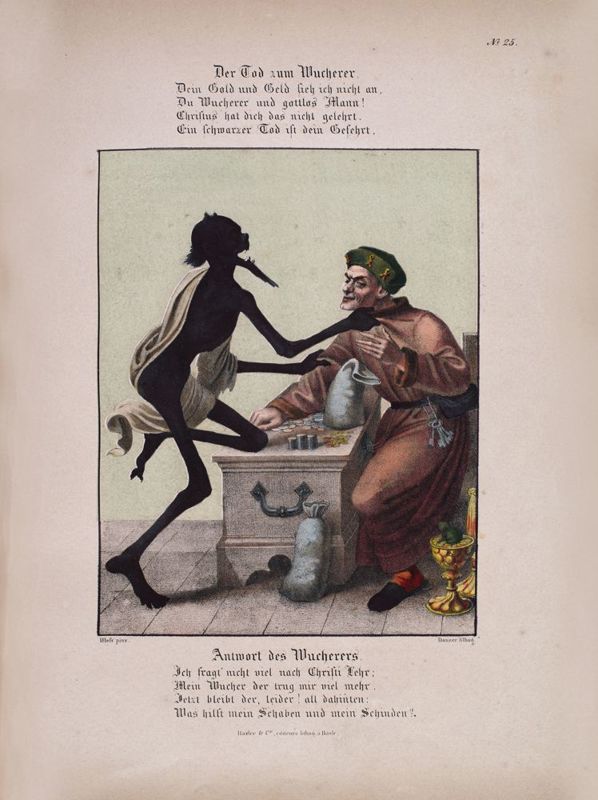
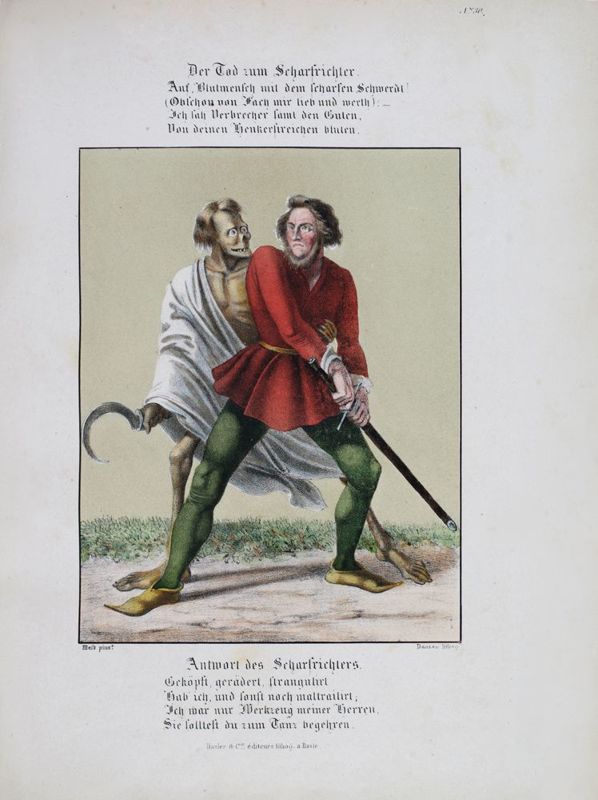
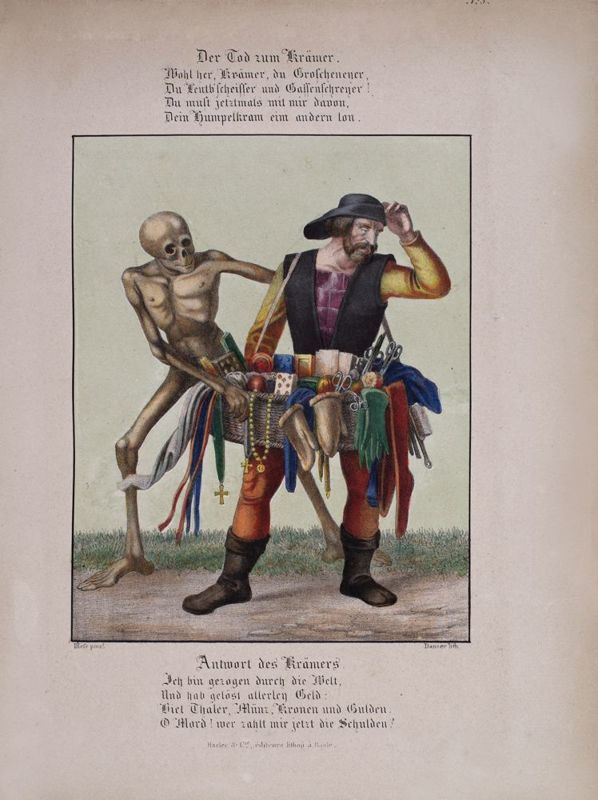
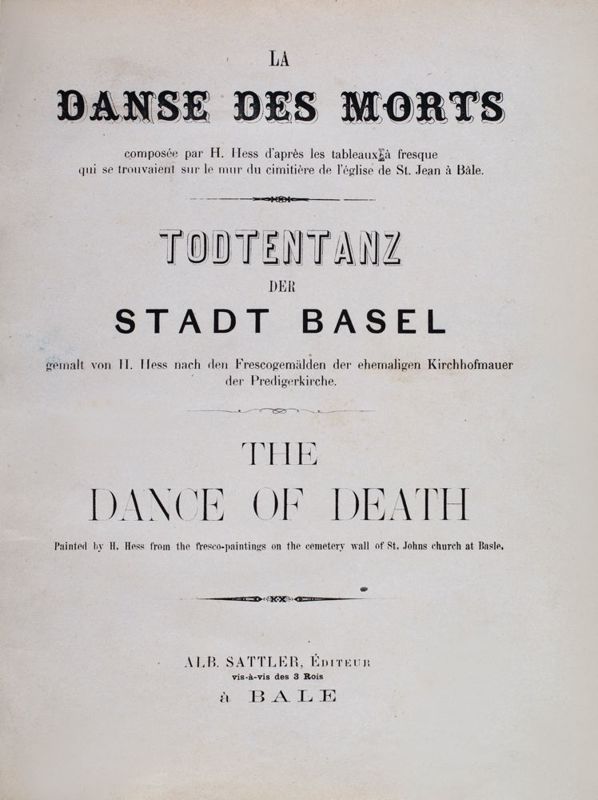
Dance of Death-La Danse Des Morts...
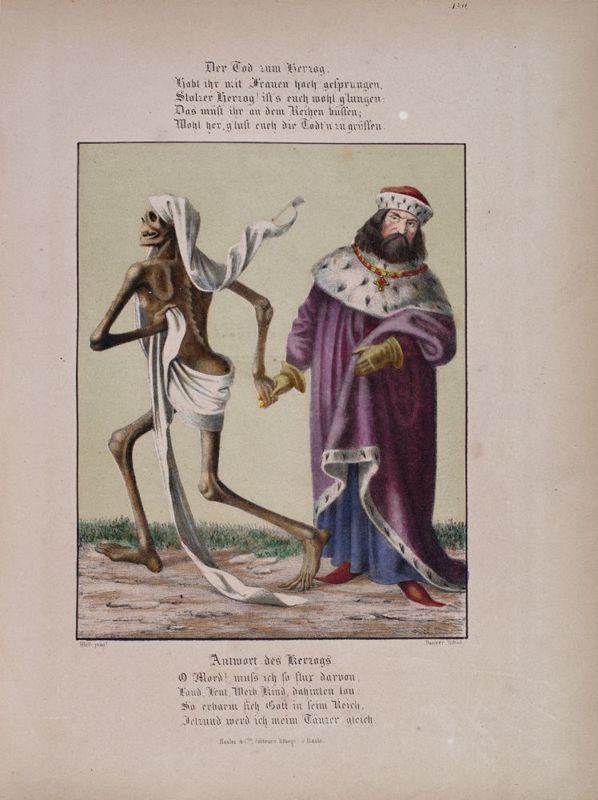
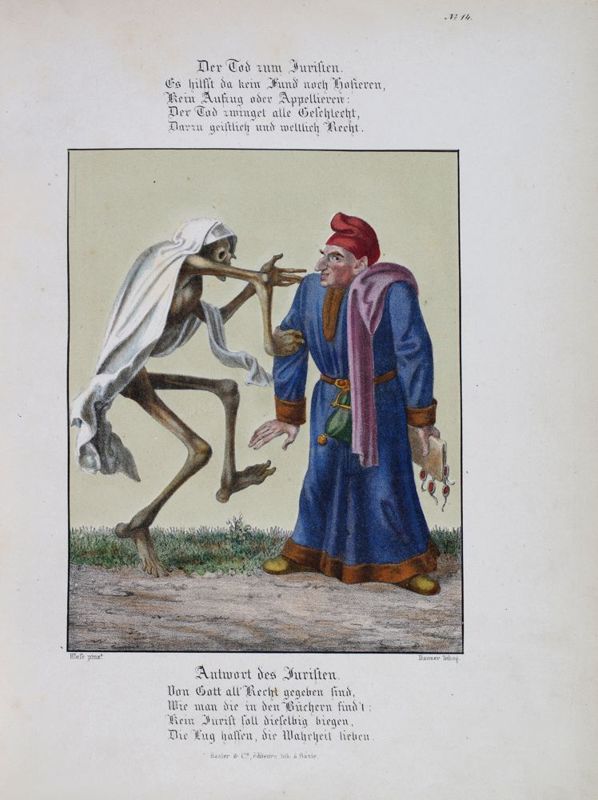
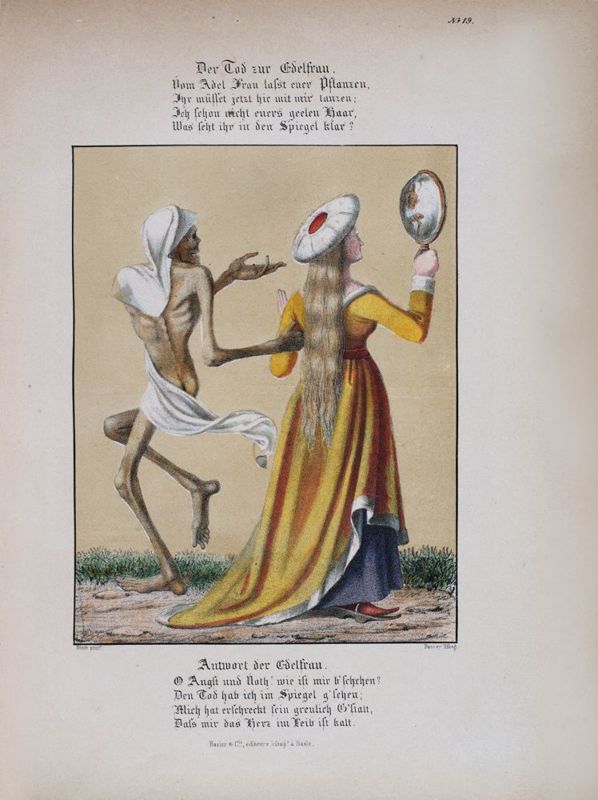
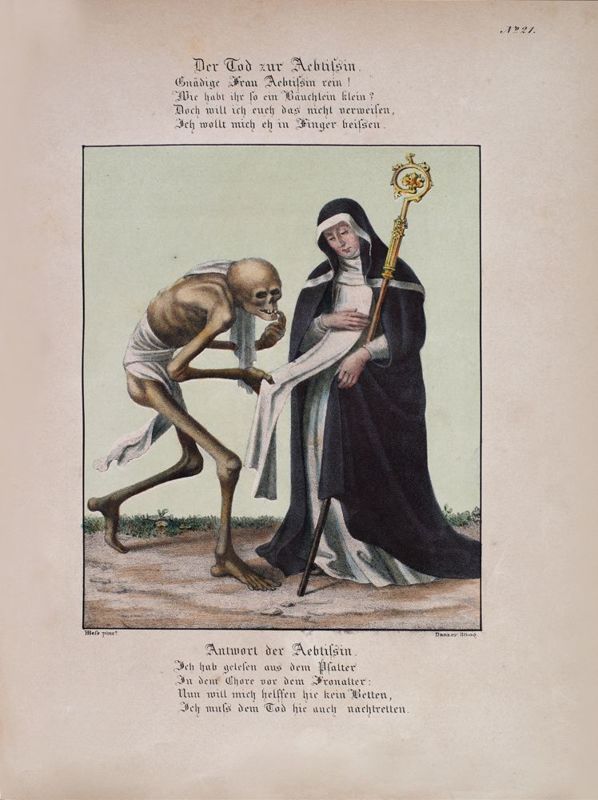
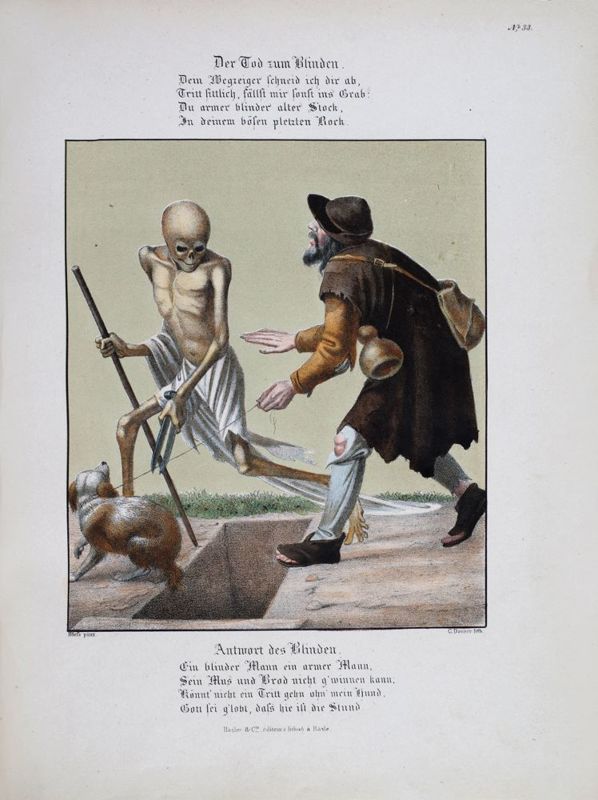
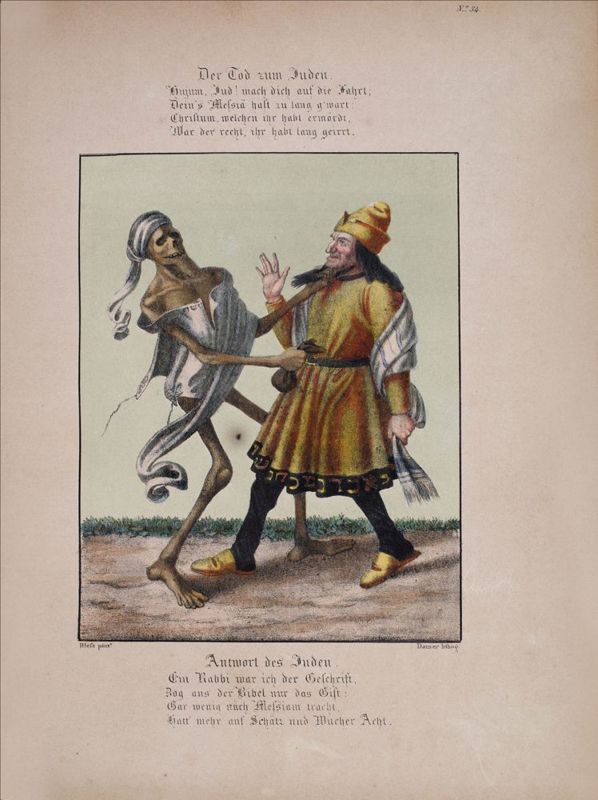
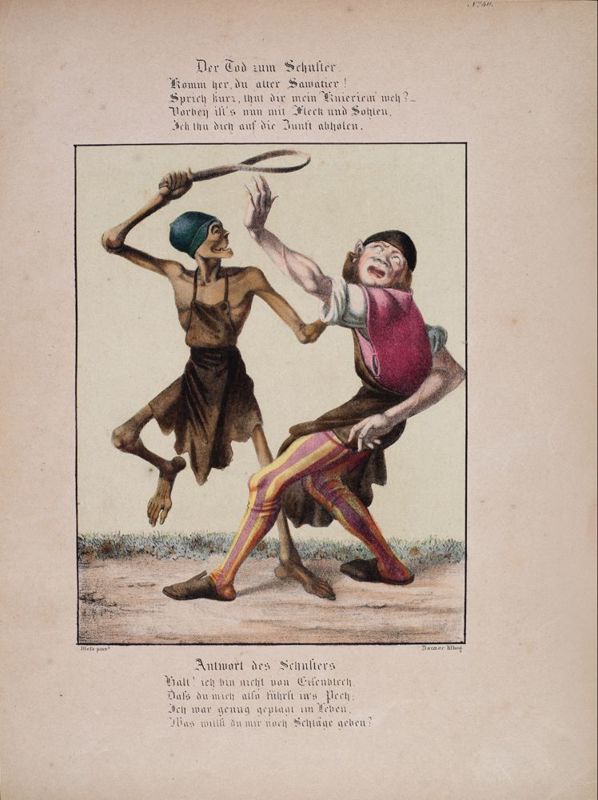
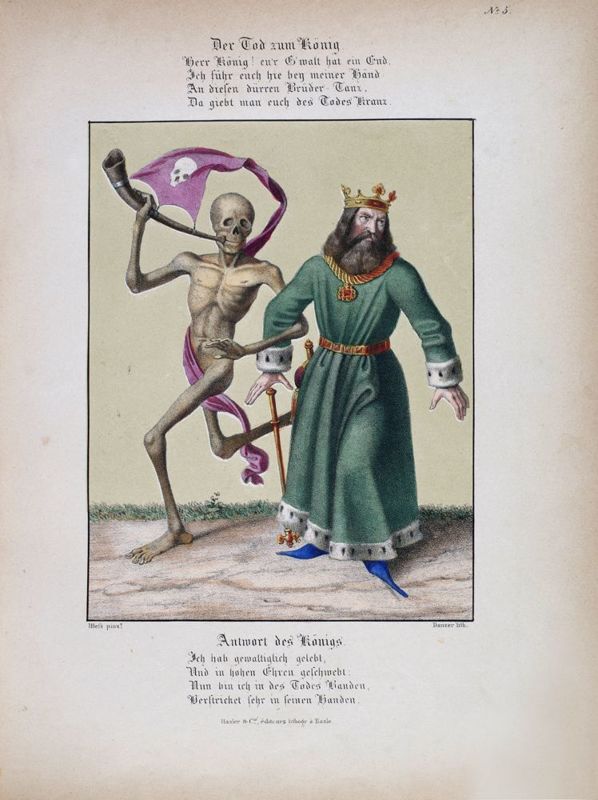
The 'Dance of Death,' also known as the 'Dance Macabre,' is an allegory on the universality of death. The portraits in the 'dance' had their physiognomy and faces modeled after well-known 17th-century citizens of Basle.





- Published
- Bale: A[lbert] Sattler, [no date]
- References
- Brun II, 54; Longchamp 780; Pfister, 'Tod und Totemtanze' (1927).
- Plates
- 40
- Binding/Size
- M=4to
- Value
- 0-5000
- Published
- Bale: A[lbert] Sattler, [no date]
- Ref
- 170
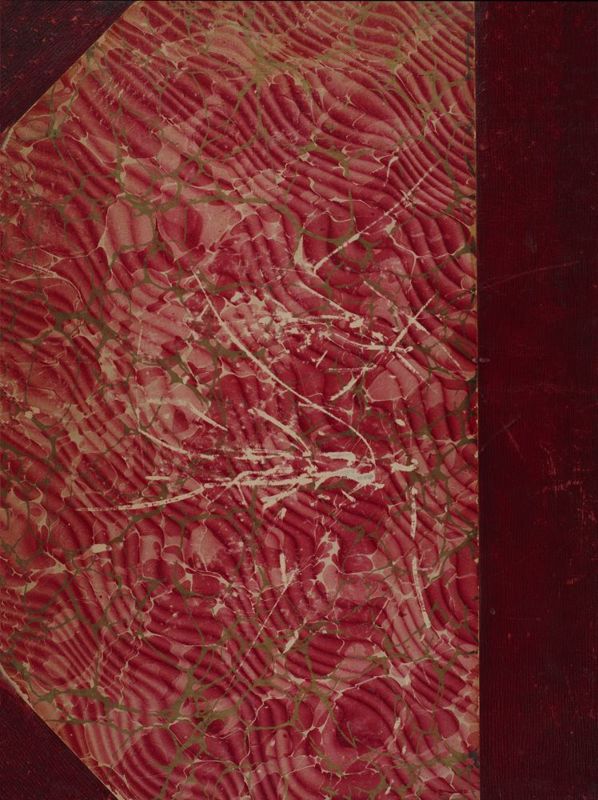
4to. FIRST EDITION, SECOND ISSUE. Half red leather rebacked over marbled boards. Title label to spine. Corners and edges worn and scuffed. Coloured, floral endpapers. Forty hand-coloured lithographic plates by H. Hess after Merian's 17th-century drawings of the frescoes on the cemetery walls of the church of St. John at Basle, which were initially painted in 1312. Unusual and gripping variations on the 'Dance of Death' theme, which increased in popularity after the "Black Plague" of the 14th century. German verse on each plate with French and English translations on facing pages. In Plate 35, Death seizes a Chinese man instead of the Traditional Turk, and the verse refers explicitly to the British Opium Wars, the second of which took place in 1856: "My opium it is inspiring, but brings me death by English firing."The artist includes his self-portrait in plate 38 and is called by Death. Susan Minns 1922 auction catalogue no.36. "fine lithographic reproduction in colour." The lithographs were first edited ca. 1840 by Hasler in Basel; they were later taken over by Salter. Slight browning throughout. RARE. Coloured plates in order: 1. A pair of Skeletons [Death] play the trumpet and bang a drum outside a House of Death. 2. Death to the Pope. 3. Death to the Emperor. 4. Death to the Empress. 5. Death to the King. 6. Death to the Queen. 7. Death to the Cardinal. 8. Death to the Bishop. 9. Death to the Duke. 10. Death to the Duchess. 11. Death to the Earl. 12. Death to the Abbot. 13. Death to the Knight. 14. Death to the Lawyer. 15. Death to the Alderman. 16. Death to the Canon. 17. Death to the Doctor. 18. Death to the Nobleman. 19. Death to the Lady. 20. Death to the Merchant. 21. Death to the Abbess. 22. Death to the Cripple. 23. Death to the Hermit. 24. Death to the Young Man. 25. Death to the Usurer. 26. Death to the Maiden. 27. Death to the Minstrel. 28. Death to the Herald. 29. Death to the Judge. 30. Death to the Sheriff. 31. Death to the Jester. 32. Death to the Pedlar. 33. Death to the Blind Man. 34. Death to the Jew. 35. Death to the Chinese. 36. Death to the Cook. 37. Death to the Peasant. 38. Death to the Painter. 39. Death to the Landlord. 40. Death to the Shoemaker.