
If you would like to get in touch, please feel free to contact: email hidden; JavaScript is required
Browse collection
- Full collection
- 18th Century & earlier
- Ackermann
- Africa
- Alken
- Animals
- Arabasia
- Architecture/Mansions
- Art
- Australasia
- Botany
- British Isles
- Caricatures
- Children
- China
- Chromo added colour
- Chromolithographs
- Conchology
- Costume
- Cruikshank
- Culture/Lifestyle
- Dutch
- East European
- Far East
- France
- Furniture/Antiques
- General
- Germany
- Grandville
- Heraldry
- History
- History - England
- History - Europe
- Holy Land
- India
- India - sepia
- Islam
- Italy
- Japan
- Literature
- London
- Manuscript
- Map
- Military
- Monnier
- Natural history
- Pastimes
- Pochoir
- Polar regions
- Portraits
- Religious/Christian
- Religious/other
- Rowlandson
- Russia
- Science
- Scrapbook
- Sepia
- South America
- Sports/Hunting
- Stamps
- Swiss
- The Americas
- Theatre
- Travel/Scenery
- Watercolours
- World
BURY, Thomas Talbot.
Coloured Views on the Liverpool and Manchester Railway, with Plates of the Coaches, Machines, &c. From Drawings Made on the Spot by Mr. T.T. Bury. With Descriptive Particulars, Serving as a Guide to Travellers on the Railway
Thomas Bury (1811-1877) was a pupil of Augustus Pugin and is best known for being the artist responsible for this series of views of the Liverpool and Manchester Railway. They were first published by the talented Rudolph Ackermann in a series entitled ‘Six Coloured Views of the Liverpool and Manchester Railway’ with paper wrappers and seven plates in February 1831. It proved instantly popular. A second series was published shortly after with a further six plates. This is one of the most famous colour plate books on the railways and one of the last great books to use aquatint as a medium.


- Published
- London:Published by Ackermann and Co, and Sold by R. Ackermann, Jun., 1833
- References
- Abbey Life 400; Prideaux p. 329; Ray: The Illustrator and the Book in England 45; Gareth Rees: Early Railway Prints p. 21 and Plates 5-9 and 13; Tooley 121 (1831 edition); Bobins II 624.
- Plates
- 13
- Binding/Size
- M=4to
- Value
- 0-5000
- Published
- London:Published by Ackermann and Co, and Sold by R. Ackermann, Jun., 1833
- Ref
- 664
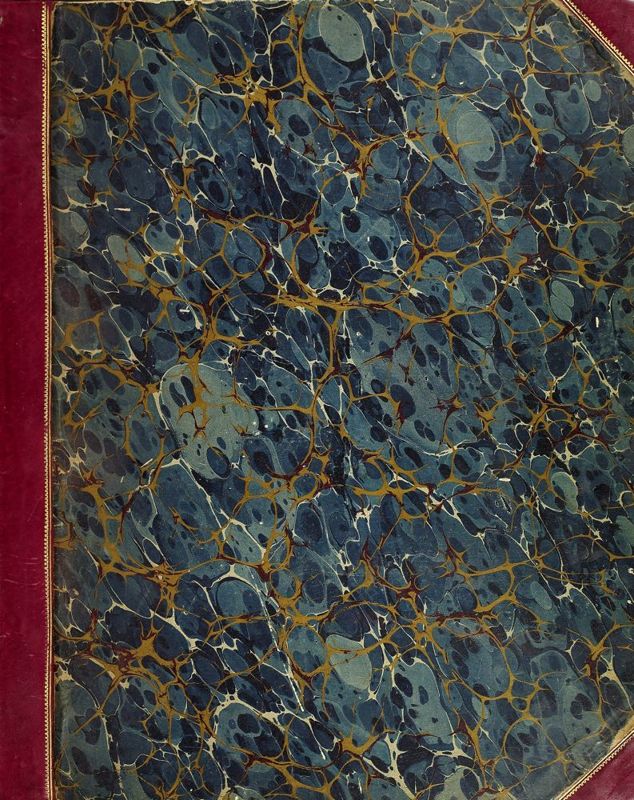
Revised edition (first published in 1831 with six plates). Large quarto (13 3/4 x 11 1/4 inches; 349 x 285 mm.). [2] 8 pp. Thirteen hand-coloured aquatint plates by S.G. Hughes and H. Pyall after T.T. Bury. Plates are watermarked 1832 and 1834. Half burgundy calf over nineteenth-century marbled boards. Spine lettered in gilt. A little minor foxing and browning. Armorial bookplate. An excellent copy larger (nearly 3/4 inch) than Abbey's. "This book was first published with six plates in 1831. It proved popular, and other editions followed. This classic record of the beginnings of the railway age was also one of the last significant books illustrated with aquatints. Lithography was already sweeping the field for pictorial records of this kind" (Ray, The Illustrator and the Book in England). Thomas Bury (1811-1877), "a pupil of Augustus Pugin, was the artist responsible for the best-known views of the Liverpool and Manchester Railway. Published as hand-coloured aquatints in paper covers by Ackermann in February 1831 [titled Six Coloured Views of the Liverpool and Manchester Railway with a plate of the coaches machines &c], Bury's work went through many editions covering about three years. There were seven views in the first edition and thirteen in the second. A re-issue appeared in 1832, followed by Spanish and French editions, while the prints were reproduced separately in France and Germany. After re-engraving, new editions appeared in England in 1833 and 1834. Akermann "clearly realized the potential of the British and European markets for railway prints as no other work passed through so many editions" (Rees). Coloured plates in order: 1. The Tunnel. 2. Entrance of the Railway at Edge-Hill Liverpool. 3. Excavation of Olive Mount four miles from Liverpool. 4. Viaduct across the Sankey Valley. 5. View of the Railway across Chat Moss. 6. Entrance into Manchester across Water Street. 7. Coaches &c. employed on the Railway. (No.1 The Northumbrian Steam-Engine &c. No. 2, 3 5 Carriages for Passengers. No. 4 Private Carriage. No. 6, 7 Carriages for Cattle). 8. Railway Office Liverpool. 9. Warehouses &c. at the end of the Tunnel towards Wapping. 10. Moorish Arch looking from the Tunnel. 11. Near Liverpool, looking towards Manchester. 12. Rainhill Bridge. 13. Taking in Water at Parkside (The station where Mr. Huskissonn fell).


