If you would like to get in touch, please feel free to contact: email hidden; JavaScript is required
Browse collection
- Full collection
- 18th Century & earlier
- Ackermann
- Africa
- Alken
- Animals
- Arabasia
- Architecture/Mansions
- Art
- Australasia
- Botany
- British Isles
- Caricatures
- Children
- China
- Chromo added colour
- Chromolithographs
- Conchology
- Costume
- Cruikshank
- Culture/Lifestyle
- Dutch
- East European
- Far East
- France
- Furniture/Antiques
- General
- Germany
- Grandville
- Heraldry
- History
- History - England
- History - Europe
- Holy Land
- India
- India - sepia
- Islam
- Italy
- Japan
- Literature
- London
- Manuscript
- Map
- Military
- Monnier
- Natural history
- Pastimes
- Pochoir
- Polar regions
- Portraits
- Religious/Christian
- Religious/other
- Rowlandson
- Russia
- Science
- Scrapbook
- Sepia
- South America
- Sports/Hunting
- Stamps
- Swiss
- The Americas
- Theatre
- Travel/Scenery
- Watercolours
- World
D'OYLY, Sir Charles, 7th Baronet.
Antiquities of Dacca.
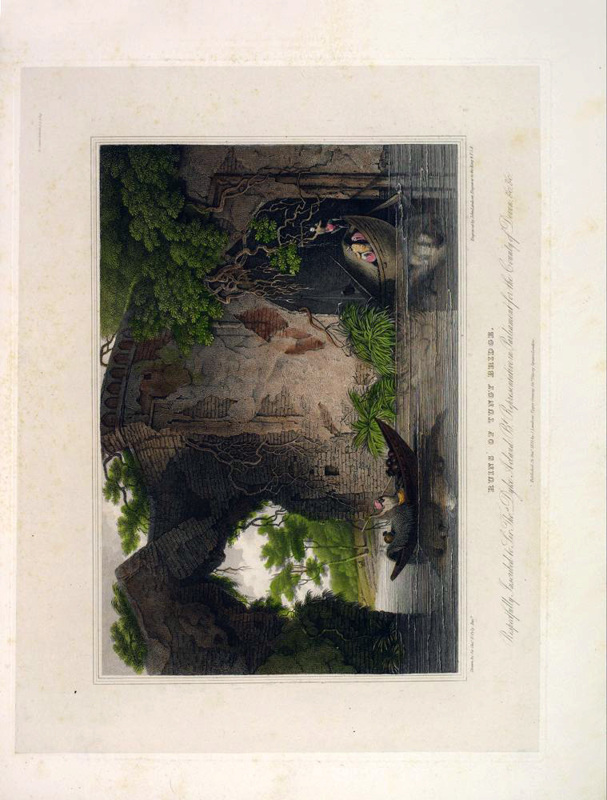
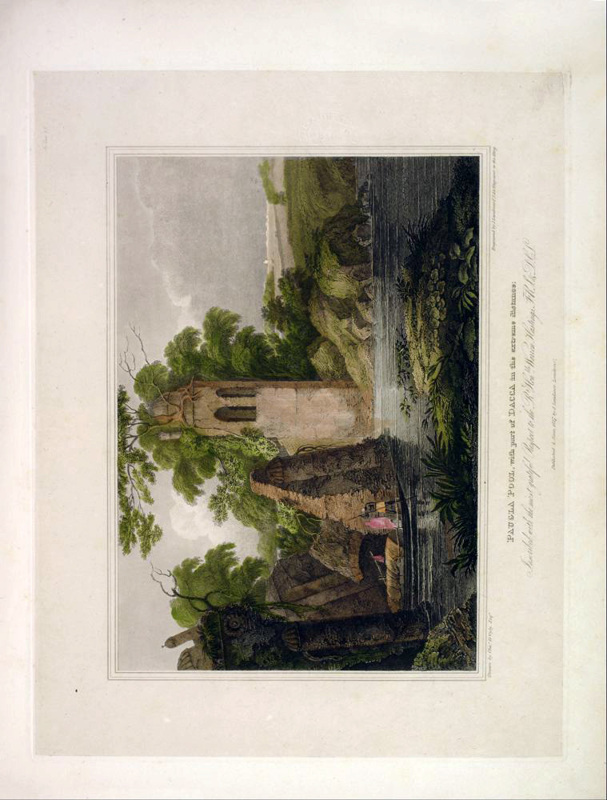
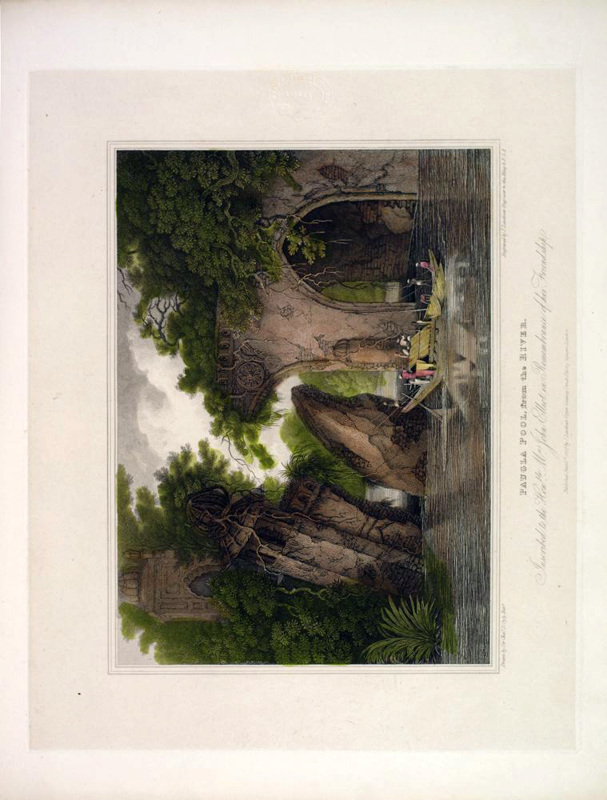
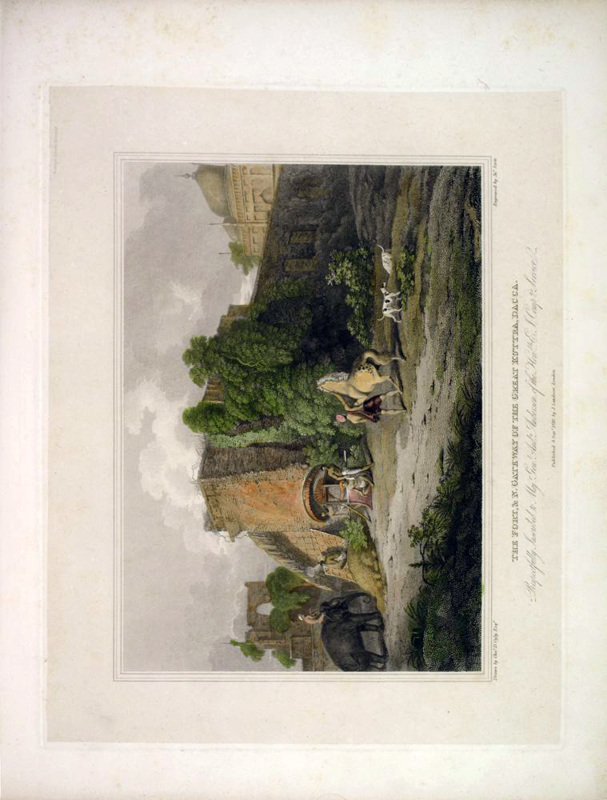
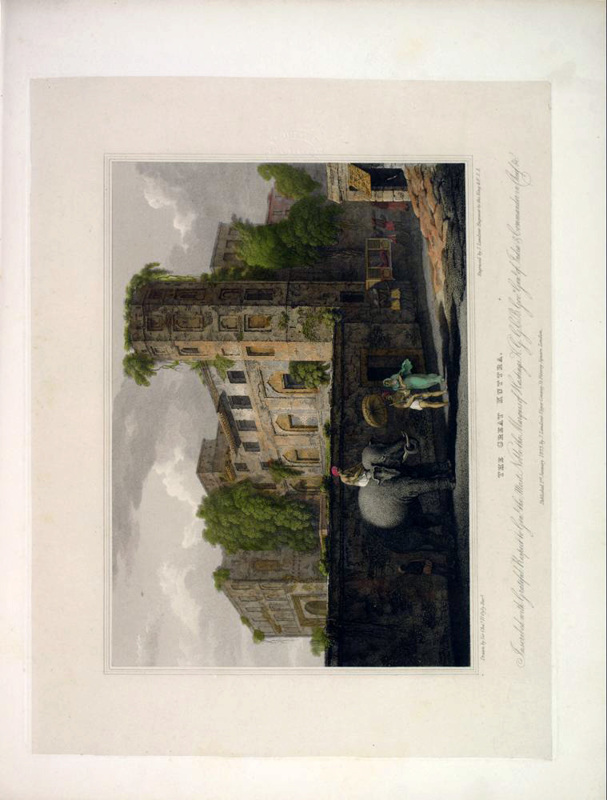
Antiquities of Dacca is important as a sourcebook for the history of Dacca (Dhaka). Actually, it is a book of painting folios, but it also contains a brief account of the history of Dhaka. D'Oyly was the collector of Dhaka between 1808 and 1811. During his stay in Dhaka, he prepared quite a few drawings and decided to publish them in the form of folios. In one sense Antiquities is the result of the labour of four persons; original drawings by D'Oyley, the narration on Dhaka prepared by Atkinson and Vignette Chinery, and engravings by Landsier. The first of the folios were published in 1814. The others followed in 1817, 1826, and 1827. Though it was announced in the prospectus that six folios would be published, so far only four have been found. In all probability, the last two were never published.




- Published
- London: John Tyler. n.d. [1826]
- Plates
- 19
- Binding/Size
- L=FOLIO
- Value
- 0-5000
- Published
- London: John Tyler. n.d. [1826]
- Ref
- 1460
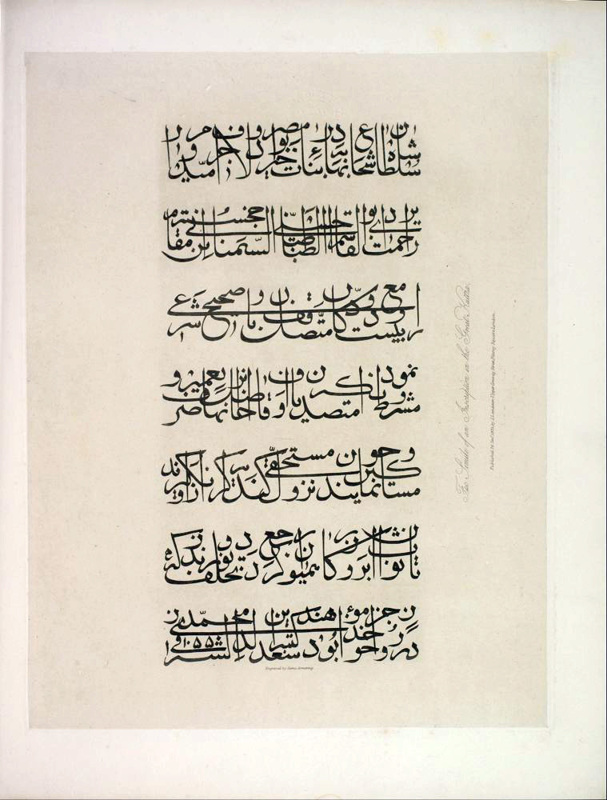
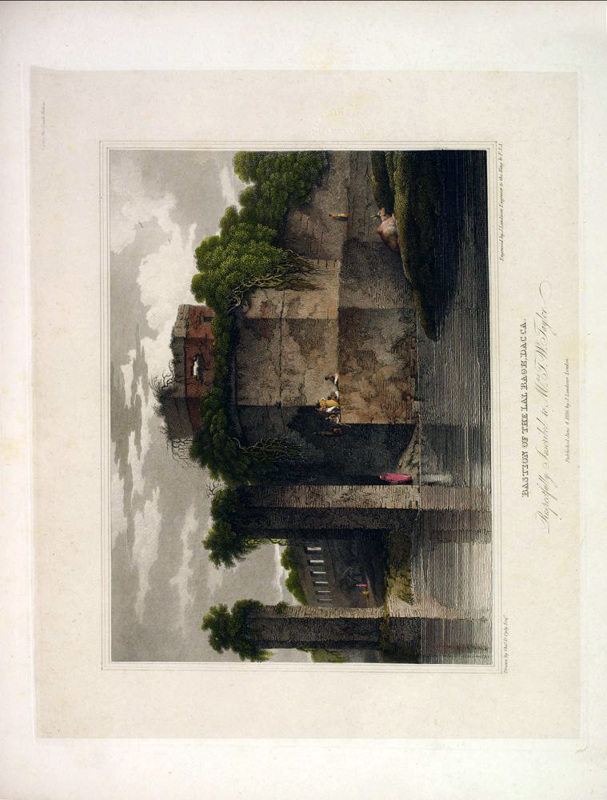
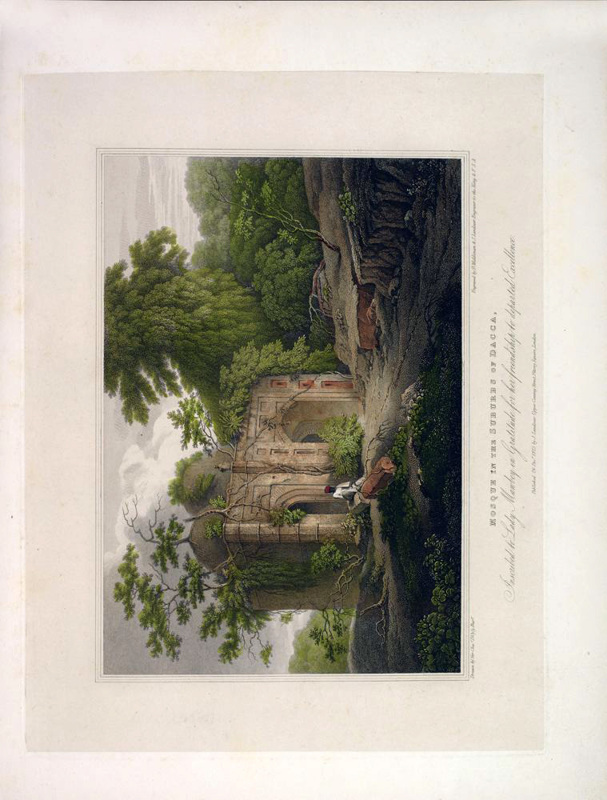
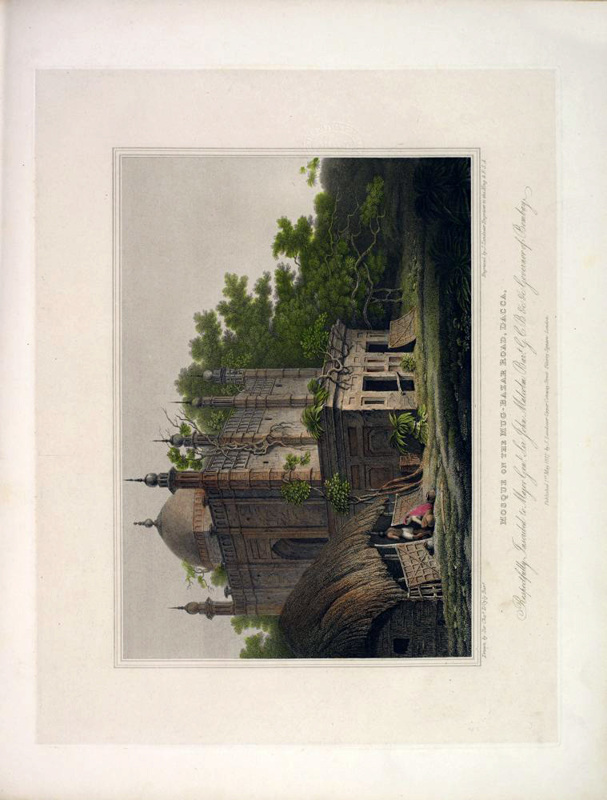
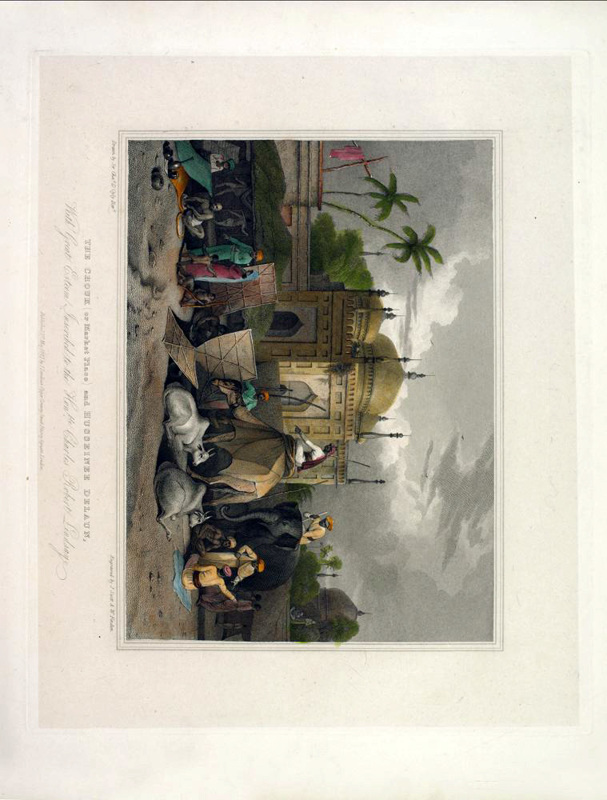
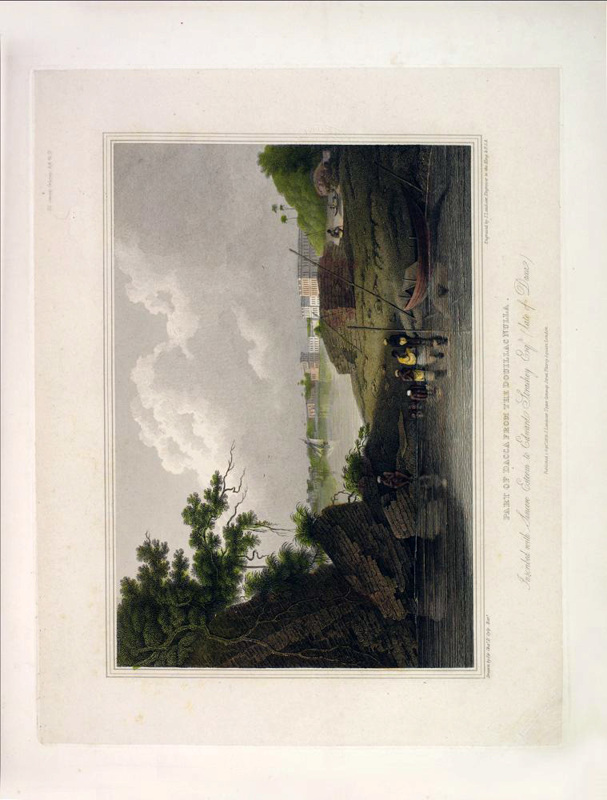
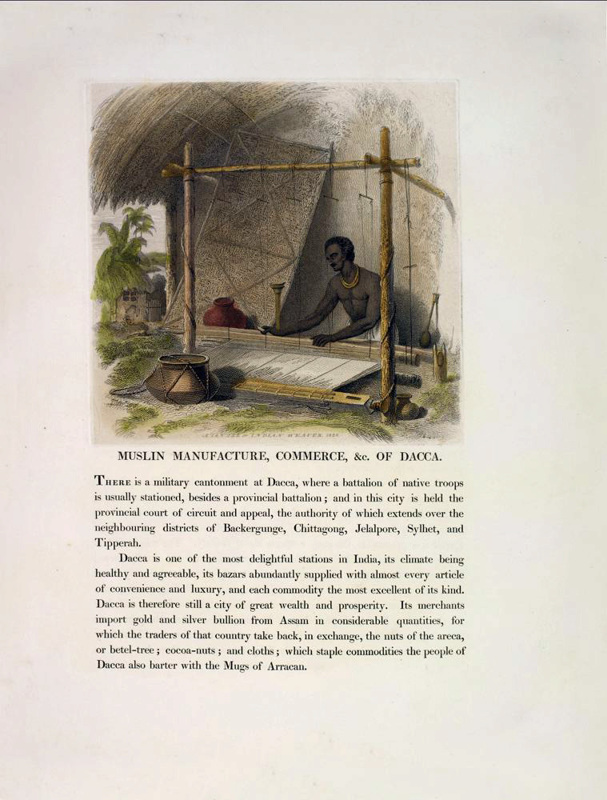
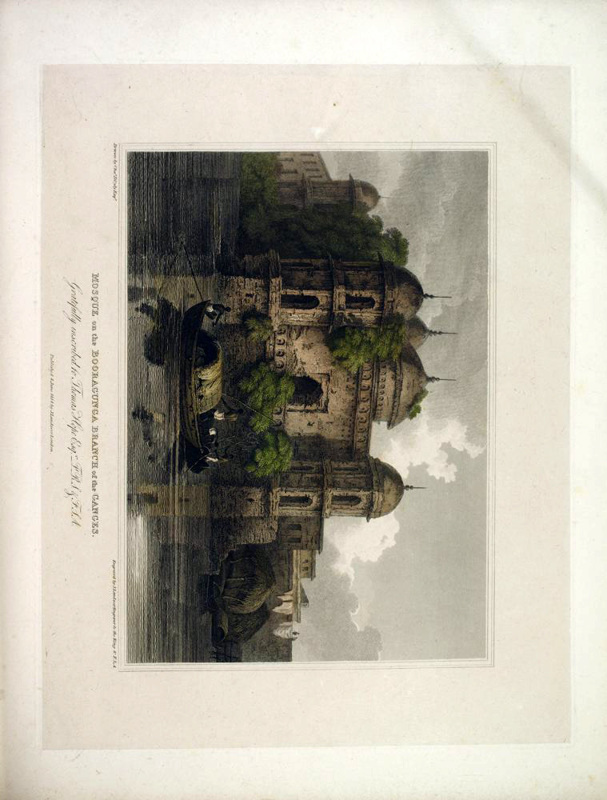
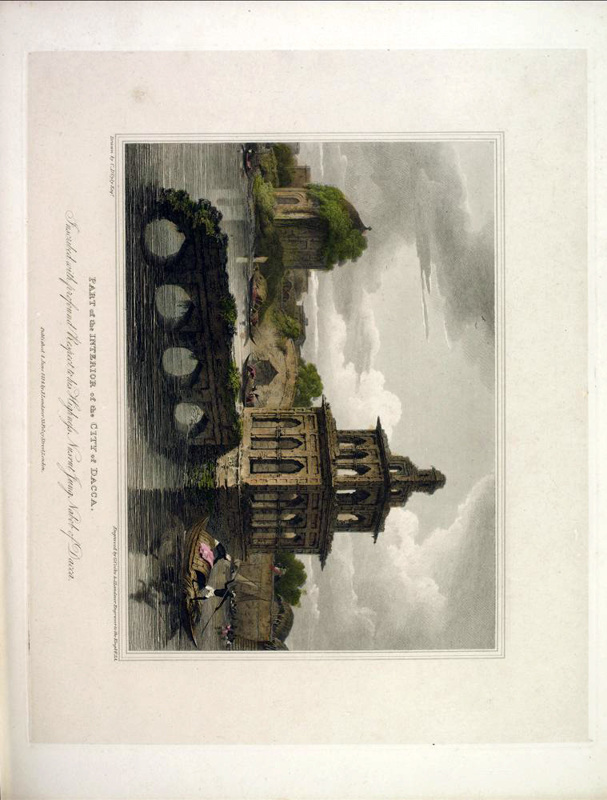
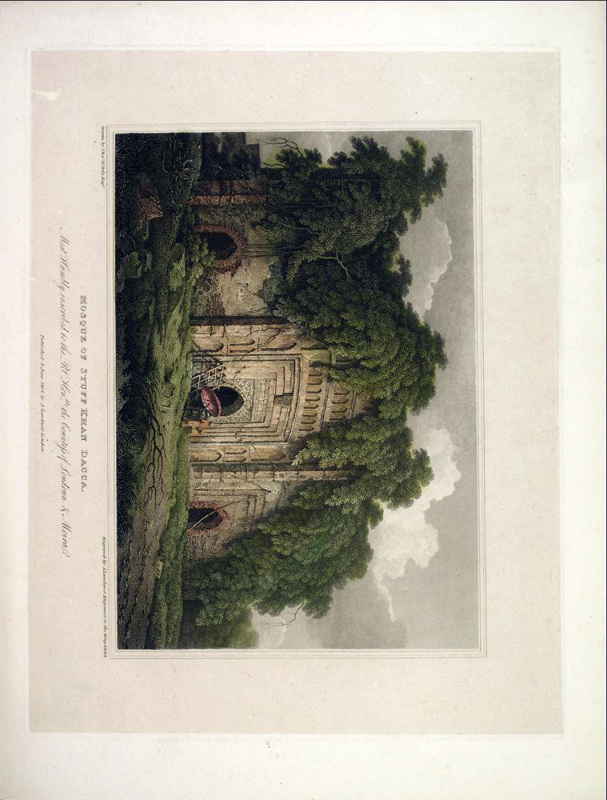
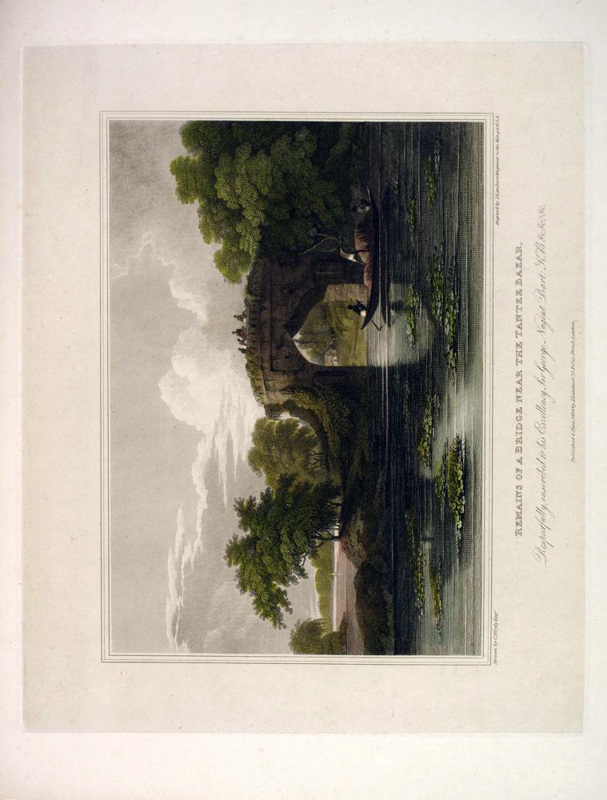
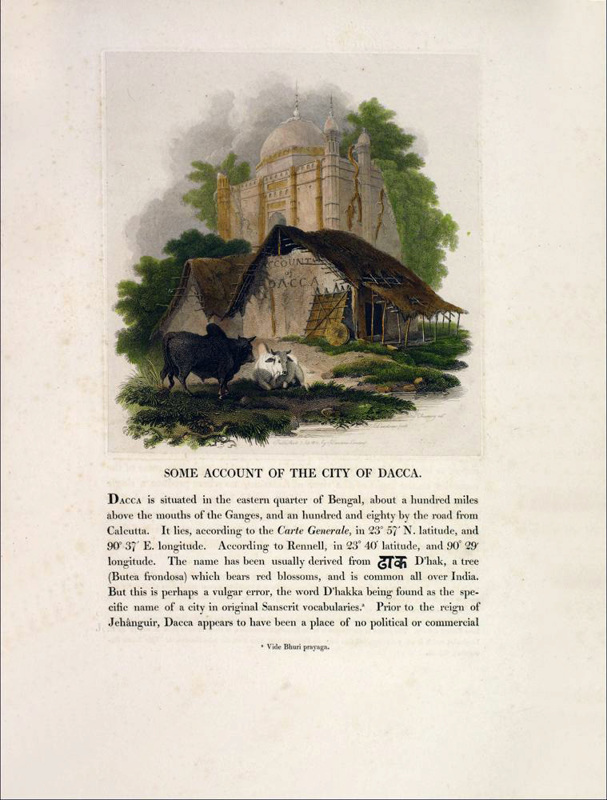
Folio. Delightful recent full leather binding with decorative black patterned tooling to boards, gilt title label in red morocco to upper board, spine comprised of six compartments, gilt lettering to the second and the fifth compartments. Raised bands in blind. Etchings by John Landseer after paintings by Sir Charles D'Oyly. With 15 coloured plates. D'Oyly was Collector of Dhaka from 1808 to 1817. During that period, he painted various pictures, especially the Mughal ruins. He decided to publish the drawings relating to Dhaka in the form of a folio-size book. After engraving, the drawings of D'Oyly were published in London from 1823 onwards. A short historical account of Dhaka was also appended to each book. James Atkinson wrote these accounts, accompanied by engravings done by Landseer. These books became known as Antiquities of Dacca and became critical social documents. Some plates are on India paper and have a blind library stamp. Coloured plates in order: 1. Frontispiece (?) Account of Dacca.* 2. Ruins of Tungy Bridge. 3. Paugla Pool, with part of Dacca in the extreme distance. 4. Paugla Pool, from the River. 5. Modern Habitations at Dacca, 1823.* 6. The Fort & North Gateway of the Great Kuttra, Dacca. 7. The Great Kuttra. 8. The Small Kuttra with its enclosed Mosque, Dacca. 9. Bastion of the Lal Bagh, Dacca. 10. Mosque in the suburbs of Dacca. 11. Mosque on the Mug-Bazar Road, Dacca. 12. The Chouk (or Market Place) and Husseinee Delaun. 13. Approach to Tungy.* 14. Part of Dacca from the Douillac Nulla. 15. A Tantee or Indian Weaver, 1826.* 16. Mosque on the Booragunga Branch of the Ganges. 17. Part of the Interior of the City of Dacca. 18. Mosque of Syuff Khan, Dacca. 19. Remains of a Bridge near the Tantee Bazar. * denotes a half-page illustration.