
If you would like to get in touch, please feel free to contact: email hidden; JavaScript is required
Browse collection
- Full collection
- 18th Century & earlier
- Ackermann
- Africa
- Alken
- Animals
- Arabasia
- Architecture/Mansions
- Art
- Australasia
- Botany
- British Isles
- Caricatures
- Children
- China
- Chromo added colour
- Chromolithographs
- Conchology
- Costume
- Cruikshank
- Culture/Lifestyle
- Dutch
- East European
- Far East
- France
- Furniture/Antiques
- General
- Germany
- Grandville
- Heraldry
- History
- History - England
- History - Europe
- Holy Land
- India
- India - sepia
- Islam
- Italy
- Japan
- Literature
- London
- Manuscript
- Map
- Military
- Monnier
- Natural history
- Pastimes
- Pochoir
- Polar regions
- Portraits
- Religious/Christian
- Religious/other
- Rowlandson
- Russia
- Science
- Scrapbook
- Sepia
- South America
- Sports/Hunting
- Stamps
- Swiss
- The Americas
- Theatre
- Travel/Scenery
- Watercolours
- World
DALTON, Richard.
Antiquities and Views in Greece and Egypt with the Manners and Customs of the Inhabitants From Drawings made on the Spot A.D. 1749.
This work amalgamates the three series of prints that Dalton had advertised in the press as 'Twenty-one Prints of the Antiquities of Athens ...', 1751; 'Museum Graecum et Aegypticum ...', 1752; and 'A Series of Prints Relating to the Manners, Customs, &c. of the present Inhabitants of Egypt', 1781. The prints were based on Dalton's participation as a draughtsman in Lord Charlemont's expedition to the Levant in 1749-50.




- Published
- [London] Thomas King and Henry Chapman, 1791.
- References
- BL; Weber 825; Blackmer 443; Colas 779; Atabey 311, Bobins 129.
- Plates
- 27
- Binding/Size
- L=FOLIO
- Value
- 25001-100000
- Published
- [London] Thomas King and Henry Chapman, 1791.
- Ref
- 5102
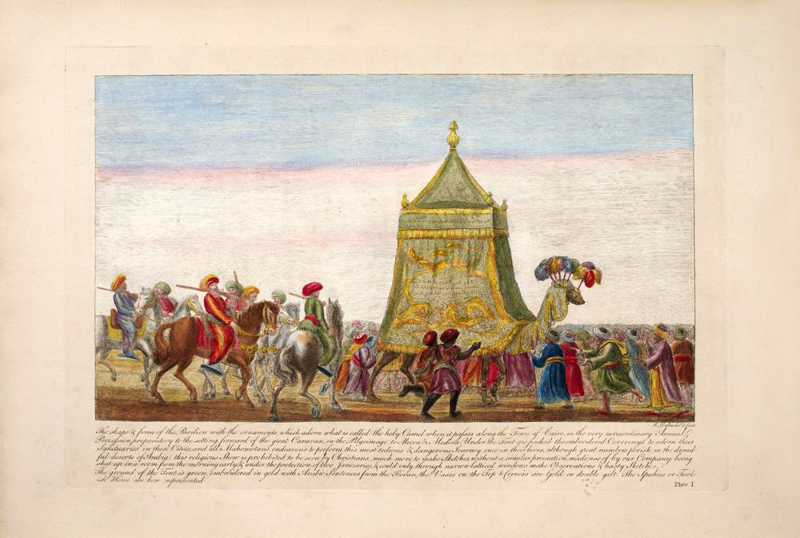
First collected edition. Large folio, [1] 12, 79 engraved plates on 76 sheets, of which six double-page, by Chatelain, Vivares, Rooker, Basire, Mason &c. 27 costume plates hand coloured, later half red morocco, over marbled boards, spine ornately gilt in compartments, raised bands. Bobbins bookplate. This edition has the series costume plates, displayed two to a page not present in the earlier edition. Over the years, Dalton made arrangements himself to have the sketches he had made during his tour of the Levant with James Caulfield, the Earl of Charlemont’s party in 1749-50. This work appeared in four stages, the 23 plates of Athens were engraved in 1751, the 20 plates of Egypt, Aetna, and the Archipelago appeared in 1752, and the nine plates of Halicarnassus [present day Bodrum] were engraved by Dalton sometime after 1771, and the 21 plates of Egypt were engraved in 1781, together with the six costume portraits, each printed on a separate sheet, in this 1791 edition, the only one with a general title page, these six plates are printed two to a page. All copies seem to have been uncoloured. For Lord Charlemont’s journey, see W. Standford and E.J. Finopoulos. The Travels of Lord Charlemont in Greece and Turkey, London, 1984. Coloured plates in order: 1. The shape & form of the Pavilion with ornaments adorn what is called the holy Camel when it passes along the Town of Cairo... 2. An attempt to explain further the zeal & enthusiastic rage of the People when the second sacred Camel passes in the great annual procession along the streets of Cairo. 3. In the procession are a great number of Religious Companies with their standard bearers... 4. Different Bodies of Horse Guards, distinguished for the strange stile of heir Armour & Dress, with long Lances... 5. The Litter of the Emir Hadge; the Women are often carried in similar ones. 6. Pages of the Emir Hadge, arm'd with Bows & Arrows. 7. Pages of the Emir Hadge, unarmed seated on the backs of Camels. 8. The State with which both the Bashaw of Cairo & the Emir Hadge appear when they ride in or near the Town. 9. The Excercise of shooting at Water Pots called Burdacks when the Horse is on full speed; immediately after firing, the Horse turns short and makes way for the next... 10. Mograbins, or African Merchants, a mixture of Moors and Arabs from the different States of Barbary: arrived at Cairo to join Company with the great Caravan going to Mecca... 11. Cara Duliman Lee or Black-Coat, a Chiaus of the Janizaries. 12. Women of different distinctions as they appear in the streets of Cairo. 13. Dancing Girls of Egypt... 14. Ethiopians, or Abissinians coming down the Nile with floats of small wood to sell at Bulac, the Port of Cairo... 15. The Excercise of the Arabs managing their Horses and throwing the Lance. 16. A Mulah or Effendi explaining the Law to Turkish Youths... 17. The Manner of the Beys parading through the streets of Cairo, in going to the Castle to hold their Council. 18. An Entertainment of a Supper given by a Sheck of the Arabs, to Lord Charlemount & the Party on that Voyage; striped Turbans distinguish the guests. 19. Part of the first of the Ceremonies attending the Devotions of the Dervizes as seen in their Temple of Pera at Constantinople... 20. Part the second. After the Preacher has finished his Discourse, and with his Assistant seated on the Floor, the Dervizes changing their Garb to a short Waistcoat & long Petticoat... 21. Women of Egypt. 22. An Effendi of Constantinople. 23. An Effendi of Cairo. 24. Bashaw of Cairo. 25. Cadiliskier. 26. Emir Hadge / Caia / A Plebeian. 27. One who makes equal use of his Toes and Hands in twisting a Binding.


