If you would like to get in touch, please feel free to contact: email hidden; JavaScript is required
Browse collection
- Full collection
- 18th Century & earlier
- Ackermann
- Africa
- Alken
- Animals
- Arabasia
- Architecture/Mansions
- Art
- Australasia
- Botany
- British Isles
- Caricatures
- Children
- China
- Chromo added colour
- Chromolithographs
- Conchology
- Costume
- Cruikshank
- Culture/Lifestyle
- Dutch
- East European
- Far East
- France
- Furniture/Antiques
- General
- Germany
- Grandville
- Heraldry
- History
- History - England
- History - Europe
- Holy Land
- India
- India - sepia
- Islam
- Italy
- Japan
- Literature
- London
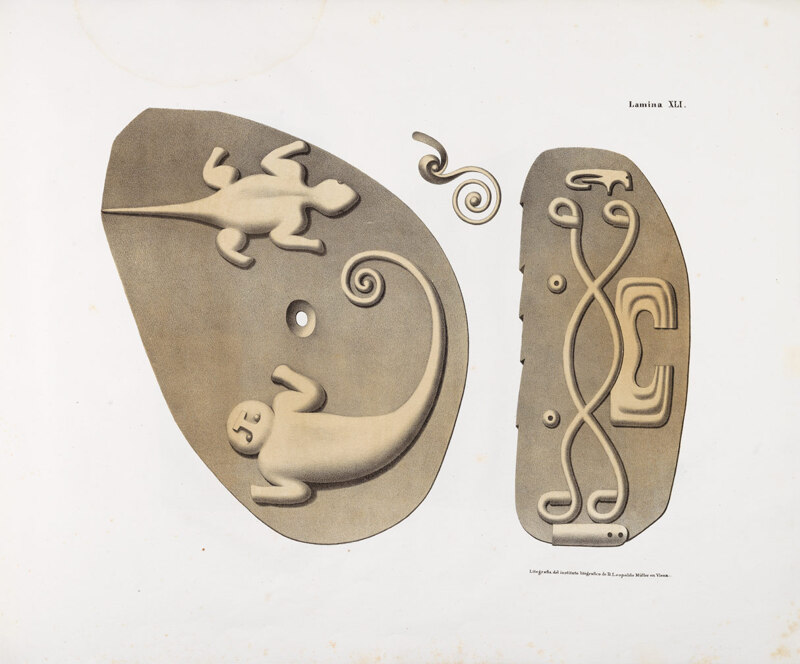
- Manuscript
- Map
- Military
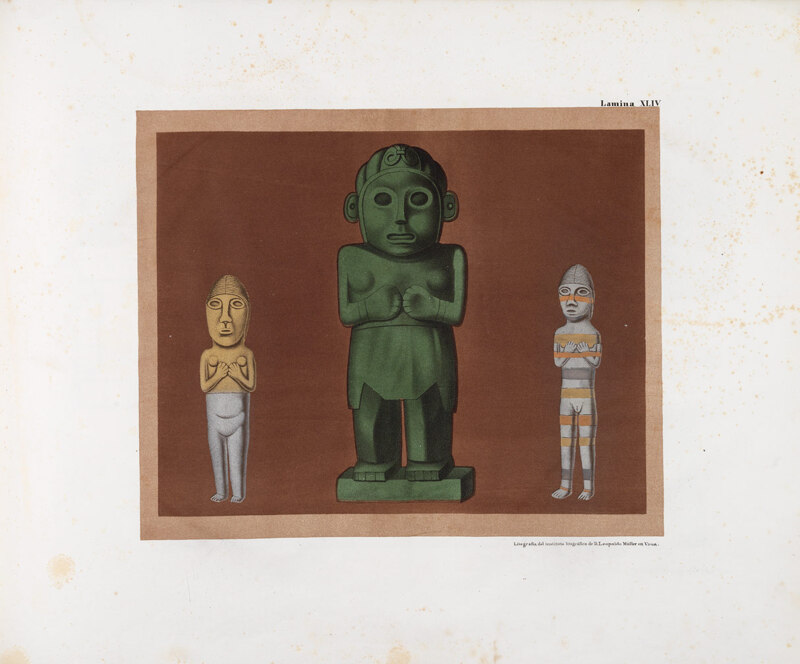
- Monnier
- Natural history
- Pastimes
- Pochoir
- Polar regions
- Portraits
- Religious/Christian
- Religious/other
- Rowlandson
- Russia
- Science
- Scrapbook
- Sepia
- South America
- Sports/Hunting
- Stamps
- Swiss
- The Americas
- Theatre
- Travel/Scenery
- Watercolours
- World
RIVERO Y USTARIZ, Mariano Eduardo de.
Antiguedades Peruanas...
A splendid work on ancient Peru and Pre-Columbine archeology. One of the most important and comprehensive works on Peruvian archaeology, and the first of its kind; it deals with the original inhabitants, their history and political system, language, religion, objects, costumes, monuments, burials & mummifications, and such. Rivero (1798 – 1857) was a prominent Peruvian scientist and archaeologist, Director to the National Museum of Lima.


- Published
- Vienna, 1851
- References
- Sabin 71642 & 71643.
- Plates
- 60
- Binding/Size
- L=FOLIO
- Value
- 5001-25000
- Published
- Vienna, 1851
- Ref
- 1622
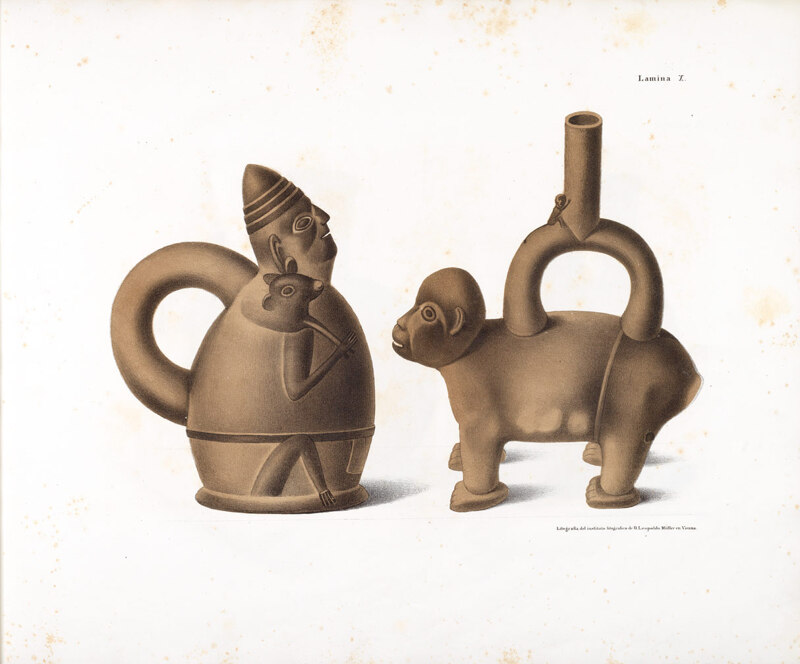
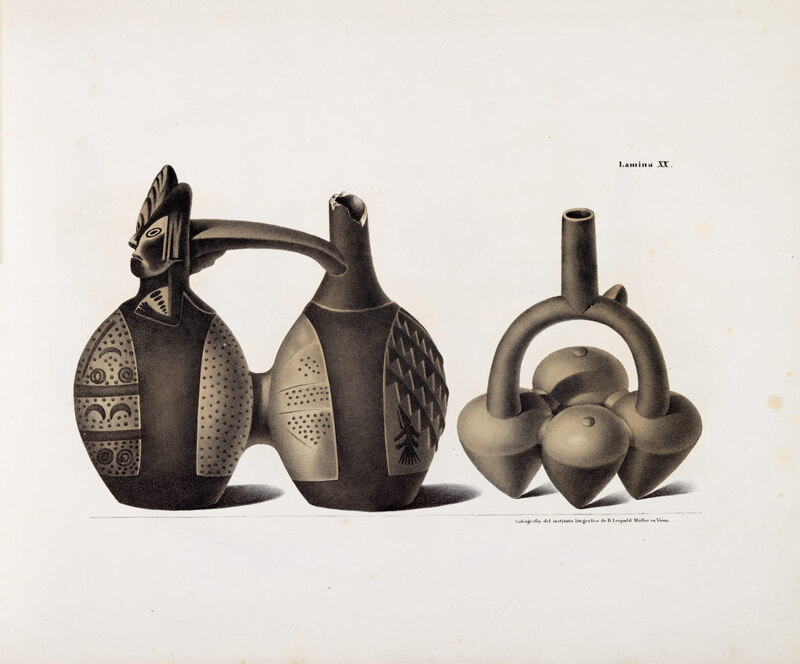
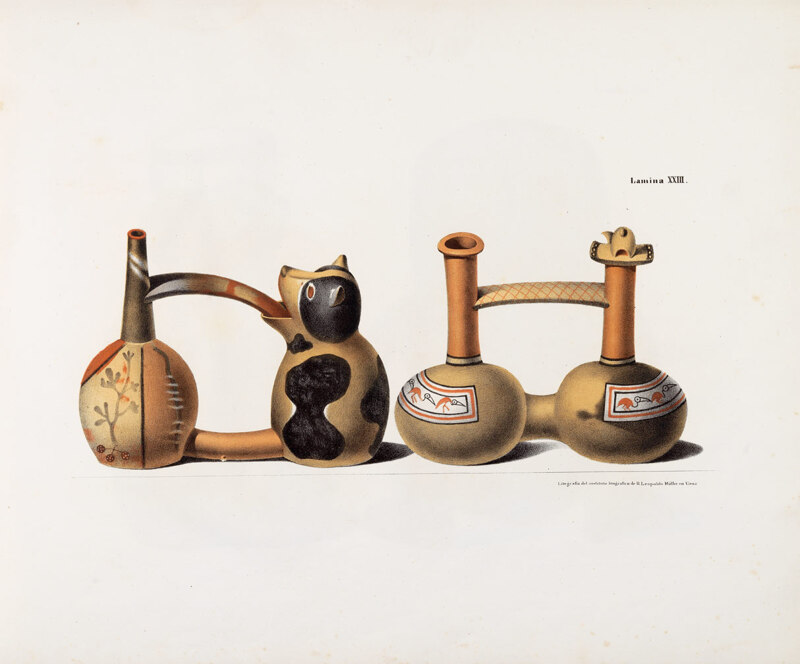
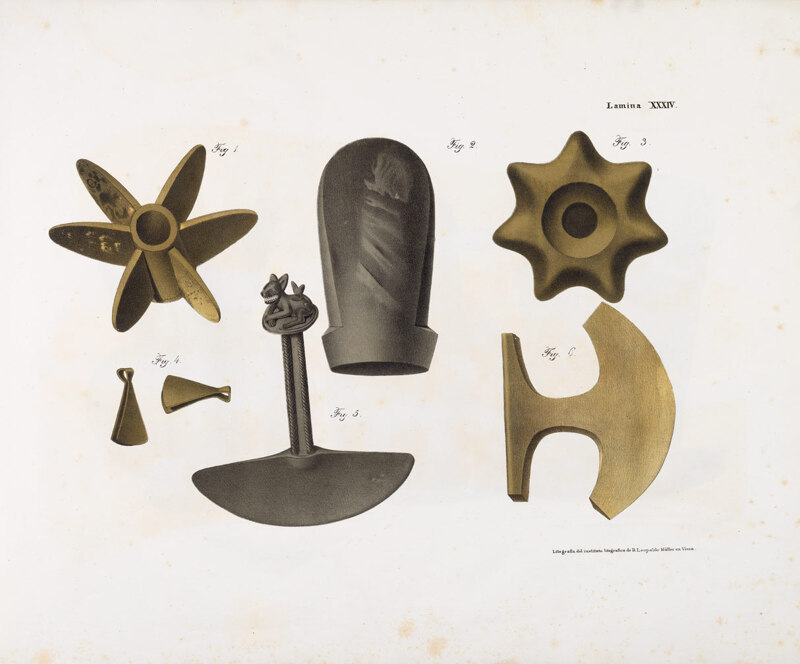
[Peruvian Antiques] A FIRST EDITION. A rare book of Peruvian antiquities. 2 vols; 328pp; (quarto - text / oblong folio - atlas) in publisher's cream hardcovers, titles pushed on to the the upper covers, all in a modern unbleached canvas casing. Black morocco title pasted on the the upper cover, a restored spine. 59 (I-LVIII) chromolithographs on a tinted background by Leopold Mueller. Some foxing throughout. A very beautiful work on Peruvian antiquities, complete with its volume of accompanying text - which is often missing. It is composed by the Peruvian scholar and statesman Mariano Eduardo de Rivero y Ustariz (1798-1857), then the first director of the National Museum of Archeology in Lima, as well as the Swiss diplomat Johann Jakob von Tschudi (1818-1889) who spent 5 years in the Peruvian Andes from 1838-43. This is a first-rate work; especially important both as the first archeological monograph of Peru, and for the high quality of its iconography in colour (representing mummies; ceramics; fabrics and monumental remains). Colour plates in order: 1. Title page. 2. Mummy wrapped with covers and tied with a rope of cabuya in the form of a net, as was found in the Huacas, or ancient tombs on the coast of Peru. 3. Mummy covered in part with a red wool blanket, well preserved in its weave and colour. A dry membrane hangs from his left eye; the lower lip cracked revealing the jawbone. 4. Mummy of a naked woman, having between her legs a stick on which she rests her head, and tied with a rope that is six or seven turns. Because of the bands of the same cord, that hug his forehead, it is inferred to be a mummy of the common people. It was taken from the tombs of Cajatambo. 5. Mummy covered at the bottom with a cotton blanket, brownish in colour; on the left hand supports the inclined head, and the fingers of the right, grasp the lower margin of the orbits. These three mummies exist in the National Museum of Lima. 6. Skull, with his thick black hair, perfectly preserved, on the left side of the face the hazel complexion remains / Skull, from an individual of the Chincha race. Between these skulls the outline of the occiput of the latter will be noted in which the great interparietal bone is shown. 7. Mummy of a parrot found at the feet of the mummy of a twelve or fourteen-year-old boy from a Huaca in the province of Tarma / Mummy of a seven-month-old [human] foetus extracted from its mother's womb. 8. Mummy of a child of the Indians called Opas, natural size, seen from the front and in profile, found in a Huaca in the province of Lampa. 9. Conopas, or idols of gold, solid and hollow very worthy of note; the first for its strange ornaments, and the fourth for its cap,[...] the sixth for its headwear ; the eighth carries a Pan flute in his arms, and the ninth appears to represent a woman carrying a child... 10. Interesting gold conopas for their strange shapes; most of them, taken from the tombs and hung around the neck of the mummies. The fourth figure is of the oriental type. The first figure is a ring such as those worn by noble people, and the last appears to indicate a sceptre. The glass, or cup in the centre, is very thin, all in one piece, hammered, with reliefs on the top in the form of carras and feathers... 11. The first figure represents a very thin hollow silver Llamapconopa...The second represents a Zarapconopa, carrying two gourds in his hands...The third is a silver vase...The fourth is a silver vase... .The fifth, is a three-inch glass vase representing a human figure...The sixth, the same as the second...The seventh represents an idol or Conopa. 12. An image that represents an Orejon Indian, with a strange-shaped hat, carrying on his back an animal that looks like a deer / Hollow vessel in the shape of a Caparro, or Monkey as they are found in the mountains of the Pangoa and on the banks of the Chanchamayo... 13. Figure of a glass that, judging by the feet, looks like a deer, with a muzzle on the snout, despite the fact that the head, although well outlined, does not characterise the deer well, nor any other quadruped of Peru / Conopa hollow, in human figure and seated, her back, head and neck covered with a kind of hood; from the ears and the nape come two joined tubes; He wears a white sash on his chest. 14. Duplicated glass in the form of two flasks, with straight necks, one of them ending with a human face, and the other has a mouth to pour any liquor (both connected with each other) / A Zarapconopa very well carved. 15. Vase representing the flower and fruit of the banana, which can serve as proof that this plant was known to the indigenous people before the arrival of the Spaniards / Vase, in the shape of a fish, very well moulded, on the handle is coloured a deformed monkey holding on to the mouth. 16. Vessel with the very interesting portrait of a man, holding in both hands a staff, or spear with a human face at the tip of the shaft, representing a Deity / Conopa figurine (an Indian), with her hair braided, carrying a bundle on her back. 17. Quadruple vessel, hollow, interesting for its interior communications. The counter-opening is found at the upper end of the vessel, together with the one adorned with the head of an animal / Conopa worthy of note for its misshapen proportions and the strange work on its face. 18. The first and last figures represent clay conopas, found in the Huacas de Chancay, distinguishing themselves both by the expression of their physiognomies and by their hats, from the idols found in the tombs of the interior of the South / The duplicate vessel in the centre represents two tarugas, male and female, the first one on the left side missing the tips of its horns. 19. Duplicated vase, partly painted, with a fish of the shark family, and the other figure a fantastic animal / Vase with its appendages in the form of fruits. On the handle on each side of the mouth there are openings. 20. Hollow clay conopa, representing a lizard; with the tip of its tail it touches its mouth and forms a circle / A duplicate vase, apparently also a Conopa; the head, the neck and the throat covered with a kind of case in the form of a mitre. The work on the vessels are just decorations without any other meaning. The handle and the mouth are broken. 21. Clay vessel, which would probably serve for the sacrificial corn; it resembles, like the last one in this plate, the head of an animal and the Egyptian type / The glass in the centre represents a well-figured monkey. 22. Double conopa in the form of bottles, communicating through the centre and top. It is worth noting the direction of the eyes, very different from that observed in the other heads. The drawings that adorn these glasses seem to have a symbolic meaning / A quadruple vessel with internal communications. 23. Beautiful sonorous glass in the shape of Zarapconopa. The figure of this glass is similar to that of the pineapple. There are reliefs of ears of corn, and at the end a figure of an Indian with a miter representing the ears of corn, in which the opening for the air to come out is noted / A duplicate vase, one featuring a bird similar to a parrot, and the other a bottle adorned with mystical figures. 24. Round vase with designs / A double vase, whose main part represents a parrot with its poorly painted wings. 25. Duplicate vase, notable for its vivid colors. One shows a bottle adorned with plant designs, the other a wild cat, quite well represented... / Two bottles joined by their bodies, with a handle on their necks, adorned with designs that apparently indicate they are flamingo birds. 26. Conopa, figuring an Orejon Indian, seated with his legs crossed. He wears a kind of cap on his head, has an aquiline nose, a closed mouth and very marked features, giving his physiognomy a severe character. A snake comes out of the neck coiling around the chest, side and left leg, and the head is going to be placed in the genital parts. We ignore the meaning of this emblem / A Conopa representing a woman, whose head is girdled with a rope, and her limbs fall on her chest. She wears rings on her ears and a kind of necklace on her neck. The particular position in which the figure is found strongly suggests that it is giving birth to a child; thus it is inferred by the expression of the physiognomy that indicates a vehement pain. 27. Jointed vessels resembling eggs, or perhaps the fruit known by the name of cucumber / Duplicate glass featuring two fantastic animals, with their heavily scratched faces; on the handle is a monkey holding on to the mouth / Another vessel with a face of a turkey, joined by a handle, and with an open spout. 28. Conopa depicting a priest offering a sacrifice. This should be judged by his cap, by the glass he carries in his hands, and by the cincture adorned with mystical work / A Conopa representing an Indian leading by the feet another who hangs from his back. The moustaches were probably painted on after unearthing, imitating those of the conquerors... 29. The first and third figures represent pitchers for domestic use. The one in the centre is a goblet adorned with square drawings and regularly outlined crosses. 30. Very remarkable vessel for its beautiful workmanship and the perfection of its execution. The interior ducts can be seen / A regular coloured clay saucer, for domestic use. 31. A very fine coloured clay head, found in a Huaca near Arequipa / A jar of coloured clay, with colourful designs; of the Huacas of Cuzco / A red clay dish. 32. Two variegated marble cups, reddish brown. They are in the collection of Mr. Don Manuel Ferreyros. 33. Round cup of brownish marble with its yellow veins. It is adorned with a snake, whose heads come to finish off the handles / round stone cup with its handles. The substance of which it is composed is a kind of Grauwacke (a variety of sandstone). It was found in the Huacas of Cuzco. Both are from the collection of Don Manuel Ferreyros. 34. Extremely heavy cup of red jasper, a quadrangular shape, with a receding angle / Pan's Flute. Both from the collection Don Manuel Ferreyros. 35. (Fig 1) Amphibolic greenish stone axe found in the Huacas of Cuzco / (Fig 2) A copper axe with two engraved figures / (Fig 3) A heavy wooden club called a Chonta. You can see in the upper part some drawings carved in the same wood, and others on the lateral sides... 36. (Fig 1) A copper instrument / (Fig 2) A stone axe / (Fig 3) A stone instrument with an opening in the centre that is hooked on a staff... / (Fig 4) A pair of copper tweezers for plucking beards / (Fig 5) A brass instrument, whose use we ignore! / (Fig 6) A copper instrument, it is claimed, to carve stones. 37. Blackish clay vial, adorned at the top with the fantastic image of an animal that seems to eat a foot / Double glass, representing a crucible that is attached to another in the form of an animal, whose head resembles that of a cat; crude wings are painted on the body. 38. Bottle-shaped vase with many drawings of birds and insects / Two flat saucers, whose colours and designs are perfectly well preserved /Blackish clay vessel with a very elegant shape. 39. Wool blanket with very interesting designs, taken from the Huacas de Chancay. Square mat in which the blue and yellow bands that are made of feathers should be noted, and the very coppery silver plates that are glued, or tied to the fabric... 40. Pretty double cotton rugs. Wool fabric with beautiful designs. These fabrics, found in the Huacas of the coast, remain with all their consistency and shine. 41. The first figure of this plate represents a statue of a rod and eight inches long, and three fourths and six inches wide from shoulder to shoulder. The characters that he wears on his cap were undoubtedly placed by one of those who, at the beginning of the conquest, visited the ruins of the town where he is found / The second figure represents an idol one and a half yards long, two-fourths and inches from ear to ear, two-fourths five fingers from the beard to the end of the cap, or montera; the thickness is two to three quarters in different parts. Both statues, as well as those that follow, are made of sandstone, or stoneware. 42. Considering that until now the extremely interesting statues of the Muyscas in Colombia have not been published we deem it convenient to add to the collection of monuments from the time of the Incas some plates of the monuments of their neighbors, the Bochicas. A statue measuring four inches long, three-quarters wide, and five inches from shoulder to shoulder. The face is three-quarters wide and three-fourths and inches long. A man, with a misshapen body, whose dimensions are one yard long from the anus to the neck, half a yard from the neck to the beard, and from the beard to the forehead inclusive, a quarter and two inches; wide from forehead to ears four and four inches. 43. The first figure has some connection with the astronomical calendar of the Muyscas, since the two animals one is after the other, and the hole that can be seen in the middle, suggest that this assertion is not without foundation. The second figure represents a mass of granite three varas long and a half thick, with symbols or designs that cannot be deciphered. It was found in the town of Chavin de Huanta, Department of Junin (Peru), where there are remains of fortifications and buildings of the Incas. 44. Statue of one and a half yards long, half a yard wide from one shoulder to the other, its head is out of the cap, and the bearded face to the forehead is a little more than tertiary; half a rod and four fingers wide / Statue of a rod and half long, about three-quarters wide; from shoulder to shoulder three-quarters wide. The head is a quarter and four inches long, and three-quarters wide between the ears. 45. In this sheet are represented the engravings in three granite masses from the top of the Caldera, eight leagues north of Arequipa. The other figures are a bird in a circle, and a Conopa representing a man with open arms, both of a very coppery silver, and three small Conopas of greenish stones, of which the last one seems to represent a dog. 46. An idol of silver and gold representing a naked woman, with a kind of cap on her head, and with bows that fall on her shoulders / A crude green idol, standing on a base, with his robe reaching to his knees / Idol of a mixture of solid tin silver with inlaid bands of pure gold, silver and copper, which seem to make a single mass; wearing a pointed cap on his head... 47. The first design represents the view of a palace, or temple on the island of Coati in the Titicaca lagoon / Below the plan of said palace / The third design on the right hand side represents the ruins of a building of singular construction on the island of Titicaca in the lagoon of the same name / The fourth design represents part of this building. We have found the original drawing in the possession of a Lord of the Sierra. 48. Tiwanaku Ruins. In the first design, stones in the form of columns can be seen / In the second design, a set of carved stones of different sizes can be seen / In the third design, the two monolithic doors mentioned and one of the columns are represented / To the right of the sheet are idols, columns, the figure and size of the stones and a sample of the doors of the doors, all in one piece. 49. This plate represents the design of a square table made of sandstone, whose feet are four columns of the same substance at the four ends and one in the centre that is not entirely cylindrical like the others... 50. View of the Rodadero, or remains of the walls of the Cuzco fortress. 51. Ruins of Collcampta, supposed residence of the Inca Manco-Capac and Huacatupac-Paullu-Inca, son of Huaynacapac, in the Plaza de San Cristoval de Cuzco, with the hill of Sacsahuaman. The walls of the buildings and roofs are of cyclopic construction, and are made up of pieces of calcareous stones, a dirty yellow on the surface. 52. View of part of the lower wall and the middle wall of the fortress of Cuzco... 53. View of part of the Convent of Santo Domingo de Cuzco, built on the cyclopic remains of the Temple of the Sun / The second design represents the aforementioned rodadero stone. 54. The first design represents the town and fortress of Ollantaytambo; the second, the wall that encloses the fortress from above and allows us to see the platforms, or terraces that lead to the top of the castle. 55. First design. View of the hill of Clustoni and Hatuncolla. In the first chulpas of different sizes are noted, in them sculptures of lizards are observed; in the second the ruins of other buildings / Second design. Condorhuasi (house of great people) near Asangaro, the town of the Huillea-Apasa Indian. 56. View of the ruins of the temple of Pachacamac, the temple of the Sun, the house of the chosen virgins, the palace of the Incas and the ancient population in the valley of Pachacamac. 57. Horizontal plan of the same ruins. (A) Pachacamac Temple. (B) Temple of the Sun. (C) Palace of the Incas. (D) House of the chosen virgins. (E) Roads. 58. The first design represents the six portals of the Inca's house in Huanuco el Viejo, and below it is the horizontal plan of these portals / The third design represents the viewpoint described and in the fourth the tower near the town of Chupan on the banks of the Maranon on the top of a hill that hangs over the same river. 59. Details of the Chimu-Canchu palace in the vicinity of Trujillo, whose plan is found in the following plate. (A) View of room of the first palace. (B) Carved wall. (C) Carved wall. (D) Profile of the main wall and an excavation that serves as the entrance through to the second palace and next to it the profile of the second wall. (E) The wall is built of adobes stones. (F) Huaca of the Bishop. (G) Profile of a wall of the Temple of the Sun. (H) View of the city of Trujillo, taken from the Huaman road. 60. Plan of the two main buildings, or palaces of the Chimu-Canchu, in the ruins of Mansiche, known under the title "ruins of the Chimu"...