If you would like to get in touch, please feel free to contact: email hidden; JavaScript is required
Browse collection
- Full collection
- 18th Century & earlier
- Ackermann
- Africa
- Alken
- Animals
- Arabasia
- Architecture/Mansions
- Art
- Australasia
- Botany
- British Isles
- Caricatures
- Children
- China
- Chromo added colour
- Chromolithographs
- Conchology
- Costume
- Cruikshank
- Culture/Lifestyle
- Dutch
- East European
- Far East
- France
- Furniture/Antiques
- General
- Germany
- Grandville
- Heraldry
- History
- History - England
- History - Europe
- Holy Land
- India
- India - sepia
- Islam
- Italy
- Japan
- Literature
- London
- Manuscript
- Map
- Military
- Monnier
- Natural history
- Pastimes
- Pochoir
- Polar regions
- Portraits
- Religious/Christian
- Religious/other
- Rowlandson
- Russia
- Science
- Scrapbook
- Sepia
- South America
- Sports/Hunting
- Stamps
- Swiss
- The Americas
- Theatre
- Travel/Scenery
- Watercolours
- World
COX, David and David Cox Junior.
A Series of Progressive Lessons Intended to Elucidate the Art of Painting in Water Colours. With Introductory Illustrations on Perspective and Drawing with Pencil.
Known mainly as a painter of watercolour, Cox is one of the major figures in the golden age of that medium and of English landscape painting, which began towards the end of the 18th century and might be thought of ending with the death of Turner in 1851. Cox was born in Heath Mill Lane, Digbeth, in 1783 and gained early experience as a theatrical scene painter. He moved to London in 1804 to pursue this career but gravitated toward the form of art for which he is best known. Between 1814 and 1827, he made a living as a drawing master in Hereford, returned to live in London until 1841, and "retired" to Birmingham, where he died in 1859.







- Published
- London: T. Clay, 1838.
- References
- Tooley 161;
- Plates
- 11
- Binding/Size
- M=4to
- Value
- 0-5000
- Published
- London: T. Clay, 1838.
- Ref
- 614
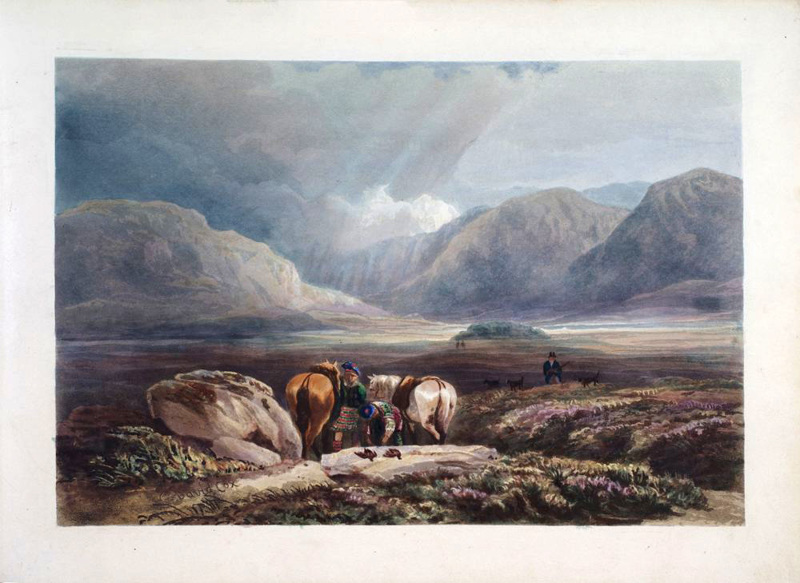
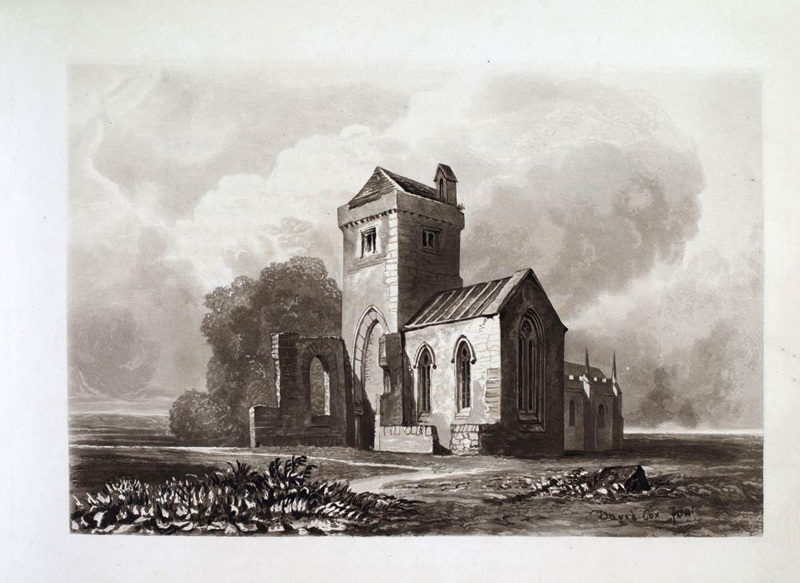
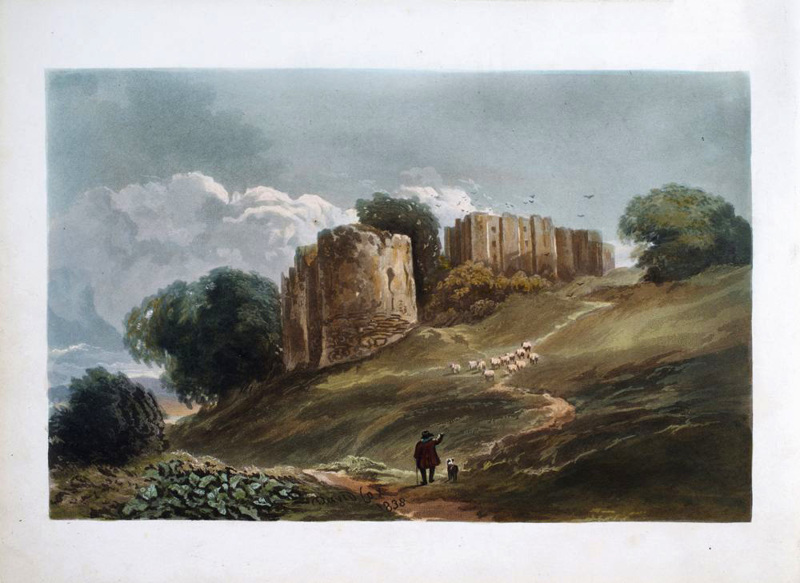
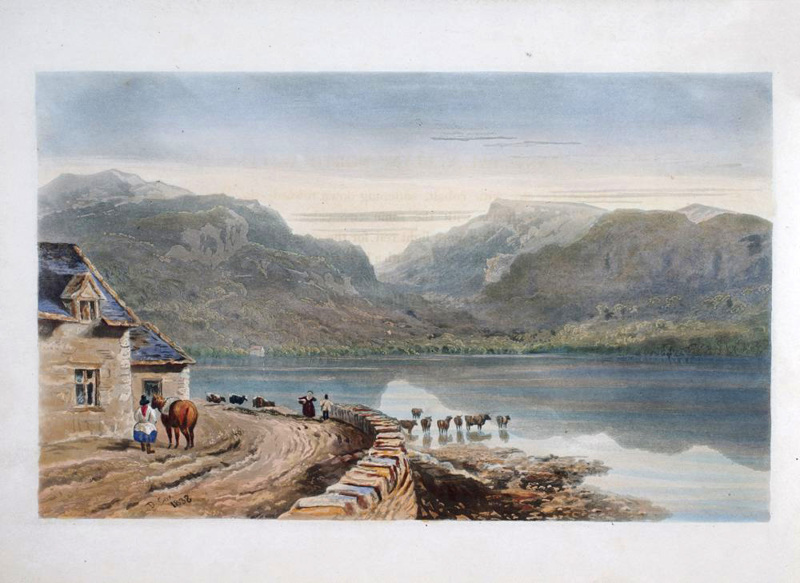
Oblong 4to pp. [ii] 24; [7] [1] blank; 18 plates viz.: plates 1-3 engravings on perspective; [4-5] lithograph on 'Sketching'; [6-7] lithograph and sepia aquatint 'On Shading with Sepia'; [8-11] on colouring in 'Progressive State' (i.e., a lithograph and three aquatints that are bound so that all four can be viewed together); and [12-18] hand-coloured aquatints specimens of watercolour in the printed text; half calf over marbled boards, rubbed at worn in places; contents a little spotted in places; contemporary half tan calf with a title label on upper board; extremities a little worn re-backed. MS signature in pencil to title page "July 16, 1880. H Pelegrini" (?) Written and illustrated by David Cox (1783-1859) and his son of the same name, the artist/authors fully revised or rather reformatted the work adding additional plates and changing the text. as the authors explain in their 'Advertisement' 'to explain the system adopted in the present improved state of the Art it was necessary to discard the preceding work altogether and produce another entirely new.' The text accompanying the aquatints includes colour samples interspersed with the text. The views include Beaucilff Abbey; Battle Abbey; Goodrich Castle Herefordshire; Moel Shabboa North Wales; Dutch Boats on the Scheldt off Antwerp Watermill near Dolbenmaen North Wales; scene near Balquidder North Britain and Bolton Abbey Yorkshire. See Tooley 161 for the 1841 issue. Coloured plates in order: 1. Beaucliff Abbey (sepia only). 2-4. Battle Abbey, Sussex (progressive states of the same illustration). 5. Goodrich Castle, Herefordshire. 6. Moel Shabbod, North Wales. 7. Lake Tal-y-Llyn, North Wales. 8. Dutch Boats on the Scheldt, off Antwerp. 9. Water Mill near Dolbenmaen, North Wales. 10. Scene near Balquidder, North Britain. 11. Bolton Abbey, Yorkshire.